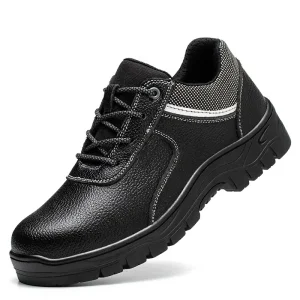
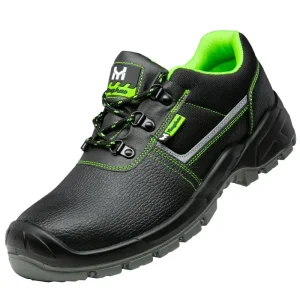
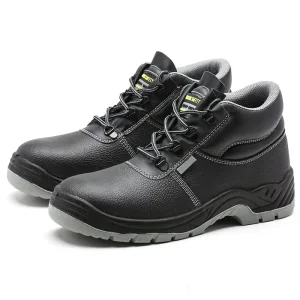
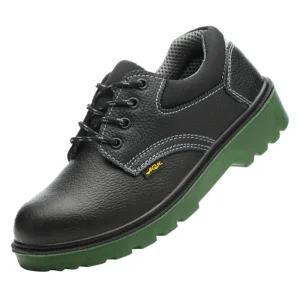
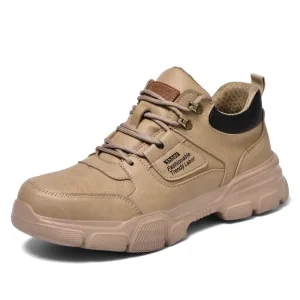
S1P / Oxford Breathable
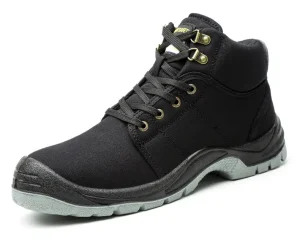
High-demand baseline occupational footwear engineered for warehousing, precision assembly, heavy logistics, and site mechanical operations. Fully compliant with international impact and puncture resistance benchmarks.
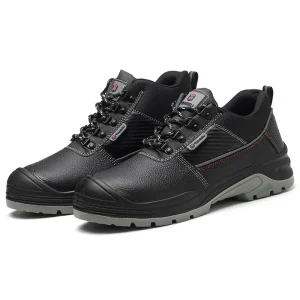
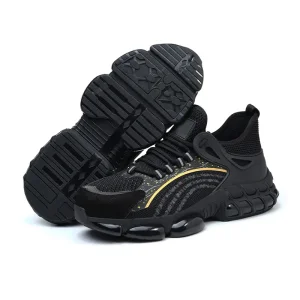
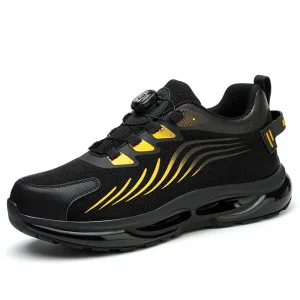
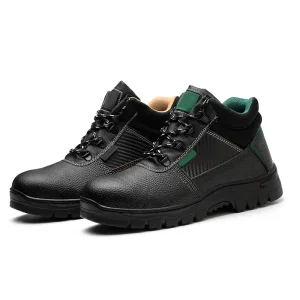
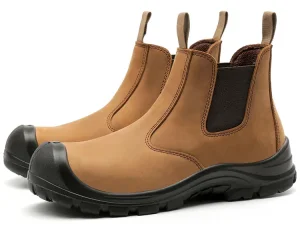
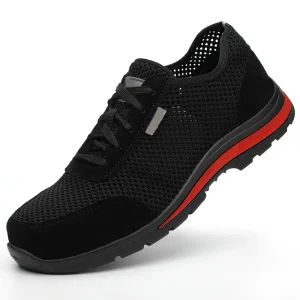
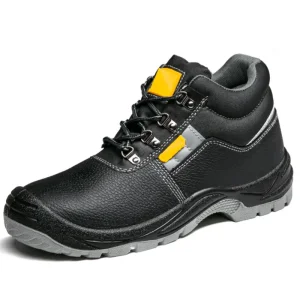
Historically perceived as cumbersome mandatory equipment, modern basic safety shoes represent an convergence of advanced polymer science, ergonomic musculoskeletal protection, and strict multi-jurisdictional compliance.
Across North America, the European Union, Australia, and GCC regions, environmental health and safety (EHS) officers along with corporate procurement heads are fundamentally overhauling their Personal Protective Equipment (PPE) purchasing rubrics. Procurement mandates no longer focus solely on the initial landing invoice cost; instead, the emphasis has shifted toward Total Cost of Ownership (TCO), chronic musculoskeletal disorder mitigation, and stringent adherence to revised regulatory standards like EN ISO 20345:2022.
In high-throughput environments such as Amazon-tier distribution centers, semiconductor manufacturing plants, automotive assembly lines, and modern construction infrastructures, the performance of safety footwear directly correlates with operator turnover, ergonomic fatigue, and lost-time injury (LTI) metrics. An unoptimized, heavy steel-toed work shoe can impart upwards of 1.2 kilograms of deadweight drag per stride, accelerating spinal fatigue, plantar fasciitis, and occupational slip events. Our manufacturing operations at Tianjin ZhongQi reconcile this friction point: engineering baseline, cost-effective safety shoes featuring high-tenacity Oxford fabrics, puncture-resistant non-metallic Kevlar/aramid composites, and energy-rebound dual-density Polyurethane (PU/PU) outsoles that maintain rigorous 200J toecap survivability while shedding up to 40% of standard shoe weight.
Engineered protective caps configured for targeted hazardous environments, balanced between raw physical resistance and weight distribution.
Multi-layered ballistic defense plates isolating plantar surfaces from nails, screws, metal swarf, and sharp structural masonry.
Direct injected dual-density PU and high-traction rubber matrices designed for aggressive chemical and frictional longevity.
Navigating cross-border occupational compliance requires exact material traceability and third-party laboratory verification. Here is how our production aligns with global PPE regulations.
Procuring protective footwear across transnational operations presents distinct logistical and regulatory hurdles. An importer supplying multinational mining consortiums in South America, mechanical contracts in Germany, and civil engineering infrastructure projects in the UAE cannot rely on ambiguous supplier claims. Safety shoes must bear uncompromised certification tags mapped to batch inspection documentation.
Under the revised EN ISO 20345:2022 standard, critical testing parameters have been refined. The legacy "SRA / SRB / SRC" slip classification has been superseded by rigorous baseline ceramic tile with NaLS slip performance plus optional specialized "SR" testing. Furthermore, puncture protection classifications are differentiated between metallic nail penetration (labeled 'P') and non-metallic synthetic inserts, now categorized into 'PL' (tested with a standard 4.5 mm nail) and 'PS' (tested with a smaller, highly demanding 3.0 mm conical spike). At Tianjin ZhongQi, our factory production lines integrate pre-molding automated tensile load cells and digital impact drop towers to ensure continuous batch conformity prior to container staging at the nearby port of Tianjin.
| Standard / Rating | Impact Protection | Penetration Barrier | Electrostatic Property | Recommended Industrial Sector |
|---|---|---|---|---|
| EN ISO 20345:2022 SB | 200 Joules drop impact / 15 kN | Optional / None | Not mandatory | Dry mechanical maintenance, low-hazard assembly |
| EN ISO 20345:2022 S1 / S1P | 200 Joules (Toe Defense) | 1100 N (P/PL/PS Aramid/Steel) | Antistatic (0.1 MΩ to 1000 MΩ) | Indoor logistics, automated warehousing, manufacturing |
| EN ISO 20345:2022 S3 / S3L | 200 Joules + Water Resistant Upper | 1100 N puncture resistance | Antistatic + Cleated Outsole | Civil construction, infrastructure, outdoor mechanical |
| ASTM F2413-18 M/I/C PR | 75 ft-lbs impact / 2500 lbs comp. | 1200 N (270 lbs) puncture resistant | SD 100 / Static Dissipative | North American distribution, mining, oil & gas support |
| AS/NZS 2210.3:2019 | 200 Joules compliant | Class 1 / Class 2 standard | Conductive or Antistatic | Australasian heavy engineering, commercial utilities |
Situated in the Shuangjie Trusted Industrial Park, Beichen District, Tianjin, our production facility minimizes inland drayage expenses and mitigates multi-stage trucking delays. Immediate container terminal staging allows expedited vessel clearance to Europe, North America, Southeast Asia, and Africa.
Over 15 years of dedicated contract manufacturing enables us to configure bespoke private-label safety footwear programs. We offer mold fabrication for unique tread geometry, embossed branding, customized box packaging, and customized tongue labeling detailing target region certification codes.
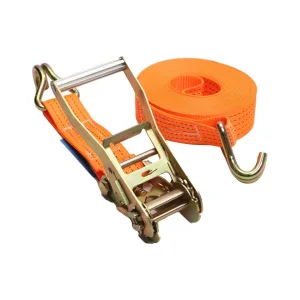
Leverage our unified manufacturing capacity to combine safety shoes, high-tensile fall protection harnesses (CE EN 361), polyester lifting slings (EN 1492-1), ratchet cargo lashing straps, industrial helmets, and protective gloves into consolidated full-container loads (FCL), optimizing freight economics.
Our engineering divisions focus on three pillars of innovation: weight reduction without structural loss, biomechanical fatigue dissipation, and circular material lifecycle management.
Traditional split cowhide leathers deliver exceptional abrasion resistance but present challenges in warm, high-aerobic warehousing environments. ZhongQi utilizes automated computerized flat knitting machines producing seamless high-tenacity polyester uppers. Engineered with variable tension zones, these lightweight uppers provide structural stability across the heel counter and metatarsus while maximizing airflow around the vamp. When treated with hydrophobic fluorocarbon finishes, the textile repels splash moisture while permitting vapor evaporation, maintaining optimal internal microclimates.
Fatigue-induced loss of worker vigilance contributes significantly to warehouse slip, trip, and crush incidents. Our advanced tooling lines incorporate cellular E-TPU midsole inserts—similar to high-performance marathon running foam. These enclosed micro-cellular capsules absorb vertical kinetic impact energy at heel strike and return over 55% of the mechanical energy upon toe-off. This reduces cumulative calf muscle contraction and lower-lumbar compression throughout 12-hour shifts, improving worker comfort and focus.
Corporate ESG (Environmental, Social, and Governance) commitments require measurable supply chain decarbonization. ZhongQi is actively integrating GRS-certified (Global Recycled Standard) recycled PET yarn into shoe lining fabrics, toe cap edge padding, and internal tongue foams. Furthermore, our injection molding facilities utilize bio-based polyurethane polyols derived partly from renewable plant oils, reducing petrochemical reliance while maintaining oil, fuel, and mild chemical resistance standards.
Answers to detailed technical, certification, and procurement inquiries asked by global PPE category managers and industrial safety engineers.
Both configurations meet identical international safety benchmarks: absorbing a 200-Joule dynamic drop impact and resisting a 15-kN static compressive load (per EN ISO 20345 / ASTM F2413). However, carbon steel caps maintain a thinner cross-sectional profile, allowing a sleeker external shoe silhouette at a more cost-effective production point. Composite toe caps (crafted from carbon fiber, fiberglass, or specialized polycarbonates) are approximately 30% to 40% lighter, conduct zero electricity, prevent thermal bridging in frozen or extreme heat environments, and do not trigger airport or high-security metal screening detectors.
Direct polyurethane injection is an automated robotic process where liquid polyol and isocyanate are injected directly into the shoe mold cavity against the lasted upper. The chemical reaction generates an unbreakable molecular bond between upper and outsole, entirely eliminating adhesives that degrade from moisture, heat, or organic solvents. A dual-density configuration features a low-density, soft microcellular PU midsole directly under the foot for shock absorption, paired with a compact, high-density PU outer tread engineered for abrasion resistance, oil resistance, and slip defense.
In EN ISO 20345:2022, penetration resistance testing has been clarified. Metallic puncture plates remain classified under code 'P' using a standard 4.5 mm test nail. Non-metallic puncture-resistant textiles (such as woven Kevlar/aramid sheets) are split into two categories: 'PL' (tested with a standard 4.5 mm nail representing standard industrial hazards) and 'PS' (tested with a sharpened 3.0 mm small-diameter spike representing construction wood slivers or fine needles). Specifying PL versus PS allows safety officers to tailor puncture protection to specific jobsite risk assessments.
Standard production runs for customized OEM safety shoes (customized upper color combinations, branded tongue badges, screen-printed insoles, and personalized retail packaging) generally begin at 500 to 1,000 pairs per style across standard European or US size distributions. Initial proto-sampling and mold configuration require approximately 7 to 14 business days, while volume mass production takes 30 to 40 days following sample sign-off, coordinated with container bookings via Tianjin Port.
Yes. Every export lot undergoes structured internal laboratory batch testing before final packaging. We provide factory test certificates confirming toecap impact clearance (measured with internal modeling clay gauges per ISO 20344), midsole penetration force values in Newtons, sole-to-upper bond peel strength, and electrical conductivity/antistatic resistance measurements. Independent third-party test reports from accredited bodies (such as CTC, Intertek, or SGS) are readily supplied during sample and contract validation stages.
Unlike single-line workshops, Tianjin ZhongQi operates coordinated manufacturing programs across fall protection harnesses (EN 361), polyester flat webbing slings (EN 1492-1), cargo tie-down ratchet straps, work gloves, safety hard hats, and industrial protective shoes. Importers can combine diverse SKUs within a single 20GP or 40HQ container, significantly reducing freight handling charges, clearing customs under unified import paperwork, and minimizing inventory carrying risk.
Extended commercial footwear range featuring two-layer genuine cowhide, high-ankle mechanical support, specialized green-bottom safety boots, and critical load-lashing gear manufactured to rigorous export standards.