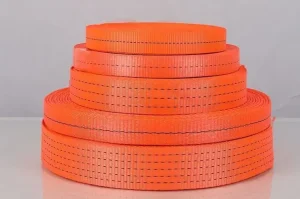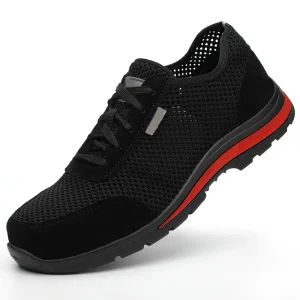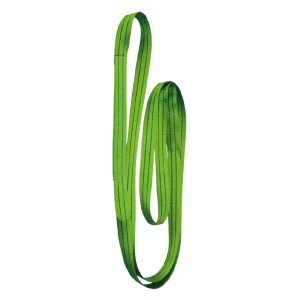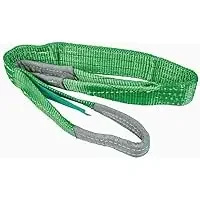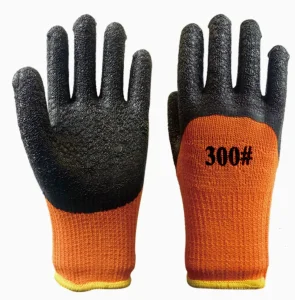
Explore initial core procurement items engineered for mission-critical cargo securing, dynamic crane hoisting, and comprehensive personal fall protection arrays.
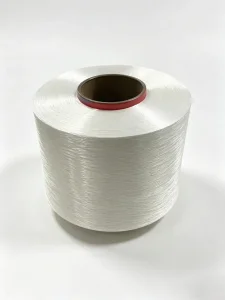
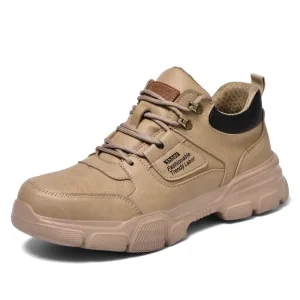
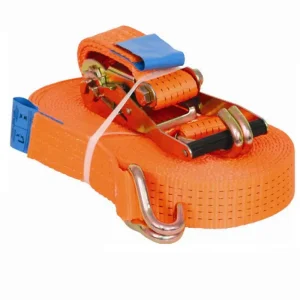
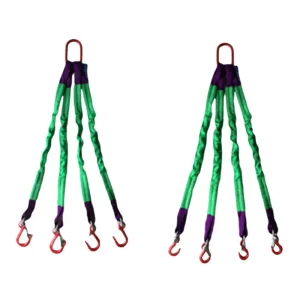
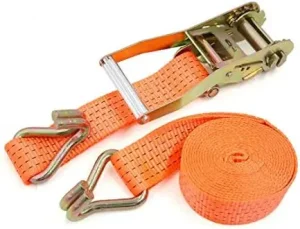
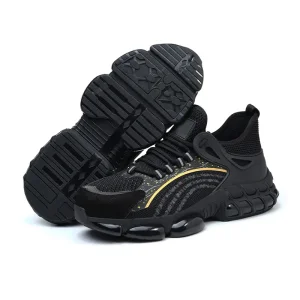
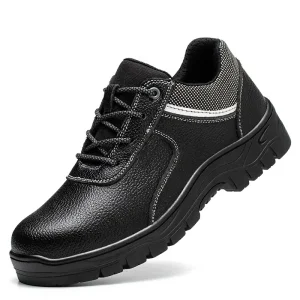
Evaluating modern high-tenacity narrow fabric supply chains, material synthesis shifts, and maritime shipping logistics from China's premier manufacturing corridors.
The transition from commodity textile fibers to continuous-filament industrial yarn (such as 210D/AA grade high-tenacity polyester) provides dimensional stability under heavy tension. Unlike open-market standard grade yarns, AA-grade filaments preserve molecular chain alignment, ensuring zero unravelling, micro-tear resistance, and unmatched tensile consistency across 10,000+ meter production batches.
Procuring directly through vertically integrated factories situated in established industrial clusters—such as the Shuangjie Trusted Industrial Park in Tianjin—minimizes lead times. Direct proximity to Tianjin Port eliminates complex intermodal transit, enabling consistent 20ft and 40ft container freight dispatches while insulating European, American, and Asia-Pacific distributors from domestic supply disruptions.
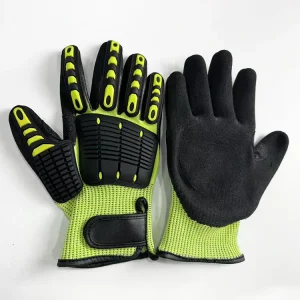
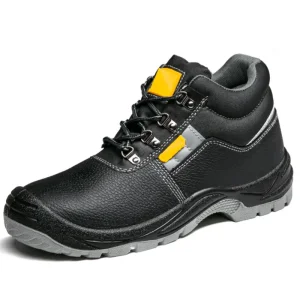
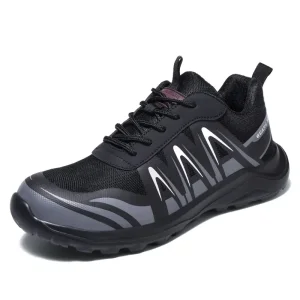
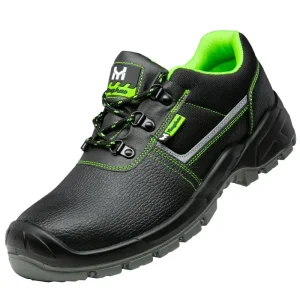
Industrial procurement managers face rising LCL (less-than-container-load) tariffs. Our strategic production capacity integrates synthetic webbing slings, heavy-duty ratchet tie-downs, drop-forged rigging hardware, safety footwear, cut-resistant gloves, and structural PPE under a unified Bill of Lading, maximizing container volumetric efficiency and substantially lowering landed unit costs.
Comprehensive engineering breakdown comparing synthetic fibers, environmental resistance thresholds, and international lifting standard criteria.
| Polymer Classification | Specific Tenacity | Elongation at Break | Melting Point (°C) | Acid Resistance | Alkali Resistance | Primary Industrial Use-Case |
|---|---|---|---|---|---|---|
| High-Tenacity Polyester (PES) | 7.5 – 8.5 cN/dtex | 12% – 16% (Total) | ~260°C | Excellent | Degrades in hot base | Flat Webbing Slings, Cargo Straps (EN 1492-1) |
| Polyamide 6.6 (Nylon / PA) | 8.0 – 9.0 cN/dtex | 20% – 28% (High) | ~255°C | Poor (Hydrolyzes) | Excellent | Dynamic Kinetic Recovery Ropes, Shock Lanyards |
| Polypropylene (PP) | 5.0 – 6.5 cN/dtex | 18% – 22% | ~165°C | Exceptional | Exceptional | Chemical Tanker Straps, Floating Marine Lines |
| UHMWPE (Dyneema® Class) | 30 – 38 cN/dtex | 3.5% – 4.5% (Ultra-Low) | ~145°C | Inert | Inert | Offshore Rigging Slings, Heavy Lift Roundslings |
| Meta/Para-Aramid (Kevlar®) | 22 – 28 cN/dtex | 2.0% – 3.5% | Decomposes >450°C | Moderate | Moderate | High-Heat Slings, Firefighter Fall Protection |
| Webbing Color Coding | Rated WLL (Straight Vertical) | Rated WLL (Choked Hitch, M=0.8) | Rated WLL (Basket Hitch, M=2.0) | Minimum Breaking Strength (7:1) | Nominal Width |
|---|---|---|---|---|---|
| Violet | 1,000 kg (1.0 Ton) | 800 kg | 2,000 kg | 70 kN (7,000 kg) | 30 mm – 35 mm |
| Green | 2,000 kg (2.0 Ton) | 1,600 kg | 4,000 kg | 140 kN (14,000 kg) | 50 mm – 60 mm |
| Yellow | 3,000 kg (3.0 Ton) | 2,400 kg | 6,000 kg | 210 kN (21,000 kg) | 75 mm – 90 mm |
| Grey | 4,000 kg (4.0 Ton) | 3,200 kg | 8,000 kg | 280 kN (28,000 kg) | 100 mm – 120 mm |
| Red | 5,000 kg (5.0 Ton) | 4,000 kg | 10,000 kg | 350 kN (35,000 kg) | 125 mm – 150 mm |
| Brown | 6,000 kg (6.0 Ton) | 4,800 kg | 12,000 kg | 420 kN (42,000 kg) | 150 mm – 180 mm |
| Blue | 8,000 kg (8.0 Ton) | 6,400 kg | 16,000 kg | 560 kN (56,000 kg) | 200 mm – 240 mm |
| Orange | 10,000 kg+ (10.0 Ton+) | 8,000 kg+ | 20,000 kg+ | 700 kN+ (70,000 kg+) | 250 mm – 300 mm |
Ensuring cross-border compliance through accredited destructive load testing, CE certification, and automated CNC stitching control.
Every consignment matches explicit jurisdictional protocols: European EN 1492-1 / EN 1492-2 (7:1 safety factor), American WSTDA-T-1 / ASME B30.9 (5:1 safety factor), Australian AS 1353, and European lashing standard EN 12195-2 (2:1 safety factor). Complete declarations of conformity (DoC) and certified third-party laboratory test reports accompany each dispatch.
Each webbing sling and ratchet strap features an indelible, thermal-transfer sewn-in blue or white label protected by a heavy transparent PVC sleeve. Labels contain the unique serial number, production batch, year of manufacture, Working Load Limit (WLL) / Lashing Capacity (LC), Standard Tension Force (STF), and the buyer's OEM logo, guaranteeing audit readiness under OSHA and EU Machinery Directives.
Quality assurance is verified by calibrated 100-Ton and 300-Ton horizontal tensile test beds. Webbing samples undergo elongation assessment, breaking force verification, dynamic drop tests (for full-body safety harnesses under CE EN 361), and xenon-arc accelerated UV weathering per ISO 4892-3, providing quantitative empirical proof before packaging.
Analyzing high-stress field conditions where synthetic webbing replaces heavy, dangerous steel cables and wire ropes.
Overland logistics operators rely heavily on 50mm (2-inch) and 100mm (4-inch) heavy-duty polyester ratchet tie-down assemblies with high pre-tensioning ratchet handles (STF up to 500 daN). Synthetic webbing prevents surface marring on finished architectural precast panels, structural steel trusses, and packaged timber products while maintaining tension over rough haulage routes.
Modern offshore and onshore wind turbines incorporate ultra-sensitive composite fiberglass blades exceeding 80 meters in length. Handling these massive aerodynamic surfaces demands specialized wide-body flat webbing slings and roundslings with working load limits spanning 20 to 50 tons, distributing compressive loads evenly without inducing micro-fractures in the composite matrix.
Saltwater immersion rapidly corrodes conventional ungalvanized steel wire rope, generating dangerous metal splinters and brittle failure points. Specially treated polyester and UHMWPE roundslings feature closed-cell protective jackets that prevent marine salt ingress, chemical solvent absorption, and bacterial rot, ensuring dependable crane operations in the North Sea, Gulf of Mexico, and South China Sea.
Fall protection webbing requires an exact balance between high static strength (breaking strength exceeding 22 kN per EN 361) and controlled energy absorption. Our 45mm polyester harness webbing is woven with customized density to maintain flexibility through pass-through buckles while dampening peak impact forces on the human skeletal frame during arrest events.
Pioneering intelligent load monitoring, sustainable bio-polymers, and advanced hybrid yarn matrices for 2026 and beyond.
We are embedding passive RFID and NFC micro-chips directly inside the core weave structure of synthetic slings. In parallel, research is advancing toward integrated conductive fiber ribbons that register real-time elongation thresholds and structural cut damage, transmitting telemetry directly to construction safety management software via Bluetooth.
To support global carbon-reduction commitments, our R&D center is finalizing commercial-scale weaving using 100% post-consumer bottle flakes re-polymerized into high-tenacity industrial yarn. These sustainable rPET webbing assemblies match virgin polyester in tensile strength (within 2%), allowing Tier-1 infrastructure contractors to satisfy strict ESG criteria.
Traditional webbing inspection requires manual micrometer calipers to detect internal yarn abrasion. Our next-generation dual-weave webbing introduces a contrasting high-visibility signal-red internal core surrounded by standard safety-colored exterior yarns. Once exterior fibers wear down past the critical 10% threshold, the bright warning core is revealed instantly.
Detailed technical, compliance, and international ordering guidance directly from our senior engineering team.
Complete your container consolidation order with certified personal protective equipment, impact-resistant footwear, and heavy crane slings.