Engineered for extreme environmental compliance, high photometric performance, and robust workplace protection across civil infrastructure, logistics, and heavy manufacturing.
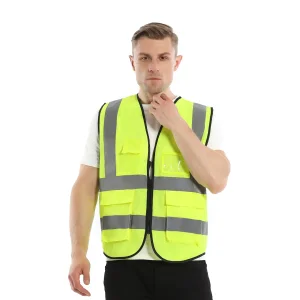
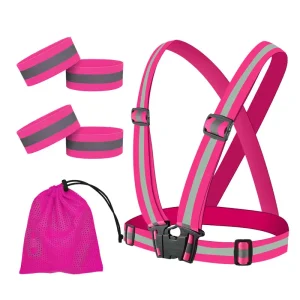
In modern heavy industry, high-visibility warning clothing serves as the foundational barrier against struck-by vehicular accidents, human error, and occupational low-light fatalities.
A safety vest is far more than a fluorescent fabric garment; it is a meticulously calculated optical system governed by strict photometric and colorimetric equations. Under daylight conditions, worker visibility relies heavily on fluorescence—the physical process where fluorophores within the dye absorb high-energy ultraviolet radiation (290–400 nm) and instantly re-emit it as visible light within the peak human scotopic sensitivity zone (500–600 nm). According to ANSI/ISEA 107-2020 and EN ISO 20471:2013+A1:2016, fluorescent background fabrics (Fluorescent Yellow-Green, Fluorescent Orange-Red, and Fluorescent Red) must maintain strict chromaticity coordinates under Standard Illuminant D65.
At nighttime or in unlit industrial environments, fluorescence ceases, shifting 100% of the cognitive recognition burden onto retroreflective materials. Retroreflection is achieved through either wide-angle micro-glass bead technology (catadioptric refraction) or micro-prismatic total internal reflection (TIR). Premium retroreflective tapes manufactured by Tianjin ZhongQi Growth Technology Co., Ltd. maintain an initial coefficient of retroreflection ($R_a$) exceeding 500 cd/(lx·m²) at an entrance angle of $\beta_1 = 5^\circ$ and observation angle of $\alpha = 12'$, ensuring an equipment operator approaching at 100 km/h has over 8 full seconds of reaction distance.
| Standard Classification | Minimum Background Material | Minimum Retroreflective Tape | Typical Industrial Deployment Scenarios | Mandatory Design Constraints |
|---|---|---|---|---|
| ANSI/ISEA 107 Class 1 (Type O) | 0.14 m² (217 in²) | 0.10 m² (155 in²) | Off-road warehouse picking, parking attendants, sidewalk maintenance | Permitted only where moving equipment speeds do not exceed 40 km/h (25 mph). |
| ANSI/ISEA 107 Class 2 (Type R) | 0.50 m² (775 in²) | 0.13 m² (201 in²) | Highway survey crews, railway track inspection, utility maintenance, airport ramp handling | Must provide 360-degree waist/shoulder bands; ensures full human profile recognition. |
| ANSI / ISO Class 3 (Type R) | 0.80 m² (1240 in²) | 0.20 m² (310 in²) | Interstate night paving, high-speed rail construction, extreme blizzard or maritime operations | Mandatory coverage on torso and arms/legs; full body biometric motion recognition. |
| EN ISO 20471 Class 2 | 0.50 m² | 0.13 m² | European logistics hubs, port container crane zones, urban municipal engineering | Strict color boundary testing post 25-50 wash cycles at 60°C per ISO 6330. |
How Fortune 500 EPC contractors, municipal logistics agencies, and industrial safety distributors achieve high compliance, rapid inventory turns, and lowered Total Cost of Ownership.
Global distributors routinely suffer from color drift ($\Delta E > 1.5$) between manufacturing lots. Our automated continuous dyeing jigs and spectrophotometric batch release ensure identical chroma and luminance factor ($Y$) across 500,000 units.
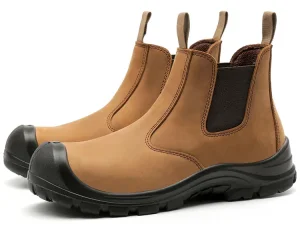
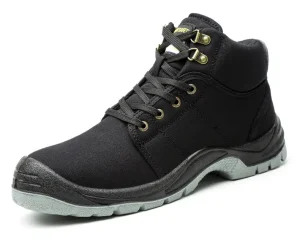
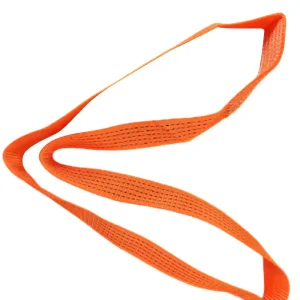
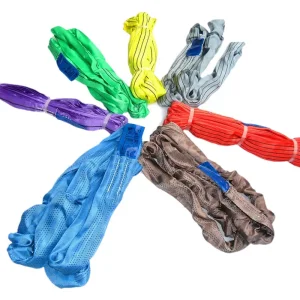
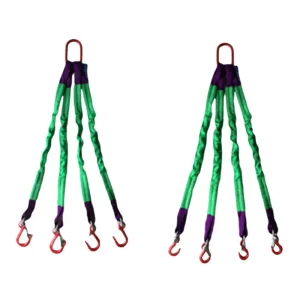
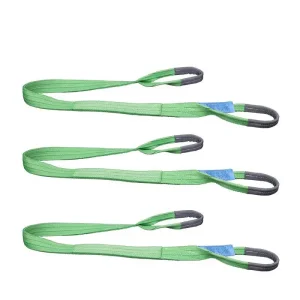
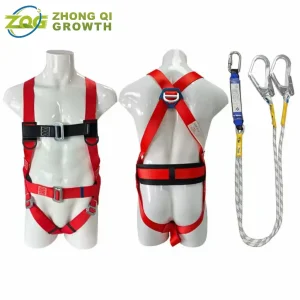
Located in Shuangjie Trusted Industrial Park, Tianjin, ZhongQi provides integrated container consolidation. Combine Class 2 safety vests with CE EN 361 fall arrest harnesses, EN 1492-1 lifting slings, and safety footwear in a single 40ft HQ container directly shipped via Tianjin Port.
Complete custom branding including micro-injected silicone emblems, heat-transfer wash care labels, woven neck tags, individual barcode tagging, and master carton EDI serialization for seamless warehouse ERP ingestion.
Transitioning from passive textile protection to active photonic systems and connected IoT human-machine telematics.
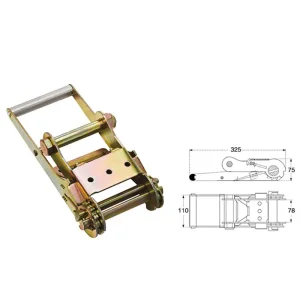
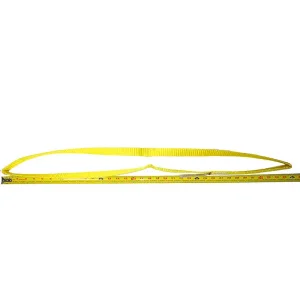
Expand your supply chain synergy with certified safety harnesses, tie-down systems, and heavy-duty protective footwear directly from our integrated manufacturing plant.
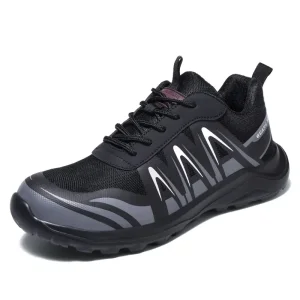
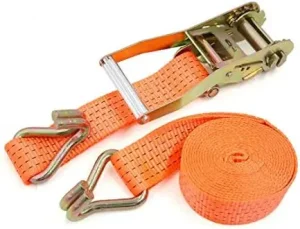
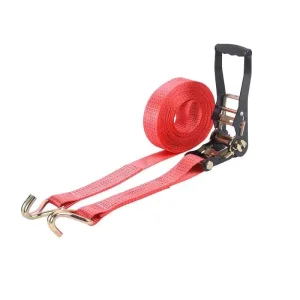
Tailoring textile substrates, retroreflective coatings, and ergonomic silhouettes for rigorous operating conditions across key heavy-industry verticals.
Salt-spray corrosion resistant nylon zippers, hydrophobic fluorocarbon fabric coatings preventing moisture weight absorption, and micro-prismatic tape resilient against marine swell wash.
Governed by European RIS-3279-TOM standards, our fluorescent orange railway apparel provides instant visual differentiation against natural track ballast and industrial sidings.
Intrinsically safe anti-static conductive carbon yarn grids (EN 1149-5) paired with inherent Flame Retardant (FR) Modacrylic/cotton blends (NFPA 70E Arc Rating HRC 2).
Multi-pocket tablet/scanner cargo compartments, reinforced mic tabs, and 4-way mechanical stretch fabric ensuring comfort during continuous 10-hour forklift operations.
Comprehensive regulatory and technical answers derived from international PPE specifications, batch auditing requirements, and logistics parameters.
Class 2 garments require a minimum of 0.50 m² (775 in²) of fluorescent background fabric and 0.13 m² (201 in²) of retroreflective material, engineered for workers in traffic zones from 25 to 50 mph. Class 3 garments mandate 0.80 m² (1240 in²) of background fabric and 0.20 m² (310 in²) of reflective tape, requiring sleeves with reflective bands to define human silhouette motion at speeds exceeding 50 mph.
Our glass-bead and micro-prismatic tapes are verified under ISO 6330 Method 6N (domestic wash at 60°C) and ISO 15797 (industrial laundry at 75°C with tunnel drying). After 25 to 50 documented washing cycles, retroreflective performance is tested with a calibrated optical retroreflectometer to verify that luminance remains strictly above 100 cd/(lx·m²).
Yes. For oilfield, utility, and electrical arc-flash applications, we engineer vests utilizing inherently flame-resistant fabrics such as treated cotton, Nomex, or Modacrylic blends conforming to ASTM F1506, NFPA 70E, and EN ISO 14116 Index 1–3, paired with certified flame-retardant retroreflective heat-seal transfers.
Standard catalog configurations maintain an MOQ of 500 units per colorway. Full OEM private-label production (custom PMS color matching, custom pocket configurations, printed heat-transfer branding) carries an MOQ of 1,000–2,000 units. Prototype samples are dispatched within 5–7 business days; full 40ft container production cycles average 25–30 days.
Tianjin ZhongQi Growth Technology is situated adjacent to Tianjin Port, northern China's premier international deep-water logistics gateway. This proximity significantly reduces inland drayage transport fees, minimizes container handling risks, and provides direct weekly sailings to major ports across North America, Europe, Australia, and the Middle East.
Absolutely. One of our key competitive advantages is comprehensive industrial safety manufacturing. Importers routinely combine polyester lifting slings (EN 1492-1 / ASME B30.9), cargo ratchet tie-down straps (EN 12195-2), CE EN 361 fall protection harnesses, and high-visibility apparel in a single consolidated bill of lading (BOL).