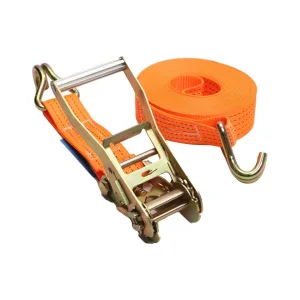
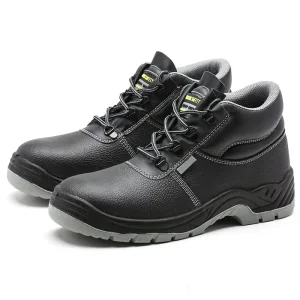
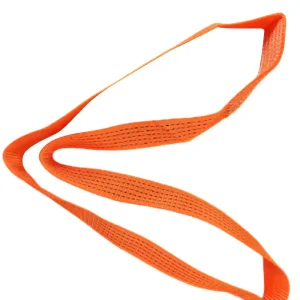
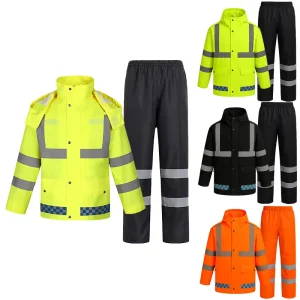
Engineered alongside helmet suspension straps to support comprehensive industrial load management, worker retention, and site-wide safety infrastructure.
In modern industrial safety protocols, head protection effectiveness is inherently determined by helmet retention stability. A hard hat shell cannot absorb kinetic energy if dislodged during an initial slip, trip, or rotational fall.
Global original equipment manufacturers (OEMs) and Tier-1 safety factories have transitioned from basic woven cords to automated, high-precision, multi-axis computerized shuttleless loom webbing. Modern retention assemblies must maintain elongation limits under 10% under load while delivering sustained skin biocompatibility across 12-hour operational shifts.
Industrial procurement teams confront diverging international standards. General construction under EN 397 mandates that chin strap retention systems release between 150 N and 250 N to mitigate severe strangulation risks. Conversely, EN 12492 (mountaineering and working-at-height) mandates buckle retention above 500 N to ensure the helmet remains secured throughout multiple successive rotational impacts.
Legacy 2-point direct chin loops are rapidly being phased out worldwide in favor of ergonomically balanced 4-point and 6-point Y-shaped cradle harnesses. Distributed anchoring geometry stabilizes against lateral deflection, preventing helmet roll-off during wind gusts, crane operations, and sudden body decelerations.
Advanced material chemistry and digital industrial IoT integration are transforming humble chin straps into sophisticated, active worker safety modules.
Next-generation factories now manufacture patent-pending mechanical toggle buckles that allow field workers to manually switch between <250 N (Ground Mode / EN 397) and >500 N (Height Mode / EN 12492) with an intuitive locking slide, eliminating the need to inventory separate helmet shells across varied work sites.
Conductive yarn interlacing integrates micro-strain gauges and photoplethysmography (PPG) sensors directly into chinstrap fabrics. These measure carotid pulse rate, skin surface core temperature, and harness tension in real time to alert site command before heat exhaustion causes syncope.
Because chin straps sit directly on facial dermis exposed to high humidity and sweat, Tier-1 factories apply non-leaching silver-ion and fluorocarbon-free hydrophobic chemistry. This repels bacterial colonisation, inhibits skin contact dermatitis, and resists grease, diesel fumes, and industrial solvents.
A strap system designed for standard warehouse shelving will catastrophic fail in offshore subsea winds or blast furnace environments. Engineering selections must align with specific operational friction.
Primary Hazards: Constant salt-fog corrosion, violent maritime gales exceeding 50 knots, and hydrocarbon splashing.
Engineering Solution: Marine-grade 316 stainless steel or carbon-reinforced acetal quick-release buckles paired with solution-dyed ultra-violet resistant nylon 6.6 webbing rated to ASTM B117 1,000-hour salt spray exposure.
Primary Hazards: Confined vertical ladder ascents, elevated rotational fall hazards, inverted hanging positions.
Engineering Solution: 4-point EN 12492 compliant non-elasticated retention straps with micro-adjustable cam buckles and memory foam chin pads, ensuring zero helmet detachment during a secondary dynamic deceleration event.
Primary Hazards: Falling fractured debris, heavy damp air containing pulverized silica and iron ore, lamp and ear defender cable drag.
Engineering Solution: Flame-retardant treated high-tenacity polyester webbing meeting ISO 15025 flame spread requirements, equipped with integrated cable management guide loops and easy-clean silicone chin cups.
B2B procurement criteria for verifying compliance across international supply chains before committing to bulk factory production.
| Evaluation Parameter | EN 397 (Industrial Safety) | EN 12492 (Mountaineering / Height) | ANSI/ISEA Z89.1 (Type I/II) | ZhongQi Factory Standard |
|---|---|---|---|---|
| Buckle Retention Force | 150 N – 250 N (Breakaway) | ≥ 500 N (Zero Slippage) | Optional or < 50 lbs | Dual-Mode Configurable |
| Webbing Elongation Limit | ≤ 25% under load | ≤ 15% dynamic shock | Standard compliance | ≤ 8% Premium High-Tenacity |
| Yarn Composition | Standard Polypropylene/PES | Polyamide / PES blend | Nylon / Polyester | 210D AA Grade Virgin Filament |
| Hardware Thermostability | -10°C to +50°C | -20°C to +50°C | Basic Ambient | -40°C to +80°C Virgin Polyoxymethylene |
| Flammability Resistance | 5-second flame application | Ignition self-extinguish | Class C/E electrical | Self-Extinguishing < 2 seconds |
How global buyers eliminate supply chain volatility by consolidating safety helmet straps, harnesses, and fall protection components at an integrated production base.
By executing yarn extrusion, optical dye vat calibration, shuttleless precision weaving, ultrasonic laser cutting, and computerized automated pattern tacking in a single facility, our manufacturing pipeline eliminates intermediate distributor markups and delivers strict colorfastness matching your corporate branding.
Every production master batch is subjected to destructive tensile elongation tests, automated cycle buckle fatigue runs (exceeding 10,000 snap-fit cycles), accelerated xenon arc UV weathering chambers, and low-temperature impact drops to guarantee uncompromised compliance in audited test reports.
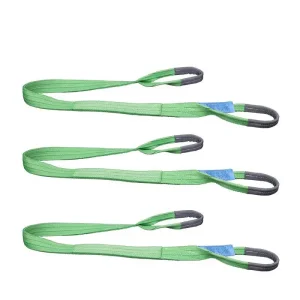
Located in the Shuangjie Trusted Industrial Park in Beichen, Tianjin, direct proximity to Tianjin Port affords unmatched logistics efficiency. International buyers can consolidate palletized helmet chin straps, lifting slings, and safety footwear into combined full container loads (FCL), drastically slashing landed shipping overhead.
In-depth engineering answers addressing compliance, material degradation, installation geometry, and OEM production capabilities.
Under European Standard EN 397 (and equivalent global industrial helmet guidelines), workers face substantial entanglement hazards around overhead machinery, structural scaffolding, and material hoists. If a worker slips while working at ground level and their helmet shell snags on an obstacle, an unbreakable chin strap can induce fatal cervical hyperextension or asphyxiation. Hence, EN 397 strictly specifies that the chin strap buckle or release mechanism must yield between 150 N and 250 N (roughly 15 to 25 kg of direct tensile force) to protect the worker’s neck.
Polyester (PES) offers superior ultraviolet (UV) radiation resistance, excellent dimensional stability, and low moisture absorption (typically under 0.5%), meaning it retains full tensile rigidity in soaking rain or humid marine settings. Polyamide (Nylon 6,6) exhibits superior abrasion resistance and higher mechanical elongation, which provides greater shock elasticity during violent impact decelerations. ZhongQi engineers formulate customized hybrid weaves or select pure high-tenacity virgin PES or PA66 based on your market’s specific UV exposure, chemical environment, and flexibility criteria.
Buckles engineered from virgin polyoxymethylene (POM / Delrin) undergo pneumatic cyclic clip testing on calibrated test benches. The male prongs are inserted and released under tension for 5,000 to 10,000 continuous cycles at ambient temperature, followed by low-temperature soak tests at -30°C and thermal aging at +70°C. Retention force is continuously measured by load cells to verify zero prong fatigue, stress cracking, or latch deformation.
Yes. We specialize in custom OEM/ODM production. This includes customized webbing widths (15mm, 18mm, 20mm), jacquard woven or thermo-transferred corporate logos, custom POM anchor clasps engineered to lock into proprietary slot dimensions on any third-party ABS/HDPE helmet shell, and specialized skin-friendly chin rest cups crafted from hypoallergenic TPR, silicone, or genuine leather.
While helmet shells commonly hold a recommended working lifespan of 3 to 5 years, textile webbing straps absorb sebum, perspiration acids, skin salts, sunscreen lotions, and constant solar UV radiation. We advise industrial health and safety managers to conduct semi-annual visual inspections for fuzzing, stitching fray, or buckle stiffness, with complete chin strap replacement occurring every 12 to 24 months, or immediately following any significant impact or fall arrest incident.
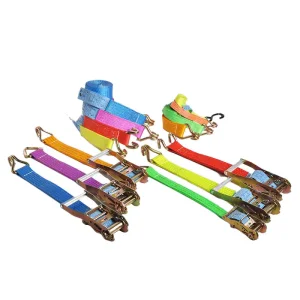
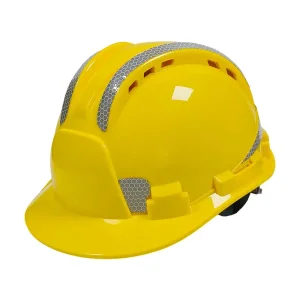
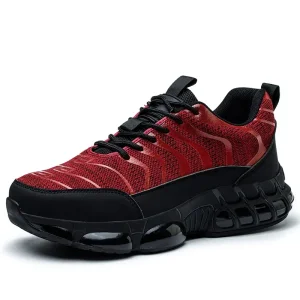
Complete your supply chain procurement portfolio with heavy-duty lashing assemblies, impact-rated safety headwear, and ballistic-grade puncture-resistant work footwear direct from our manufacturing lines.