Verified manufacturing capacity engineered for global construction, manufacturing, and energy infrastructure safety standards.

Analyzing thermal stress reduction, mechanical integrity, and the global regulatory landscape driving demand for vented industrial safety headgear.
Thermal accumulation within conventional unvented hard hats significantly accelerates operator fatigue, elevates core body temperature, and impairs cognitive reaction speeds. Aerodynamically positioned ventilation ports optimize convective chimney currents, dissipating heat flux up to 34% faster under extreme ambient thermal stress without structural attenuation.
Cutting holes blindly into polymer shells introduces catastrophic mechanical failure points. Advanced OEM injection tooling utilizes Finite Element Analysis (FEA) to route force vectors away from ventilation slots around reinforced longitudinal ribs, satisfying both impact absorption and top-tier lateral rigidity mandates (EN 397 & ANSI Z89.1).
Procuring "cheap" air holes safety helmets directly from Tier-1 Chinese manufacturing clusters does not denote compromised safety. Through vertical polymer compounding, high-speed automated multi-cavity injection molding, and localized supply chains, per-unit acquisition costs drop by 40% while sustaining zero-failure quality tolerances.
A rigorous architectural breakdown of high-impact Acrylonitrile Butadiene Styrene (ABS) versus High-Density Polyethylene (HDPE) polymer engineering.
| Evaluation Parameter | High-Impact Engineered ABS | High-Density Polyethylene (HDPE) | Impact on Industrial Procurement |
|---|---|---|---|
| Tensile Strength at Yield | 42 – 50 MPa | 22 – 31 MPa | ABS yields thinner, lighter shells without losing crown energy absorption. |
| Impact Resistance (Notched Izod) | 200 – 300 J/m (-20°C to +50°C) | 100 – 160 J/m | Superior low-temperature anti-crush ratings for global cold storage & Arctic sectors. |
| Thermal Deflection Temp (HDT) | 95°C – 105°C | 65°C – 80°C | ABS preserves internal dimensional stability when exposed to direct metallurgy slag & solar radiation. |
| Ventilation Geometry Efficiency | Modular shutter louvers + micro-mesh | Fixed stamped slots with splash baffles | ABS supports precise slide-shutter integration for switchable all-weather rain sealing. |
| Wholesale Cost Efficiency | Balanced Premium Tier | Ultra-Low Cost Economy Baseline | HDPE represents ultimate bulk unit savings; ABS targets maximum field durability. |
Configured specifically to navigate international safety codes across diverse territorial applications.
Ventilated industrial helmets inherently qualify under Class C (Conductive) headwear. These configurations eliminate electrical insulation properties to unlock maximum convective breathability, engineered primarily for infrastructure, commercial roofing, civil scaffolding, and open-pit mining logistics.
Our dual-norm architectures combine the shock absorption and penetration standards of European industrial safety (EN 397) with alpine work-at-height retention standards (EN 12492). The 4-point/6-point webbing chinstraps withstand >50 daN forces to prevent helmet displacement during lateral sway or structural rebound.
In high-ambient-heat geographic theaters—including the Middle East (GCC), Southeast Asian infrastructure, Sub-Saharan mineral extracting pits, and Southwestern US construction—unvented PPE exhibits unacceptable non-compliance rates among field workforces. Integrating factory-calibrated vent hole patterns lined with corrosion-proof stainless steel or nylon insect screens dramatically accelerates worker compliance, reducing unforced OSHA violations while elevating continuous shift operational metrics.
The evolutionary vector bridging low-cost passive head protection with active connected safety ecosystems.
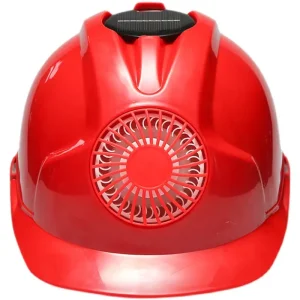
Next-generation air holes safety helmets integrate ultra-miniature brushless centrifugal fans within the crown ventilation cavity. Powered by solar-rechargeable or swappable lithium polymer battery packs, these active modules draw ambient air across the sweatband channel, dropping subjective thermal indexes by up to 8°C under direct solar radiation loads.
Ventilated shell cavities provide optimized placement profiles for non-invasive optical pulse oximeters, epidermal heat sensors, and tri-axial accelerometers. By routing wire conduits directly along internal suspension struts, factory OEM integrations deliver seamless telemetry for automated man-down alerts and real-time early warning heatstroke prevention algorithms.
In step with global Net-Zero initiatives, factory R&D pipelines are transitioning high-volume air-hole helmet production to bio-circular polycarbonates and ocean-bound post-consumer recycled HDPE. Formulated with proprietary cross-linking stabilizers, these eco-conscious matrixes fully preserve critical UV weathering properties and EN 397 shock attenuation lifespans.
Addressing structural safety questions, standard validations, and export container consolidation parameters.
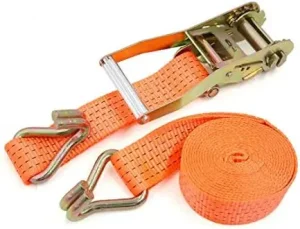
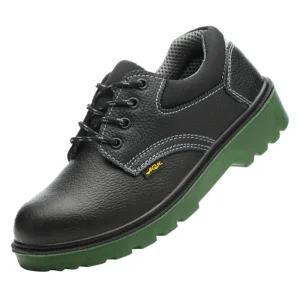
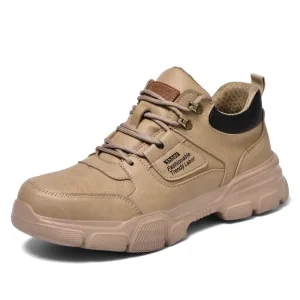
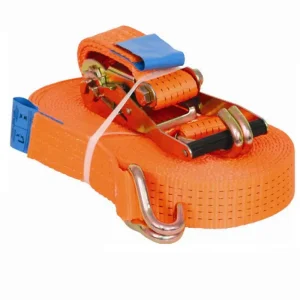
Direct manufacturer volume consolidation across protective footwear, synthetic lifting webs, and safety gear.