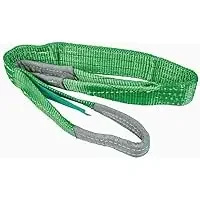
Procure certified head, foot, and load-securing protection engineered directly at our smart production hub for global contract consolidation.
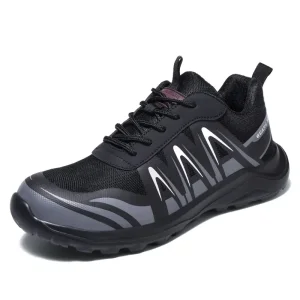
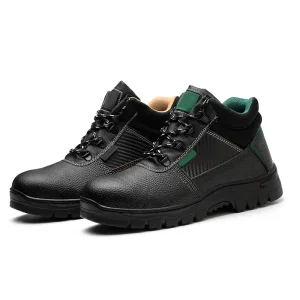
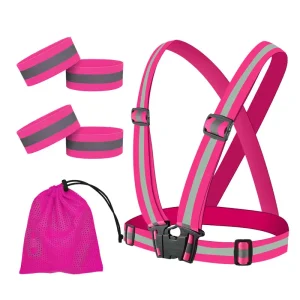
Balancing impact dynamics, forced convective airflow, and ultra-competitive unit economics at scalable B2B export volumes.
Elevated core body temperature severely impairs human situational awareness on industrial sites. When ambient dry-bulb temperatures surpass 34°C with relative humidity above 65%, standard non-ventilated hard hats act as thermal traps, accelerating cognitive degradation, syncope, and fatal fall occurrences. Integrating brushless aerodynamic fan impellers stabilizes microclimates beneath the crown suspension, maintaining neurological acuity throughout 10-to-12-hour high-altitude and underground shifts.
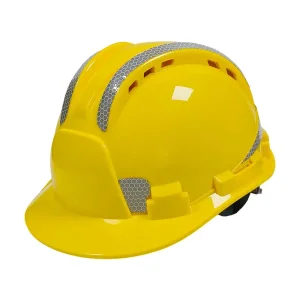
The primary engineering constraint in producing a commercial cheap safety helmet with fan helmet is introducing mechanical turbine cavities without violating the structural deflection requirements of standard drop-weight impact benchmarks (EN 397:2012+A1:2012 and ANSI/ISEA Z89.1). By utilizing proprietary finite element analysis (FEA) ribbed reinforcement rings along the sagittal crest, our factory maintains rigorous shock dissipation ratings while accommodating miniature ventilation hardware.
Commercial viability hinges upon eliminating multi-tiered distributor markups. Our direct manufacturing workflow in Beichen District, Tianjin, integrates precision thermoplastic high-tonnage injection machines, in-house motor stator winding, and automated ultrasonic sealing. This enables global EPC contractors, government infrastructure procurers, and PPE brand holders to secure unit costs 35% to 52% lower than European or North American domestic wholesale distributors.
From passive convective vents to sensor-infused micro-climate management: our five-year developmental trajectory.
Current industrial mass deployments rely upon high-efficiency 5V miniature magnetic-levitation brushless motors rated for over 35,000 continuous operating hours. By placing twin radial intake impellers along the rear rim and routing high-velocity laminar channels above the forehead brow line, thermal sweat evaporation is accelerated without directing direct airborne particulate matter into the worker's ocular field. Low vibration thresholds ensure zero acoustic interference with job-site radio communication.
Our upcoming product generation embeds flexible monocrystalline photovoltaic laminates across the crown curvature, producing an active trickle charge of 1.8W under direct solar exposure (AM 1.5 conditions). This auxiliary power circuit powers the internal blowers dynamically during peak midday sun, preserving the onboard 4,000mAh flame-retardant lithium-iron-phosphate (LiFePO4) cell for overcast environments or night shifts. LiFePO4 chemistry guarantees puncture-safe stability under high-energy mechanical crush conditions.
The convergence of industrial internet of things (IIoT) with basic PPE drives our smart helmet research. Future modular inserts incorporate non-invasive temporal pulse oximeters, ambient wet-bulb globe temperature (WBGT) transducers, and 3-axis MEMS impact accelerometers. In the event of high-g deceleration (slips, trips, or blunt-force strikes), an automated distress alert with localized ultra-wideband (UWB) spatial coordinates is immediately relayed to central command control rooms.
| Architecture Node | Propulsion & Aerodynamics | Energy Storage System | Shell Polymeric Composite | Certified Standard Matrix | Commercial Status |
|---|---|---|---|---|---|
| Generation I (Base) | Single Frontal Micro-Turbine (24 CFM) | External USB 5V Li-ion (Pack-mount) | Modified High-Impact ABS | GB 2811-2019 / CE EN 397 | Mass Production |
| Generation II (Advanced) | Dual Sagittal Blowers (38.2 CFM, 3-Speed) | Integrated LiFePO4 Puncture-Safe Cell | Virgin ABS + UV Stabilizer Matrix | ANSI Z89.1 Class C / EN 397 -30°C | Mass Production |
| Generation III (Solar Pro) | Dynamic Auto-Ramping Aerofoil | Hybrid Monocrystalline Solar + LiFePO4 | Polycarbonate / ABS Alloy Blend | EN 397 / AS/NZS 1801 / Class G | Pilot Sampling |
| Generation IV (Smart IIoT) | Dual Brushless Mag-Lev <42 dB | Solid-State Polymer Cell (Explosion-Proof) | High-Performance Carbon-Fiber Reinforced | ATEX Zone 1 / IECEx / ANSI Type II | Engineering Validation |
Targeted thermal mitigation architectures designed for severe heat, chemical exposure, and mechanical impact hazards.
Personnel constructing megawatt-scale solar arrays across the Middle East, North Africa (MENA), and the Australian Outback face ambient temperatures exceeding 48°C with zero tree canopy shade. Our solar-assisted cooling helmets provide active air velocity directly across the forehead and temples, lowering localized skin temperature by up to 6.2°C. Polymeric shells are compounded with high-potency Hindered Amine Light Stabilizers (HALS) to prevent UV embrittlement and catastrophic polymer degradation over prolonged multi-year UV exposure cycles.
Geothermal gradients in deep tunneling operations create saturated atmospheric conditions with relative humidity nearing 100%. Natural sweat evaporation ceases completely under these parameters. Our high-static-pressure centrifugal blowers generate focused convective displacement, piercing the saturated boundary layer of human skin. Internal motor assemblies can be custom-encapsulated in epoxy resin to resist sulfur dioxide, saline drainage, and high-abrasion silica dust ingress, ensuring a durable IP54/IP56 rating.
Blast furnace operators, coking technicians, and continuous casting plant personnel operate in intense radiant heat fields. For these severe environments, our factory supplies custom vacuum-metallized aluminum reflective overlays on heat-resistant fiberglass or high-deflection-temperature polycarbonate shells. Fan air intake channels are engineered with secondary ceramic spark arrestors to prevent molten spatter ingestion from contacting the micro-motor mechanics or the wearer's hair.
How vertical integration and automated manufacturing clusters in Tianjin deliver world-class economies of scale.
Situated in the Shuangjie Trusted Industrial Park, Beichen District, Tianjin, our manufacturing ecosystem sits inside northern China's premier PPE, webbing, and chemical synthesis industrial corridor. Raw high-density polyethylene (HDPE), terpolymer acrylonitrile butadiene styrene (ABS), masterbatch colorants, and electronic micro-components are sourced within an 80-kilometer logistical radius. This spatial concentration eliminates intermediate shipping overhead and protects export contracts from global upstream supply shocks.
Our workshop houses high-tonnage multi-cavity injection machines equipped with multi-axis Cartesian extraction robots. Each helmet shell cycle finishes within 42 seconds with exact dimensional repeatability. In-line ultrasonic thickness transducers evaluate critical sagittal impact zones automatically. Defective units are rejected before harness suspension installation, ensuring zero downstream batch variance across multi-container purchase orders.
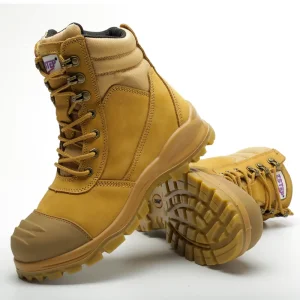
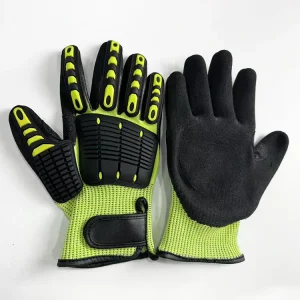
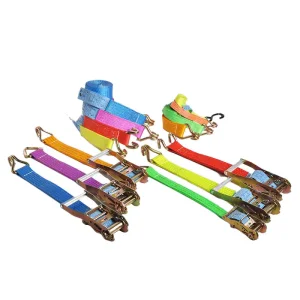
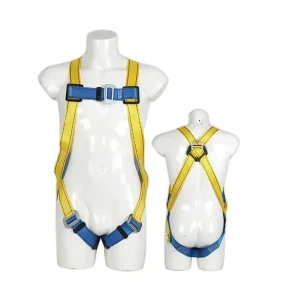
Located directly adjacent to Tianjin Port—one of the largest deepwater container hubs in North China—our facility provides streamlined multimodal sea, rail, and air logistics. International buyers can combine ventilated hard hats, full-body fall arrest harnesses, steel-toe boots, and cargo lashing systems in single 40ft High Cube (HC) containers, maximizing freight utilization factors and significantly reducing landed per-unit shipping costs.
Navigating global compliance frameworks to guarantee legal clearance and verified frontline worker protection.
Under the EU PPE Regulation (EU) 2016/425, industrial safety helmets must satisfy rigorous shock absorption tests: a 5.0 kg hemispherical steel striker dropped from 1,000 mm must transmit no more than 5.0 kN of peak dynamic force to the calibrated headform. Penetration tests using a 3.0 kg conical striker dropped from 1,000 mm must not contact the headform. Our fan-integrated shells easily surpass these baselines, retaining compliance even following extreme pre-conditioning at -30°C low-temperature and +50°C radiant-heat exposures.
North American compliance classifies helmets into Type I (top impact) and Type II (top and lateral impact). Electrical properties are governed across Class C (Conductive, no electrical protection), Class G (General, tested to 2,200V), and Class E (Electrical, tested to 20,000V). Standard fan-equipped hard hats are certified as Class C due to venting and conductive electronic circuitry. For Class G requirements, our R&D engineering team designs isolated, non-conductive dielectric battery compartments sealed with zero metallic external hardware exposure.
Deploying active electrical equipment into Zone 1 and Zone 2 petrochemical refineries or underground coal extraction requires uncompromising intrinsic safety (Ex i). Micro-motors can generate miniature commutator arcs or thermal hot-spots during rotor lockup. Our specialty hazardous-environment models utilize hermetically encapsulated brushless motors with current-limiting zener diode barriers and anti-static polyblend shells rated below 1.0 Gigaohm surface resistance to prevent electrostatic discharge (ESD) ignition.
A structured technical assessment framework for global safety directors, EPC contracting managers, and OEM private-label distributors.
| Evaluation Parameter | Typical Generic Tier-3 Resellers | ZhongQi Manufacturing Facility Benchmark | Direct Impact on Total Cost of Ownership |
|---|---|---|---|
| Virgin Polymer Purity | Recycled post-consumer ABS scrap blend (brittle) | 100% Virgin high-impact ABS / HDPE + Prime Colorants | Prevents field cracking; extends certified service lifespan from 12 to 36 months |
| Battery Safety Architecture | Uncertified 18650 Li-ion cells (thermal risk) | UN38.3, MSDS, IEC 62133 certified LiFePO4 / Li-polymer | Guarantees zero thermal runaway; eliminates international air/sea freight customs seizures |
| Suspension Webbing Matrix | Standard plastic 4-point pin-lock harness | 6-point nylon textile suspension with dial ratchet fit | Even cranial load distribution minimizes neck strain and maximizes worker compliance |
| Private-Label OEM Flexibility | Pre-printed inventory; costly mold revisions | In-house pad printing, laser etching, custom tooling | Streamlines corporate identity deployments with low minimum order quantities (MOQs) |
| Batch Quality Verification | Visual sample checks; no drop-impact towers | In-house drop striker tower, dielectric immersion baths | Absolute liability mitigation for EPC general contractors and insurance underwriters |
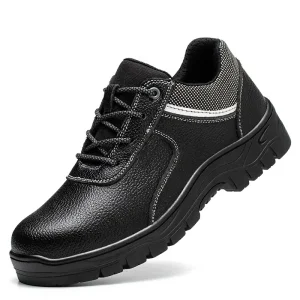
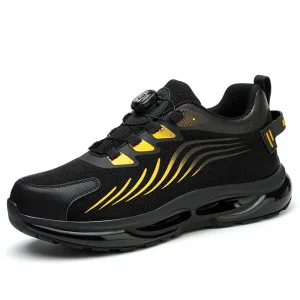
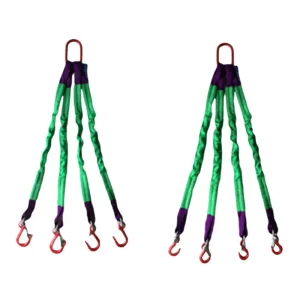
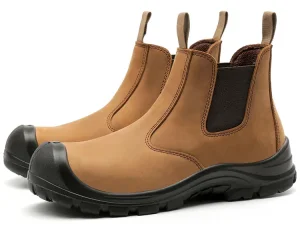
Consolidate your procurement across our certified high-altitude fall arrest, rigging, and tactical foot protection lines.
In-depth technical answers addressing regulatory compliance, mechanical performance, battery lifecycles, and export logistics.
Integrating mechanical air ducts requires strategic shell architecture. Rather than penetrating the crown apex, our molds employ reinforced outer perimeter channels. Shock absorption tests drop a 5kg guided steel striker onto the helmet crown; our internal 6-point suspension decelerates the load across the cradle while preserving a minimum 25mm clearance between the inner shell surface and the headform, easily passing the 5.0kN transmitted force threshold.
We avoid volatile uncertified cobalt-based cells. Our integrated units use custom cylindrical or prismatic Lithium Iron Phosphate (LiFePO4) or high-grade solid-gel Lithium Polymer cells that carry UN38.3, CE, and IEC 62133 certifications. During nail penetration and heavy crush testing, these cells do not exhibit thermal runaway, deflagration, or open flame, ensuring total operator skull safety in hazardous industrial environments.
On continuous High-Velocity Mode (38.2 CFM), the onboard 4,000mAh pack runs for 8.5 to 10 hours. On Economy Pulsed Mode (22 CFM), runtimes extend beyond 16 hours, covering double shifts. We offer two architectures: an internally sealed rechargeable system via IP67 magnetic water-sealed ports, and a quick-release rear-ratchet modular battery that allows field workers to swap fresh battery modules in seconds.
Yes. As a direct manufacturer, we provide turnkey OEM/ODM development. We match specific Pantone/RAL corporate color codes via computerized masterbatch mixing. Custom logos can be integrated via multi-color robotic pad printing, precision silk-screening, or permanent mold-in-graphic technology. Internal sewn-in labels, user instruction manuals, and retail packaging are fully customized to meet your local market regulatory requirements.
All circuit boards (PCBA) receive a dual-stage automated conformal nanotech coating that protects sensitive electronic tracks against oxidation, humidity, and acid-alkali mist. The motor enclosure meets IP54 dust and splash-proof baselines, with optional IP66 marine-grade upgrades. Workers can safely operate through heavy downpours, and helmets can be sanitized using standard low-pressure industrial disinfectant stations.
For standardized in-stock configurations, our baseline trial order starts at 500 units. For fully customized private-label colorways, logos, and custom packaging, our standard production MOQ is 2,000 units. Standard 40ft High Cube container orders (approximately 8,000 to 10,000 units depending on packaging configuration) finish within 25 to 30 calendar days from formal pre-production sign-off.