Full turnkey solutions produced by certified North China supply chains, integrating advanced shock absorption, high-tenacity strapping, and complete safety verification.
An in-depth metallurgical and polymer-grade analysis of China's injection molding ecosystem, economies of scale, and integrated PPE supply networks.
Leading Chinese safety helmet factories rely on high-grade Acrylonitrile Butadiene Styrene (ABS) copolymer formulations. Acrylonitrile provides thermal and chemical resistance, butadiene imparts elastomeric impact ductility even at sub-zero temperatures (-30°C), and styrene delivers high-gloss structural rigidity. Unlike budget polypropylene (PP) hard hats, ABS exhibits negligible notch sensitivity and zero micro-cracking under heavy mechanical deflection.
Tier-one manufacturers in the Tianjin-Hebei and Yangtze clusters leverage 600-to-1200-ton servo-hydraulic CNC injection machines equipped with multi-cavity hot runner systems. These robotic cells maintain strict thermal profiles (220°C–250°C melt index), entirely avoiding residual internal stress, flow line fractures, and sink marks. This ensures consistent wall thickness (2.5mm to 3.8mm) across the crown and lateral ribs.
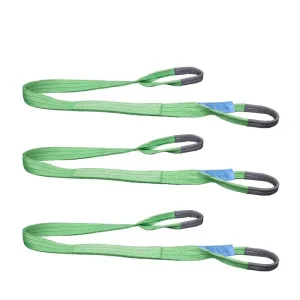
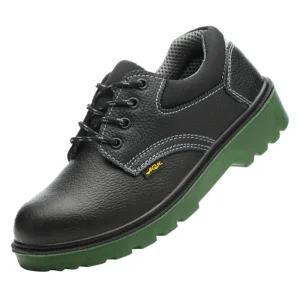
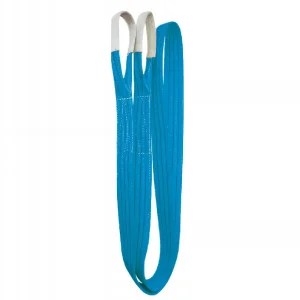
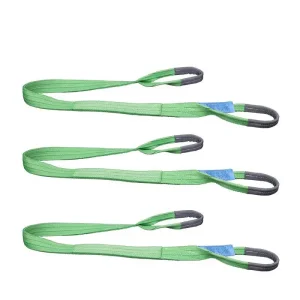
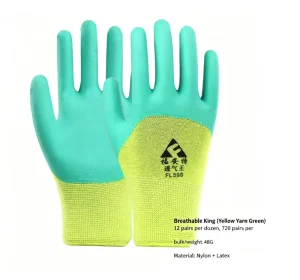
With strategic infrastructure adjacent to massive deep-water shipping hubs like Tianjin Port and Ningbo-Zhoushan, industrial helmet factories offer unmatched container consolidation. International project developers can combine full container loads (FCL) of hard hats with complementary webbing slings, safety harnesses, and cut-resistant gloves without intra-provincial trucking penalties.
Specifying the correct structural shell depends on ambient working temperatures, ultraviolet UV radiation degradation hazards, electrical conductivity risks, and lifecycle total cost of ownership (TCO).
| Performance Characteristic | High-Impact Virgin ABS | High-Density Polyethylene (HDPE) | Fiberglass Reinforced Polymer (FRP) |
|---|---|---|---|
| Impact Dissipation (EN 397) | Superior (< 3.6 kN transmitted) | Moderate (3.9 - 4.8 kN transmitted) | Exceptional (< 3.2 kN transmitted) |
| Lateral Rigidity (LD Test) | Exceptional (Minimal wall deflection) | Moderate (Subject to plastic deformation) | Rigid (Brittle fracture under extreme shock) |
| Cold Temperature Threshold | -30°C to -40°C Certified | -10°C to -20°C Threshold | -50°C Performance Stable |
| Dielectric Resistance | Class G (2,200V) & Class E (20,000V) | Class G & Class E Eligible | Class C (Conductive / Not Certified for High V) |
| Surface Finish & UV Stability | High Gloss, Scratch-Proof, UV-Stabilized | Waxy finish, prone to chalking | Textured, sensitive to high resin oxidation |
| Unit Weight vs. Comfort | Optimal (~370g - 420g with harness) | Light (~330g - 380g) | Heavy (~480g - 560g) |
Regulatory shifts and smart technology integration are transforming conventional hard hats into comprehensive micro-environment safety platforms.
Traditional EN 397 and ANSI tests focus strictly on linear crowned impacts. Future-ready Chinese factories are now engineering low-friction slip planes to deflect oblique, angular impacts, significantly mitigating traumatic brain injury (TBI) and rotational shear strain.
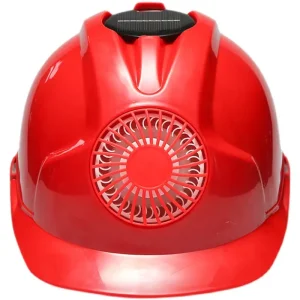
To combat heat exhaustion across Gulf and Southeast Asian infrastructure corridors, factory production lines incorporate integrated brushless micro-fans powered by hybrid monocrystalline solar panels and rechargeable lithium-ion cells with waterproof IP54 housing.
Next-generation smart ABS helmets integrate passive NFC access tokens, long-range ultra-high-frequency (UHF) RFID workforce tracking tags, and six-axis gyroscope sensors configured to automatically transmit fall-arrest alerts over industrial LoRaWAN nodes.
Modern ABS shells feature standardized 30mm Euro slots for immediate attachment of hearing protection muffs, polycarbonate face shields, flip-up welding lenses, and headlamps without drilling into or degrading the certified structural matrix.
ABS safety helmets provide targeted protection based on unique industrial risk profiles, environmental factors, and mechanical stressors.
Civil construction exposes workers to dropped hand tools, suspended crane loads, and falling rebar. Factory solutions deploy thick-walled Class C and Class G vented ABS hard hats with high-elasticity 6-point terylene textile web suspension. The internal suspension straps stretch uniformly, slowing impact deceleration and preventing skull contact.
Utility line workers operating near transformers and primary distribution lines require dielectric non-vented ABS shells certified to ANSI Z89.1 Class E. Tested against 20,000 volts of alternating electrical current with zero burn-through or flashover leakage, these designs feature zero-metal chinstraps and non-conductive nylon ratchet suspensions.
Refinery setups require exceptional chemical resistance against volatile hydrocarbon splashing and aggressive coastal saline corrosion. Premium ABS compounds enriched with fluorochemical barrier masterbatches resist swelling and stress crack corrosion, and feature chemical-resistant sweatbands and corrosion-free ratchets.
Follow these testing protocols and QA steps when qualifying OEM/ODM safety helmet manufacturers across mainland China.
Verify that the supplier's in-house laboratory possesses calibrated drop-towers equipped with piezoelectric load cells. The helmet must withstand a 5.0 kg hemispherical steel striker dropped from 1 meter, with peak force transferred to the ISO headform remaining below the strict 5.0 kN limit mandated by EN 397 (or below 4.45 kN under ANSI Z89.1).
Confirm testing with a 3.0 kg conical drop dart dropped from 1.0 meter. The tip must not pierce the shell or make contact with the headform. Furthermore, test the chin strap anchorages: under EN 397, the harness buckle must release between 150 N and 250 N to prevent worker strangulation hazards if snagged at height.
Demand test evidence of thermal and environmental pre-conditioning prior to mechanical impact testing. Shells must undergo 4 hours of heat aging at +50°C, cold immersion at -30°C, and accelerated Xenon-arc weatherometer UV exposure equivalent to 3 years of continuous outdoor ultraviolet radiation.
Detailed technical answers to common queries regarding compliance, molds, minimum orders, and shelf life.
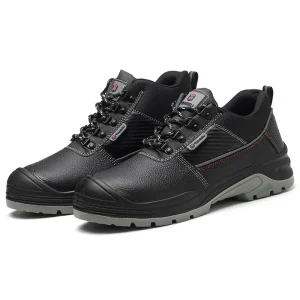
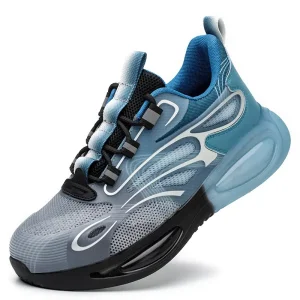
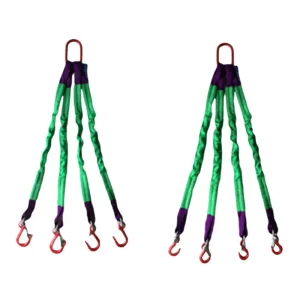
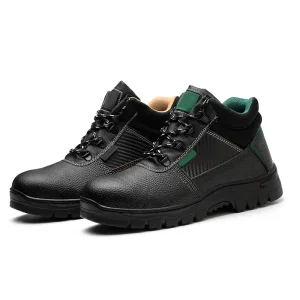
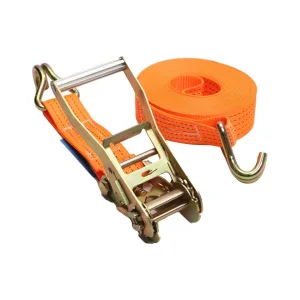
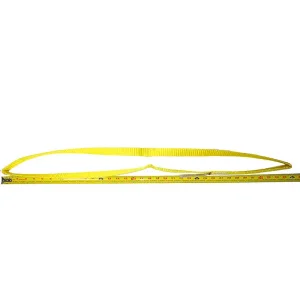
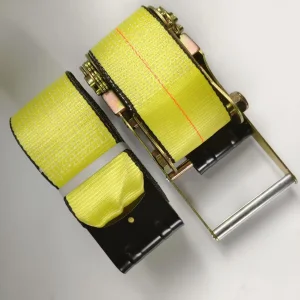
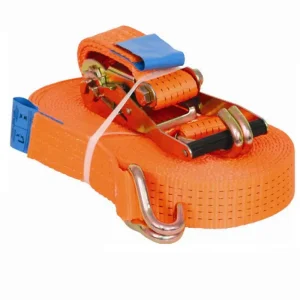
Complementary personal protective equipment, wire rope assemblies, and heavy-duty synthetic hoisting belts built for full container shipping consolidation.