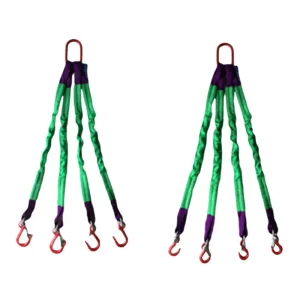
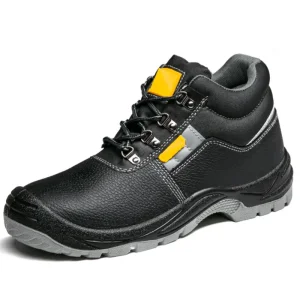
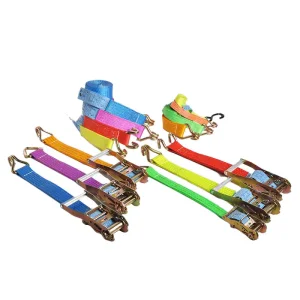
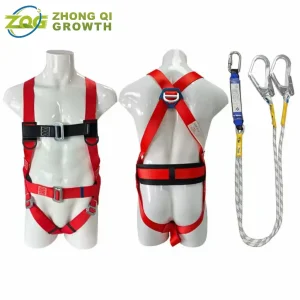
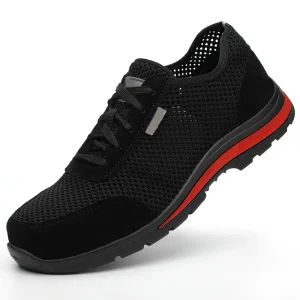
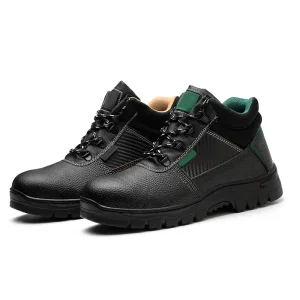
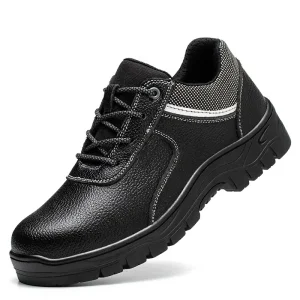
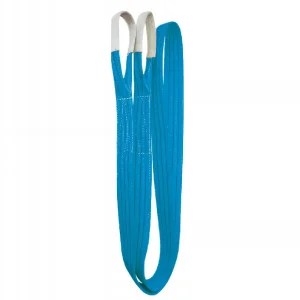
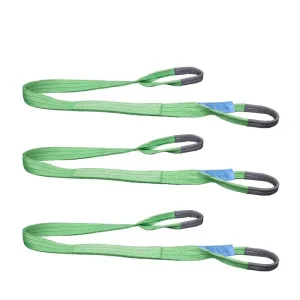
Direct factory production lines covering high-tenacity lifting slings, impact-rated safety shoes, ergonomic work gloves, and PPE components engineered under rigorous quality management systems.
Navigating structural dynamics, polymer rheology, and automated mold fabrication to overcome cycle-time degradation and residual stress in personal head protection manufacturing.
The manufacturing of reliable safety helmet injection molds demands exceptional tool steel capable of enduring high clamp forces (ranging between 650T to 1200T) and continuous injection cycling. Premium toolmakers deploy electro-slag remelted (ESR) grades such as AISI S136, DIN 1.2083, or ASSAB 718H hardened to 48–52 HRC.
These metallurgical configurations prevent parting line micro-abrasion, mitigate corrosion from flame-retardant masterbatches, and maintain high surface luster required to eliminate mechanical notch sensitivity in molded ABS and HDPE helmet shells.
To eliminate knit lines and excessive residual wall tension in safety helmet shells, high-performance injection molds utilize valve-gated hot runner systems from leaders such as Mold-Masters, Yudo, or Synventive. Sequential valve gating (SVG) controls melt-front convergence across dome apexes and ventilation channels.
Controlled gate timing minimizes weld line positioning, ensuring that the critical top-impact apex of the helmet achieves continuous isotropic molecular orientation, passing stringent international deceleration drop tests.
Cycle time accounts for the largest fraction of variable costs in industrial hard hat mass production. Traditional gun-drilled cooling channels fail to reach the deep parabolic cavity and structural reinforcement ribs of a full-brim helmet mold.
By implementing Direct Metal Laser Sintering (DMLS) 3D printed tool inserts with conformal cooling channels, coolant flow maintains uniform geometric proximity (within 2.5 mm) to the helmet shell surface, slashing cooling durations by up to 34% while preventing post-mold warpage.
Analyzing global procurement trends, supply chain nearshoring, and China’s strategic manufacturing ecosystem for safety hard hat injection molds.
The global personal protective equipment (PPE) head protection market is valued at over $3.6 Billion USD, propelled by stringent occupational safety mandates in construction, oil & gas, infrastructure, and heavy manufacturing. While localized assembly facilities are emerging in North America and Europe to counter supply interruptions, the engineering center of gravity for high-volume injection tooling remains anchored in China's industrial clusters.
Tier-1 injection mold factories in Guangdong, Zhejiang, and Tianjin integrate CNC 5-axis machining centers, sinker EDM systems, and high-speed milling lines under one roof. This geographic density enables shorter lead times (typically 35 to 55 days from CAD sign-off to T1 initial sample) compared to Western tool shops, while providing cost reductions between 40% and 60% without compromising dimensional accuracy.
Modern commercial injection facilities no longer rely on manual demolding. Modern hard hat injection molds are equipped with fully integrated three-plate or hydraulic side-action mechanisms that actuate slider cores for harness retention slots, visor mounting channels, and ear defender brackets.
Integrated pneumatic ejector pins, coupled with precision robotic end-of-arm tooling (EOAT), facilitate high-speed part retrieval within 32 to 45 seconds total cycle time. This level of automation is essential for commercial brand owners striving to meet high-volume municipal, military, and commercial procurement tenders.
The choice of polymer dictates specific mold shrinkage calculations and gate dimensioning. Industrial safety helmets utilize distinct thermoplastic resin families, each imposing unique challenges on mold tooling:
Precision parameters governing structural tooling design, runner configurations, clamping systems, and production reliability.
| Engineering Parameter | Standard Mold Specification | High-Volume Premium Specification | Strategic Advantage |
|---|---|---|---|
| Cavity Steel Material | 718H / P20+Ni (Pre-hardened 32–36 HRC) | AISI S136 ESR / DIN 1.2083 (Hardened 48–52 HRC) | Extreme corrosion resistance, mirror polish, abrasive wear endurance. |
| Mold Base Specification | LKM Standard #45 Carbon Steel | LKM / HASCO / DME Standard S50C Plate | Eliminates structural plate deflection under 1000-ton clamping force. |
| Hot Runner Architecture | Open Pin Point Single Gate Hot Tip | Multi-Drop Sequential Valve Gate (SVG) System | Precise control of weld lines, reduced injection pressure, zero flash. |
| Cooling System Design | Baffle & Spiral Deep Gun-Drill Cooling | 3D Printed DMLS Conformal Core & Cavity Channels | Decreases cooling time by 25%–35%, prevents dome warpage and ovality. |
| Ejection Mechanism | Hydraulic Knockout Pin + Air Ejection | Stripper Plate + Synchronized Nitrogen Cylinder Return | Smooth part release, avoids cosmetic push marks on exterior helmet crown. |
| Accessory Core Pulling | Mechanical Angle Pin Sliders | Hydraulic Servo Core Pullers with Limit Micro-Switches | Reliable molding of ear defender slots, lamp brackets, and inner anchors. |
| Design Verification | Basic CAD Interference Checking | Autodesk Moldflow (Fill, Pack, Warp, Cool, Fiber Orientation) | Zero-defect prototyping; prevents sink marks across thick internal ribs. |
Tailoring mold geometry, venting, and polymer selection to distinct environmental hazards across global operating theatres.
For linemen and electrical utility workers, safety helmets must meet ANSI/ISEA Z89.1 Class E (Electrical, up to 20,000V) or EN 50365. The injection mold must be engineered with zero venting apertures or through-hole perforations on the entire shell canopy.
Specialized gate locations ensure virgin non-conductive polycarbonate (PC) resin flows smoothly without micro-voids, porosity, or internal air traps that could cause dielectric breakdown during dielectric proof testing.
Subsurface excavation presents extreme risks from dropped rocks, high humidity, and acidic mine drainage. Mining hard hats require integrated mold sliders to incorporate headlamp brackets, battery cord clips, and broad rear rain gutters.
Mold steels must resist abrasive glass-filled nylon or high-impact modified ABS blends. Thick wall transitions (up to 3.8 mm at the crown) are managed with specialized packing pressure profiles to prevent cosmetic sink marks and impact-compromised internal stress points.
Urban construction environments require lightweight, well-ventilated head protection (conforming to EN 12492 mountaineering standards or EN 397 Type II climbing designs). Molds for this sector incorporate complex multi-angle slide cores that produce micro-ventilation grids with rain-diverting louvers.
Advanced tooling configurations also mold dual-component (2K) soft-touch TPE over-molds directly onto hard ABS/PC outer shells in automated rotary-platen injection molding cells.
Assuring full compliance with international occupational safety criteria through rigorous physical validation protocols.
Safety helmets destined for the European and British markets must satisfy EN 397:2012+A1:2012. Tooling geometry plays a decisive role in compliance:
• Shock Absorption: A 5.0 kg hemispherical striker dropped from 1 meter must not transmit exceeding 5.0 kN force to the standard headform. Molds incorporate parabolic crown curves that direct impact deflection toward peripheral suspension anchor points.
• Penetration Resistance: A 3.0 kg conical striker dropped from 1 meter must not make contact with the headform. Mold cavity thickness distributions maintain a minimum 2.2 mm to 3.0 mm barrier along the central ridge to guarantee puncture prevention.
For North American territories, industrial hard hats are evaluated under ANSI/ISEA Z89.1-2014 (R2019) and Canada's CSA Z94.1-15:
• Type I vs. Type II Tooling: Type I focuses on top-of-head impact. Type II demands both top and lateral impact mitigation, requiring deeper cavity clearances in the mold to integrate expanded polystyrene (EPS) or expanded polypropylene (EPP) impact liners.
• Temperature Conditioning: Helmets molded from trial batches are subjected to hot (+49°C) and cold (-30°C to -40°C) preconditioning before drop tests, verifying that mold cooling rates introduced no embrittlement or crystallization defects into the polymer matrix.
Global compliance standards require permanent, indelible markings molded into the interior shell:
Emerging innovations transforming safety helmet injection molds from passive mechanical tools to digitalized, IoT-ready production systems.
Integration of real-time piezoelectric pressure sensors and wireless temperature transponders directly inside mold cavities. Real-time feedback loops communicate with the injection molding machine, adjusting holding pressures and injection velocities dynamically to correct for minor viscosity shifts across polymer lots.
Developing mold gating and venting geometry configured for post-consumer recycled (PCR) blends and bio-based polyamides. Addressing the lower melt-flow indexing and variable thermal degradation profiles of sustainable resins without compromising impact attenuation.
Tooling capable of In-Mold Electronics (IME) integration, embedding printed circuit traces, proximity antennas, collision-detection accelerometers, and head-up display (HUD) mountings directly into the helmet shell substrate during the single-stage injection cycle.
In-depth engineering answers addressing tool steel selection, cycle optimization, mold flow simulations, and prototyping protocols.
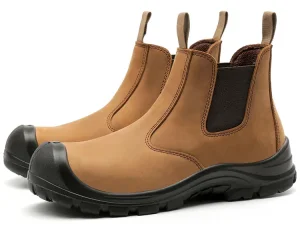
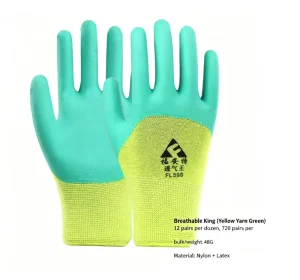
Explore our full companion range of industrial safety hardware manufactured for container consolidation and global distribution.