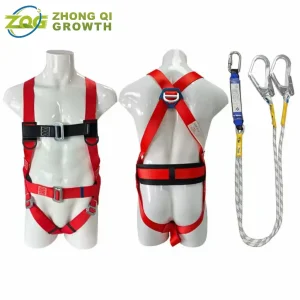
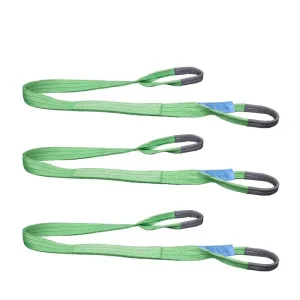
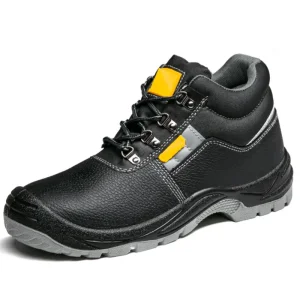
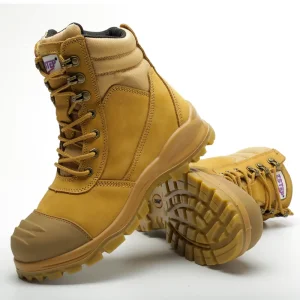
Integrate certified personal protective equipment and load securing systems manufactured with industrial rigor at our integrated Tianjin industrial facility.
A comprehensive technical investigation into how China's premier safety helmet manufacturers leverage advanced polymer synthesis and geometric reinforcement to deliver superior impact mitigation.
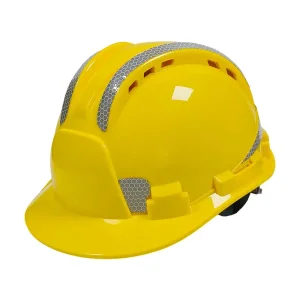
The iconic "V" crest traversing the apex of the safety helmet is not decorative; it represents an advanced kinetic load distribution mechanism. When a falling object strikes the crown, the perpendicular vertical force vector is divided into lateral oblique shear vectors.
By transforming direct localized compressive stresses into circumferential tensile elongation along the crown ridges, the V-shape prevents catastrophic central puncture and mitigates rotational brain acceleration.
China high-tier suppliers engineer shell matrices using three primary polymer bases: High-Density Polyethylene (HDPE), Acrylonitrile Butadiene Styrene (ABS), and Polycarbonate (PC). Virgin ABS blends deliver exceptional flexural rigidity and scratch resistance up to 75 MPa flexural strength.
UV-stabilizer masterbatches (Tinuvin 770 / Chimassorb 944) prevent photo-oxidative polymer chain scission under high solar UV radiation environments, maintaining yield integrity across multi-year cycles.
Impact absorption relies heavily on the deceleration distance provided by the suspension harness. Modern V-style hard hats engineered in our facilities employ 4-point and 6-point internal textile harnesses fabricated from high-tenacity woven polyester webbing.
Upon impact, the webbing straps stretch elastically and plastically, converting kinetic energy into thermodynamic heat dissipation and keeping transmitted force to the cervical spine below 5.0 kN (well under the EN 397 threshold).
International safety directors, procurement executives, and regional distributors navigate stringent regulatory audits, quality consistency challenges, and freight economics when procuring head protection systems.
A persistent dilemma for B2B procurement is the variance in recycled resin composition found in discount factories, leading to micro-fissures and compromised cold-temperature embrittlement.
Unnested industrial helmets incur massive dimensional weight shipping costs. Optimizing the nesting geometry of the outer shell is critical to reducing per-unit ocean freight charges from China ports.
Global brands require comprehensive OEM/ODM customizability—including corporate pantone color matching, pad-printed multi-color crest logos, and region-specific user manuals.
When issuing RFQs for China-origin V Stype Safety Helmet s, ensure your purchase contracts differentiate between Type I (top impact only) and Type II (lateral and top impact) testing protocols. Specifying the chin strap release tension (between 150 N and 250 N under EN 397 to avoid strangulation) is vital for industrial ground operations versus tower climbing certifications.
From deep subsurface tunneling to offshore wind turbine maintenance, different operational landscapes require purpose-engineered helmet configurations.
Equipped with rain-gutter perimeters to channel precipitation away from the worker's collar. High-visibility fluorescent pigments (EN ISO 20471 compliant) paired with micro-prismatic 3M retroreflective tape guarantee day-and-night worker detectability across busy multi-tiered job sites.
Configured with a 6-point ratchet suspension that maintains optimal center of gravity, preventing neck fatigue during 12-hour continuous shifts.
Unvented, solid-crown V-style shells molded from chemical-resistant polycarbonate alloys. Certified to Class E electrical insulation ratings, enduring 20,000 volts without dielectric puncture.
Non-sparking materials safeguard personnel against explosive atmosphere ignition in hazardous ATEX Zone 1 and Zone 2 environments containing volatile hydrocarbons.
Integrated front bracket mountings molded directly into the shell framework for secure corded or cordless LED mining lamps, alongside specialized cable routing clips.
Formulated to resist heavy abrasion and falling loose rock aggregates, tested under -30°C ultra-low thermal conditions to ensure non-brittle impact failure in subzero mine shafts.
Ensure your safety helmet imports align with the jurisdictional mandates of your target commercial territories. Our automated manufacturing strictly conforms to major international protocols.
| Standard | Jurisdiction | Impact Requirement | Penetration Test | Electrical Proof Rating | Temperature Conditioning |
|---|---|---|---|---|---|
| ANSI/ISEA Z89.1 | North America | Type I (Top) / Type II (Lateral) | 3.6 kg conical dart from 2.44 m | Class G (2,200V) / Class E (20,000V) | -18°C to +49°C |
| EN 397:2012+A1 | European Union / CE | Max 5.0 kN transmitted force | 3.0 kg conical striker from 1.0 m | 440V AC (Electrical Insulation) | -10°C / Optional -30°C to +50°C |
| AS/NZS 1801:1997 | Australia / New Zealand | Type 1 (General) / Type 2 (High Temp) | 3.0 kg pointed drop striker | Up to 650V electrical test | -10°C to +50°C |
| GB 2811-2019 | China (National Standard) | Max 4.9 kN transmitted force | 3.0 kg drop striker with steel cone | 440V to 1,200V Class options | -10°C / -30°C to +50°C |
| CSA Z94.1-15 | Canada | Class E / Class G / Class C | Drop mass test at -30°C | 20,000V dielectric breakdown | -30°C low-temp certification |
Our Tianjin manufacturing center operates under audited ISO 9001:2015 Quality Management Systems and ISO 14001 Environmental Standards. Factory inspection facilities include calibrated Instron universal testing frames, climatic conditioning chambers, AC/DC high-potential dielectric test rigs, and optical spectrophotometers for high-visibility color consistency verification.
Investigating the next decade of cranial protective innovation across China's leading research and development laboratories.
Traditional safety helmets were engineered exclusively to absorb linear impact. Modern neurotrauma research highlights that oblique impacts induce brain rotation, a leading cause of severe concussions and diffuse axonal injury.
Our engineering pipeline is integrating low-friction internal slip layers (similar to MIPS technology) directly within V-style harnesses, allowing 10-15 mm of relative motion between shell and head during the critical initial milliseconds of impact.
The convergence of safety hardware and telematics is manifesting in intelligent V-style platforms. Compact, intrinsically safe micro-sensors embedded into the crown monitor wet-bulb globe temperature (WBGT), worker heat stress, and hazardous toxic gas ppm thresholds (H₂S, CO).
Integrated Bluetooth Low Energy (BLE) transceivers support man-down alerts and instant automated evacuation sirens directly across site Wi-Fi networks.
Achieving Scope 3 decarbonization without sacrificing tensile drop-impact ratings is our primary sustainability mission. We are compounding post-consumer industrial polypropylene with graphenic nano-platelets (GnP).
The addition of 0.5% graphene increases flexural modulus by 28% and enhances impact fracture energy, enabling 100% recycled resin shells to comfortably satisfy ANSI Type I drop tests.
Comprehensive engineering, regulatory, and logistics answers for global corporate buyers, safety distributors, and procurement teams.
HDPE (High-Density Polyethylene) provides exceptional all-around impact resistance, chemical inertness, and superior cost efficiency, making it the dominant choice for mass-distribution construction projects. ABS (Acrylonitrile Butadiene Styrene) delivers enhanced surface hardness, superior scratch resistance, higher heat deflection temperatures, and better paint/print adhesion for high-end corporate identity requirements.
The prominent V-shaped ridge structurally stiffens the dome along its longitudinal center of gravity. Rather than allowing a perpendicular drop mass to concentrate kinetic stress on a localized crown contact patch, the triangular ridge apex vectors the kinetic energy downward along the perimeter flanks, transferring dissipated energy evenly into the suspension anchors.
Under standard warehouse storage conditions (shielded from direct UV radiation and temperatures between 15°C and 25°C), unissued helmets hold a shelf life of up to 5 years from the injection mold date stamped on the brim. In active service, industrial health and safety authorities recommend replacing the outer shell every 2 to 5 years depending on UV exposure, and replacing internal webbing suspensions annually.
Yes. We operate multi-axis computerized pad printing and silk-screening presses capable of reproducing multi-color corporate brand logos up to 4 colors on the front, sides, or rear of the helmet. Shell colors can be precisely matched to any standard Pantone or RAL specification using custom pre-compounded masterbatch resins for orders exceeding our standard MOQ.
All our V-style safety helmets are engineered with standardized universal 30mm accessory slots positioned symmetrically on both lateral flanks. This enables seamless click-in mounting of international brands of industrial earmuffs, forestry wire mesh visors, clear polycarbonate anti-fog splash shields, and welding hoods without modifying the helmet structure.
Each container shipment includes comprehensive quality assurance dossiers: Notified Body CE Examination Certificates (Module B), Certificate of Conformity (DoC), EN 397 and ANSI Z89.1 accredited laboratory test reports, Certificate of Origin (CO/Form E/EUR.1), detailed packing lists with cubic measurement breakdowns, and custom multilingual user instruction manuals.
Consolidate your safety equipment orders across our comprehensive production lines for streamlined logistics and volume discounts.
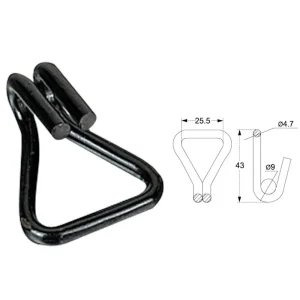
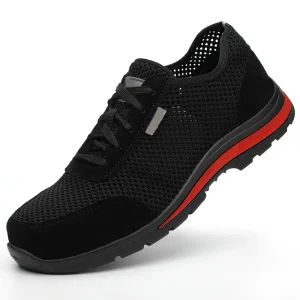
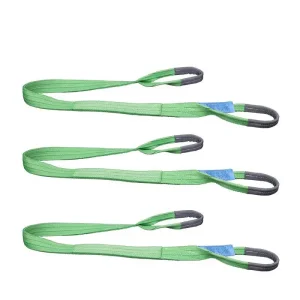
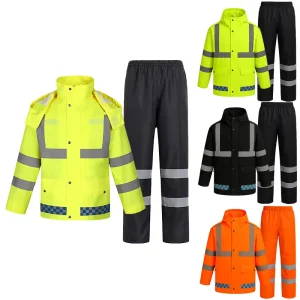
Our engineering team based in Shuangjie Trusted Industrial Park, Beichen District, Tianjin, delivers rapid quote turnarounds, custom mold evaluations, and comprehensive certification test reports within 24 hours.
