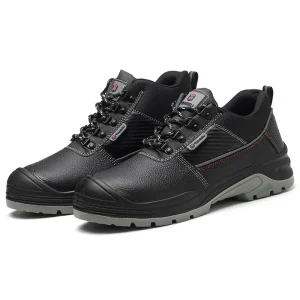
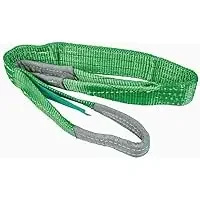
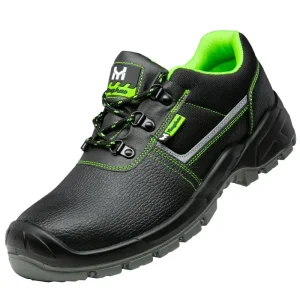
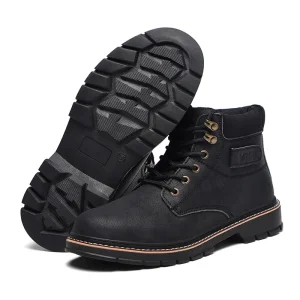
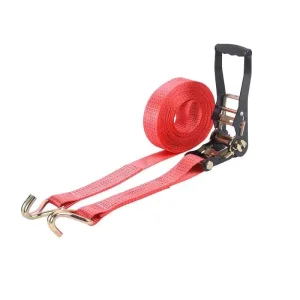
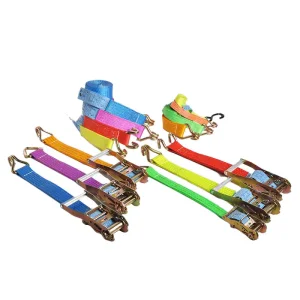
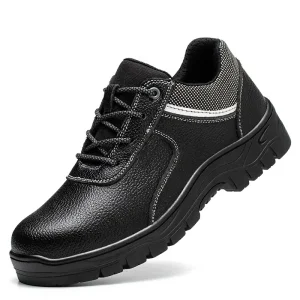
Combining heavy-duty polyester lashing, certified height protection gear, and specialized protective footwear manufactured to exacting international standards.
Why modern project owners, EPC contractors, and global PPE distributors are transitioning from legacy rigid industrial hard hats to advanced, ultra-lightweight multi-standard safety helmets.
Traditional industrial hard hats were engineered under historic standards primarily to dissipate vertical crown impacts from dropped tools. However, modern construction, renewable infrastructure, and offshore wind turbines demand multi-directional energy mitigation.
Our custom light safety helmet designs incorporate lateral, frontal, and occipital deceleration systems that align with both ANSI/ISEA Z89.1 Type II and EN 12492 requirements, dramatically decreasing severe rotational acceleration injuries without adding bulk.
Occupational hyperthermia and cervical spine fatigue account for a significant percentage of helmet non-compliance on equatorial and high-heat job sites. Standard ABS helmets create microclimatic heat entrapment exceeding 42°C inside the crown shell.
ZhongQi engineers employ computational fluid dynamic (CFD) modeling to formulate optimized ventilation apertures with integrated sliding shutters or mesh dampers, facilitating continuous convective chimney-effect heat exhaust without compromising structural rigidity.
Global distributors increasingly seek primary factories capable of unifying certified head protection, height safety harnesses (CE EN 361), and load securing tie-downs under single-container consolidations, cutting cross-docking costs by up to 28%.
By leveraging Tianjin ZhongQi’s adjacent proximity to North China’s maritime hub, tier-1 industrial clients benefit from compressed transit cycles, standardized QA documentation, and unified private-label packaging solutions across their entire fall-protection inventory.
How our custom-manufactured safety helmets adapt across diverse industrial micro-environments, from high-altitude turbine maintenance to extreme petrochemical enclosures.
Working at height requires an unobstructed upward line of sight, minimal wind drag, and absolute helmet retention during sudden gusts or arrested falls. Our low-profile brimless designs eliminate visual blind spots when looking up lattice towers.
Lineworkers operating around high-voltage transmission lines require uncompromised electrical insulation combined with lightweight comfort during 10-hour elevated bucket operations.
In high-density automated distribution centers and modular scaffolding assembly, rapid head turns in confined structural corridors cause frequent minor bumps and high ergonomic strain.
Selecting the optimal polymer resin blend and shock absorption liner configuration based on specific mechanical, chemical, and operational requirements.
| Polymer Composite | Specific Gravity | Tensile Yield (MPa) | Impact Strength (kJ/m²) | UV & Thermal Resistance | Primary Industrial Use-Case | Procurement Profile |
|---|---|---|---|---|---|---|
| Virgin ABS (Acrylonitrile Butadiene Styrene) | 1.04 - 1.07 | 42 - 50 | 18 - 25 | Medium (Requires UV stabilizer additives) | General civil construction, municipal engineering, scaffolding | High Cost-Efficiency |
| High-Density Polyethylene (HDPE) | 0.94 - 0.96 | 22 - 31 | 12 - 20 | Good chemical, acid & alkali resistance | Chemical refineries, wet mining, agricultural spraying | Chemical Resilient |
| Polycarbonate / PBT Alloy | 1.20 - 1.25 | 60 - 75 | 35 - 50 | Exceptional (-40°C to +150°C deflection) | Foundries, electrical utilities, petrochemical offshore | Heavy Industrial Tier |
| Carbon Fiber / Epoxy Matrix | 1.45 - 1.55 | 500 - 800 | 60 - 90 | Inert, ultra-high rigidity | Executive inspection, specialized rope access, search & rescue | Premium Ultra-Light |
Traditional hard hats rely purely on strap deflection clearance. Modern light safety helmets integrate high-density Expanded Polystyrene (EPS) or Expanded Polypropylene (EPP) multi-density crash cores that crush progressively during an impact event, absorbing kinetic energy at the cellular level and preventing shock transfer to the cervical vertebrae.
Our Tianjin mold engineering facility operates high-precision multi-cavity hot-runner tooling capable of manufacturing interchangeable visor clips, earmuff bayonet adapters, and customized headlamp brackets natively into the shell architecture without structural weak spots or post-drilling.
The 2026-2030 technology roadmap embraces smart PPE: custom internal crown cavities designed to house ultra-light BLE beacon tracking tags, lone-worker fall-detection accelerometers, and integrated heads-up display brackets for paperless facility inspection workflows.
Tianjin ZhongQi Growth Technology Co., Ltd. sits at the heart of North China’s PPE and industrial webbing manufacturing cluster, offering unprecedented logistical and engineering agility.
Located in Shuangjie Trusted Industrial Park, Beichen District, our manufacturing campus is under 50km from Tianjin Port. This short drayage minimizes domestic transit friction, guarantees priority container positioning, and allows quick ocean transits to North American, European, and Middle Eastern hub ports.
Unlike assembly-only shops, our vertical infrastructure manufactures high-tenacity polyester industrial yarn, precision narrow woven webbing, stamping metal buckles, and injection molded plastics under a single roof. This internal resilience eliminates tier-2 subcontractor delays and cost escalations.
Every custom production run undergoes destructive drop-tower impact tests, cold-temperature conditioning, dynamic strap retention tensile load tests, and optical visor clarity verifications. We furnish comprehensive batch test certificates (CoAs) alongside commercial shipping documents.
Over 60% of our internal staff are dedicated to R&D and technical design. We offer customized pantone shell matching, multi-color pad printing for corporate logos, customized retail box packaging, and fast CNC mockups in as little as 5 business days for client approval.
Essential testing protocols and performance limits required when importing custom light safety helmets across major international commercial zones.
| Standard Code | Geographic Authority | Impact Test Energy & Drop Height | Penetration Test Rigor | Chin Strap Release Force | Mandatory Ancillary Tests |
|---|---|---|---|---|---|
| EN 397:2012+A1:2012 | European Union / CE Mark | 5.0 kg striker from 1.0 m (≤5.0 kN transmitted force) | 3.0 kg conical striker from 1.0 m (No shell puncture) | Must release between 150 N and 250 N (prevents strangulation) | Flame resistance, low temp (-10°C / -30°C), 440V electrical insulation |
| EN 12492:2012 | Mountaineering / Height Safety | 5.0 kg striker from 2.0 m (Crown) + lateral / front / rear drops | 3.0 kg striker from 1.0 m point impact | Must NOT release below 500 N (prevents loss during falls) | Retention system effectiveness, multi-angle oblique impact |
| ANSI/ISEA Z89.1-2014 | North America (OSHA Compliant) | Type I (Top impact) or Type II (Top, front, back, side attenuation) | 1.0 kg plumb-bob dart dropped from specific velocity | Class C (Conductive), Class G (2.2kV), Class E (20kV electrical) | High visibility flourescence, reverse wearing orientation capability |
| AS/NZS 1801:1997 | Australia / New Zealand | Type 1 (Industrial), Type 2 (Mining/High heat), Type 3 (Forestry) | Drop conical striker ≤3.0 kg with optical sensor verification | Adjustable retention with secure neck nape cradle lock | High radiant heat exposure (50°C) and electrical hazard screening |
Full-spectrum OEM/ODM solutions: factory-direct fall protection harnesses, anti-slip work footwear, heavy ratchet lashing belts, and certified industrial safety helmets.
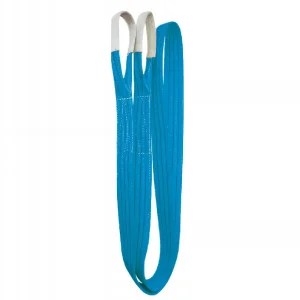
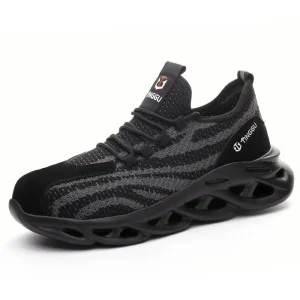
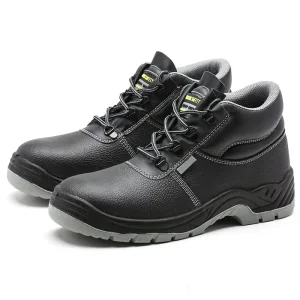
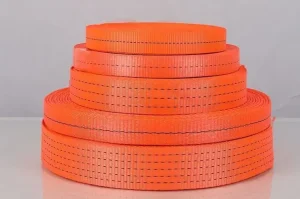
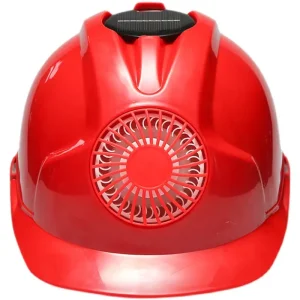
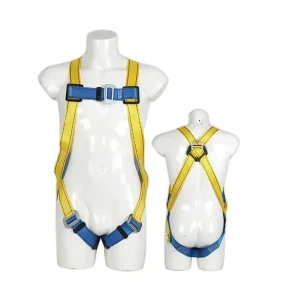
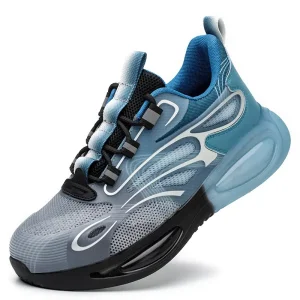
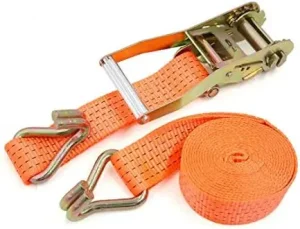
In-depth responses covering engineering tolerances, minimum order quantities (MOQ), mold modifications, and multi-product container loading.
For fully bespoke shell designs or specialized ventilation geometries, 3D CAD modeling and mold flow simulations require 3 to 5 business days. Rapid SLA/CNC functional prototypes take approximately 7 days. Hardened steel multi-cavity injection molds typically complete within 30 to 40 calendar days, followed immediately by T1 sampling for impact drop and dielectric compliance screening.
Yes. We engineer a dual-mode switchable chin strap buckle mechanism. In ground industrial mode (EN 397), the release mechanism triggers between 150 N and 250 N to prevent accidental strangulation if caught in machinery. In working-at-height mode (EN 12492), the buckle locks to exceed 500 N retention force, keeping the helmet securely anchored during a fall event.
All our virgin polymer masterbatches (ABS, HDPE, PC) are dosed with high-grade hindered amine light stabilizers (HALS) and UV-absorber packages. This formulation shields polymer chains from photodegradation, retaining over 85% of baseline tensile yield and notched Izod impact resistance even after 3,000 hours of continuous xenon arc weathering testing.
Absolutely. As an integrated manufacturer of both technical webbing and injection-molded PPE, we routinely consolidate mixed consignments. A single 40ft High Cube container can efficiently nest safety helmets, fall-arrest harnesses, ratchets, and safety shoes, lowering average freight cost per unit and significantly minimizing warehouse receiving administrative overhead.
We support 4-color high-definition pad printing, durable heat-transfer wraps, laser-etched permanent serial numbering for asset tracking, embossed internal crown logos, custom pantone suspension strap dyes, and bespoke four-color retail packaging complete with localized language user instruction manuals conforming strictly to EU PPE Regulation 2016/425.
Every helmet is stamped with an indelible date dial indicating the year and month of injection molding, alongside an internal thermal-transfer barcode linking directly to raw polymer lot certificates, colorant blend batches, and the shift inspection logs. We maintain archival retention samples for 5 years to support third-party safety audits and quality verifications.
