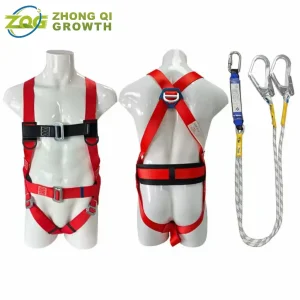
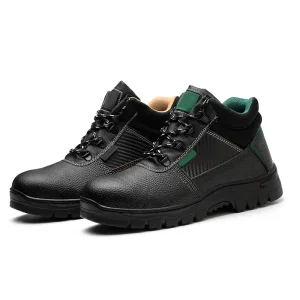
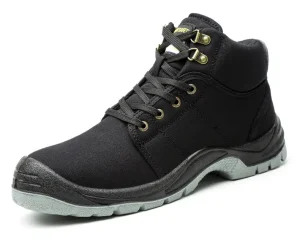
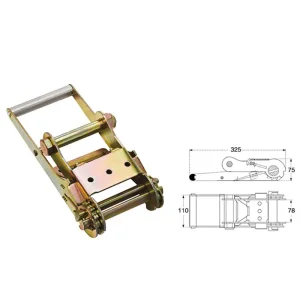
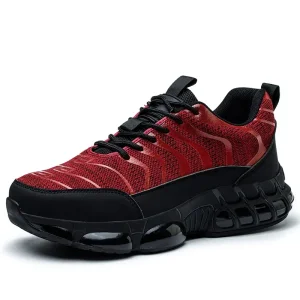
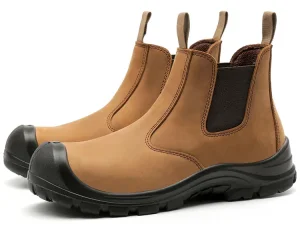
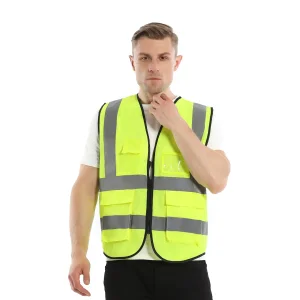
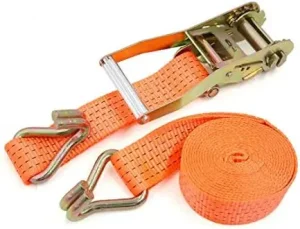
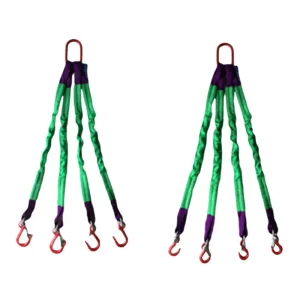
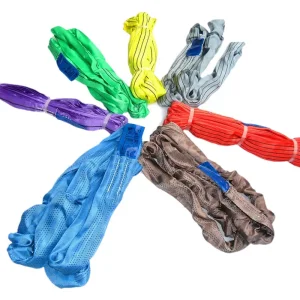
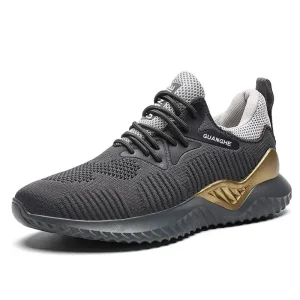
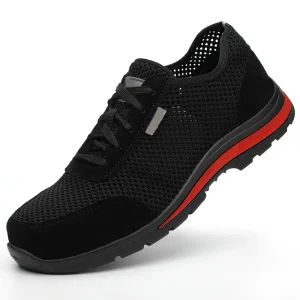
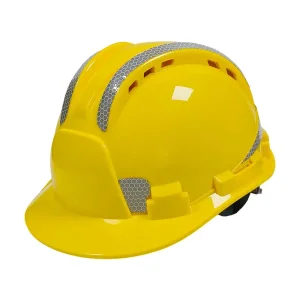
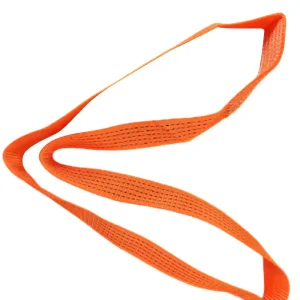
Procure certified fall-arrest hardware, anti-puncture tactical safety footwear, and heavy-duty load securing mechanisms tested to global compliance benchmarks.
How progressive EPC contractors, mega-utility builders, and mining conglomerates are overturning obsolete unisex personal protective equipment archetypes.
Over the last decade, female workforce representation across civil construction, electrical infrastructure, aerospace manufacturing, and petrochemical engineering expanded from 8.4% to over 15.8% worldwide. Traditional procurement protocols historically forced female field personnel into male-proportioned Type I helmets, causing chronic neck fatigue, slippage during downward tilt, and compromised center-of-gravity stabilization.
Surface-level rebranding—simply applying pink masterbatch to standard male helmet molds—fails the core tenet of industrial safety science. Female cranial morphologies exhibit distinct statistical variance in bi-parietal diameter, sub-occipital projection, and head circumference (clustering between 51 cm and 56 cm, compared to male distributions of 54 cm to 61 cm). OEM manufacturing requires proprietary shells designed from 3D anthropometric scans.
Regulatory authorities including the United States OSHA (under recent standard revisions emphasizing PPE fit and sizing), the European Safety Agency (EN 397/EN 12492 guidelines), and Australia's Safe Work directives are actively prioritizing employer accountability regarding proper protective gear adaptation. Ill-fitting hard hats void compliance during occupational health safety audits and dramatically escalate traumatic brain injury (TBI) metrics.
Deconstructing the internal mechanics: how advanced thermo-resin matrixes and localized suspension components deliver extreme impact resistance.
Our dedicated extrusion lines balance high-molecular-weight virgin Acrylonitrile Butadiene Styrene (ABS) with modified impact-grade Polycarbonate (PC). This yields maximum fracture toughness down to -30°C alongside high lateral rigidity (LD compliance) while avoiding brittle-point failure modes under continuous high-UV exposure.
Traditional hard hats protect strictly against direct vertical blunt trauma. By engineering low-friction multi-point cradle suspension inserts, angular impacts and lateral shearing vectors are redirected through rotational slip planes, mitigating tangential shock transmissions to the cervical spine by over 38%.
Utilizing high-speed computational fluid dynamics (CFD), shell vent channels are arranged along the sagittal suture zone. Hot air escapes upward via chimney convection without compromising vertical penetration barriers, keeping the wearer cool in extreme outdoor and underground environments.
Standard hard hats ride forward or upward if long hair or bun/ponytail configurations interfere with the retention wheel. Our patented shell mold features an elevated occipital arch matched with an ultra-low ratchet carriage, ensuring zero cranial dislodgement even in wind or inversion hazards.
Engineered for mission-critical operations where equipment stability, high visibility, and certified impact mitigation are mandatory.
High-rise staging, structural steel erection, and heavy rigging expose personnel to dropped tools and structural lateral strikes. The helmet's lightweight profile reduces cervical stress during 12-hour shifts while the high-visibility fluorescent pink compound maximizes sightlines in dense construction zones.
Engineered to cross-conform with mountaineering and industrial standard EN 12492 / EN 397, these models feature dual-retention 4-point chin straps rated above 50 daN, securing the assembly during turbulent offshore gusts or ladder ascents inside turbine nacelles.
Explosive atmosphere zones require Class E / Class G dielectric electrical isolation (rated to withstand 20,000 Volts). Zero metallic hardware in the external shell prevents arcing, while custom anti-static surface treatments eliminate spark ignition risks in combustible chemical and fuel handling plants.
Automated material distribution hubs and microchip fabrication plants require lightweight bump and lateral-strike helmets. Specialized anti-linting suspension straps prevent particulate contamination, offering complete day-long comfort for process engineers and automated system operators.
Full batch trace testing validated in CNAS-accredited laboratory facilities according to major trans-national occupational health benchmarks.
| Evaluation Parameter | ANSI/ISEA Z89.1-2014 (USA) | EN 397:2012+A1:2012 (EU) | AS/NZS 1801:1997 (Oceania) | ZhongQi Precision Custom Specs |
|---|---|---|---|---|
| Vertical Impact Force Dissipation | Transmitted force < 4,450 N (3.6 kg drop from 1.52m) | Transmitted force < 5.0 kN (5.0 kg drop from 1.0m) | Transmitted force < 5.0 kN (direct drop impact) | < 3.65 kN (Exceeds ANSI/EN) |
| Lateral Deformation (LD) | Optional / Not standardly mandated | Mandatory lateral load testing (max 40mm) | Type 1 / Type 2 structural compression test | Tested to 430 N lateral crush; < 28mm def. |
| Low-Temperature Resilience | Tested at -18°C (Cold Option to -30°C) | -10°C (Special testing available at -30°C) | -10°C pre-conditioning check | Certified dynamic resilience at -30°C |
| Electrical Insulation Rating | Class E (20,000 V) / Class G (2,200 V) | 440 VAC short-circuit exposure | Tested to dielectric breakdown limits | Dielectric rating tested up to 20,000 V |
| Suspension Attachment | 4 or 6-point harness configuration | Vertical clearance > 25mm to inner shell | Low-nape harness attachment | Patented 6-point low-nape female contour cradle |
| UV Degradation Resistance | Accelerated xenon-arc weathering | Tensile retainment post UV-radiation | Australian solar exposure pre-conditioning | High-purity UV stabilizer additives (Grade 5) |
Comprehensive direct-from-factory volume manufacturing designed for international PPE distributors, national retail chains, and multinational contracting enterprises.
We eliminate batch-to-batch color drift through computerized spectrophotometry. Whether sourcing high-visibility fluorescent pink (Pantone 806 C), industrial salmon, or corporate rose tones (RAL 4003 / 4010), our automated compounding facility ensures exact color uniformity across millions of units.
Display your brand with clarity. Utilizing 5-color precision pad printing and robotic laser engraving, we cleanly print client logos, safety messaging, QR compliance tags, and high-visibility retro-reflective prismatic decals directly onto the curved helmet contours.
Our engineering division operates high-speed CNC milling and SLA 3D printing equipment to produce functional prototypes within 72 hours. We build custom multi-cavity injection molds with beryllium copper cooling pins to ensure fast cycle times and lower per-unit costs.
Situated within the industrial manufacturing zone of Beichen, Tianjin, our factory is minutes from Tianjin Port—North China's premier maritime export hub. Consolidate safety helmets, fall-arrest harnesses, lifting slings, and safety footwear into combined full-container loads (FCL).
Our long-term R&D trajectory integrates connected digital safety features directly into lightweight head protection systems.
Complete deployment of 51-56 cm dedicated micro-contour shells, ultra-lightweight ABS-PC matrix formulations, and integrated ponytail retention carriages with quick-release dial ratchets.
Integration of low-frequency NFC chips into the shell brim to store worker certifications, blood type, and emergency contacts, readable via standard field mobile devices without power.
Internal sweatband micro-sensors monitoring core skin temperature and ambient humidity, alerting workers and supervisors via Bluetooth Low Energy (BLE) to prevent heat exhaustion.
Zero-fossil-fuel bio-polymers delivering identical ANSI impact properties, combined with snap-on photochromic arc-flash visors and bone-conduction communication headsets.
Authoritative technical answers to questions commonly raised by safety managers, procurement directors, and import compliance officers.
Unisex hard hats are engineered around 50th-percentile male cranial anthropometry (54-61 cm circumferences). When adjusted down, their internal clearance distance, center of mass, and lateral balance shift. This forces female workers to over-tighten the ratchet, causing forehead pressure points, headaches, and slippage. Our dedicated molds recalibrate the shell profile, lateral width, and occipital cradle to fit 51-56 cm head sizes securely without excessive pressure.
Yes. Every batch meets or exceeds ANSI/ISEA Z89.1 (Type I, Class C, G, or E), European EN 397:2012+A1:2012 (including optional Lateral Deformation and -30°C low-temperature testing), and Australian AS/NZS 1801. Third-party testing documentation, CE certificates, and batch test sheets are supplied with commercial shipments.
No. We formulate our shells with Grade-5 UV stabilizers and automotive-grade optical masterbatch pigments. Samples are tested via 2,000-hour accelerated xenon-arc UV exposure tests, verifying that mechanical impact properties and color tone remain within strict tolerances under harsh outdoor conditions.
We provide full customization: custom Pantone/RAL color compounding (from bright pink to soft corporate rose tones), multi-color pad printing for company logos, laser-engraved serial/asset numbers, reflective striping, customized sweatband materials, and bespoke branded retail packaging for regional distributors.
Our internal suspension features a lower nape cradle with an ergonomic central opening. This lets the worker position a ponytail, braid, or hair bun above or below the dial ratchet without skewing the helmet forward or breaking the protective harness seal around the skull.
Standard color models carry an MOQ of 500 units. For fully customized Pantone colors and custom-branded shell prints, our baseline MOQ is 1,000 units. Standard production runs complete in 15 to 25 business days, with rapid dispatch through Tianjin Port for direct global shipping.
Complete your supply container with our factory-direct safety apparel, high-tonnage lifting slings, steel wire cables, and head protection systems.