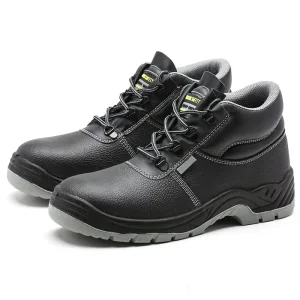
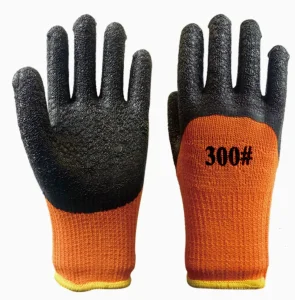
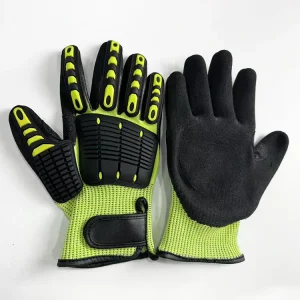
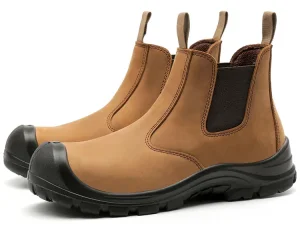
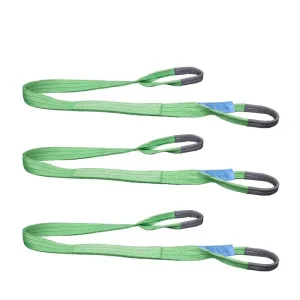
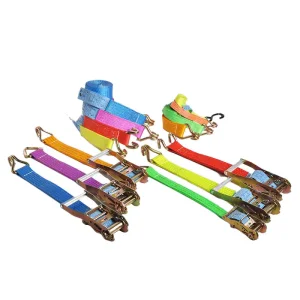
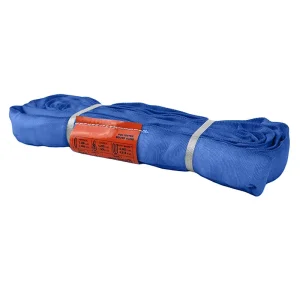
Explore high-performance PPE, ergonomic footwear, and industrial slings manufactured in high-capacity cleanroom tooling facilities.
In modern high-risk manufacturing, civil infrastructure, chemical processing, and mining industries, cranial protection forms the primary defense against kinetic falling mass, electrical discharges, and corrosive exposures. While standard ABS and HDPE helmets remain prevalent, modified poly-compound and custom PVC-alloy safety helmets have emerged as pivotal solutions due to their molecular flame retardancy, exceptional acid-alkali inertness, and structural durability.
Unplasticized and impact-modified polyvinyl chloride alloys prevent degradation from caustic splashes, inorganic acids, and hydrocarbon mists that quickly embrittle ordinary polyolefins, guaranteeing shell tensile performance in severe refining plants.
Engineered without conductive inclusions, custom formulations deliver continuous electrical resistance tested up to 440V alternating current (EN 397 optional qualification) and Class E/G thresholds under ANSI/ISEA Z89.1 protocols.
Thermally stabilized compound profiles withstand extended ultraviolet photo-oxidation without premature chalking, minimizing replacement cadences for international contractors operating across equatorial solar zones.
A rigorous quantitative benchmark comparing custom injection-grade PVC alloys with legacy PPE thermoplastic matrices.
| Performance Metric | Modified PVC Composite Shell | High-Density Polyethylene (HDPE) | Acrylonitrile Butadiene Styrene (ABS) |
|---|---|---|---|
| Acid & Alkali Chemical Inertness | Exceptional (pH 1 - 14 resistant) | Moderate (Swelling under hydrocarbons) | Poor (Susceptible to ketones & esters) |
| Flame Retardancy & Self-Extinguishing | UL94 V-0 Certified (Halogen intrinsic) | UL94 HB (Readily combustible) | UL94 HB to V-2 (Requires additives) |
| Impact Dissipation (EN 397: 5.0kN) | Achieves < 3.8kN residual force | Achieves < 4.2kN residual force | Achieves < 3.5kN residual force |
| Dielectric Breakdown Resistance | > 20,000 Volts (Class E Rating) | > 20,000 Volts (Standard Class E) | > 20,000 Volts (Class E) |
| UV Degradation Half-Life | 4,000+ Accelerated Sun Hours | ~1,800 Sun Hours (Standard masterbatch) | ~2,500 Sun Hours |
Supplying multinational mega-projects demands seamless navigation of contradictory regional standards. Our engineering team ensures full traceability from polymer feedstock verification to end-user batch lot labeling.
Conformity assessment covered under Module B/D EU Type Examination certifications. Verified for vertical shock absorption, lateral deformation (LD), low-temperature endurance down to -30°C, and electrical insulation under 1000V AC.
Certified configurations for Type I (top impact) and Type II (lateral off-center impact) hazards. Engineered specifically to comply with Class E (Electrical, tested up to 20,000V) without sacrificial dielectric coatings.
Complete documentation packages tailored for localized clearing: AS/NZS 1801 compliance documentation, GB 2811-2019 Chinese verification, and NOM-115-STPS Mexican technical validation, ensuring prompt border entry.
Where failure is not an option: Custom PVC safety helmets are engineered to perform under severe industrial stress factors.
High infrared radiance and accidental liquid metal spatters roll off treated polymer compounds without burning through, maintaining wearer security adjacent to ladle operations.
Combats saline mist induced stress-cracking. Integrated 4-point and 6-point terry-cloth suspensions ensure steady retention amid gale force offshore platform gusts.
High-profile ribs resist vertical roof rockfall while molded universal slots carry intrinsically safe explosion-proof lamps and acoustic attenuation visors.
Low outgassing specialized compounding avoids silicon wafer micro-contamination during advanced structural fabrication expansions and tooling installs.
How our factory integrates sensor telemetry, IoT connectivity, and green resin compounding into tomorrow's enterprise cranial protection ecosystems.
Embedding passive encapsulated transponders within the shell rim during the injection cycle. Provides tamper-proof digital verification of service life, assignment history, and instant access to technical inspection records on construction perimeters via mobile app scans.
Developing computational fluid dynamics (CFD) optimized ventilation manifolds that channel interior convective air currents while maintaining rigorous EN 397 penetration protection against dropped chisel projectiles.
Executing pilot tests with bio-attributed vinyl monomers sourced from forestry waste residues. Yields identical structural impact strength and dielectric resistance while lowering factory carbon equivalent emissions by 42% per produced shell.
Direct technical answers addressing OEM branding, tooling lead times, and global testing regimens.
Under normal operating parameters and regular storage away from direct solar radiation when not in use, premium UV-stabilized PVC safety shells boast an engineered service lifespan of up to 5 years from issuance date, or up to 7 years from manufacturing timestamp. In cases of significant mechanical impact or contact with concentrated solvent baths, immediate retirement is mandated regardless of elapsed age.
Yes. We specialize in custom precision molds including client-specific geometric cresting, internal shell embossing, bespoke slot orientations, and corporate logo integration via multi-color thermal transfer or pad-printing. Mold manufacturing typically runs 25-35 days from CAD signoff, followed immediately by initial prototype sample delivery for physical drop-weight validation.
Our helmets can be configured with either high-density LDPE 4-point harnesses or comfortable, impact-absorbing 6-point woven polyester webbing cradles. Retention is maintained using either smooth pin-lock adjusters or micro-ratchet dials accommodating head circumferences from 53 cm to 64 cm. Systems feature moisture-wicking anti-microbial sweatbands and removable chin-strap assemblies.
In line with ISO 9001 and CE Module D factory audit standards, each production batch undergoes destructive testing on calibrated drop towers inside our in-house testing laboratory. This includes 5.0 kg hemispherical strikers dropped at 1 meter height after thermal conditioning at +50°C and -20°C, verifying transmitted force remains below the regulatory 5.0 kN threshold, alongside penetration and electrical insulation assays.
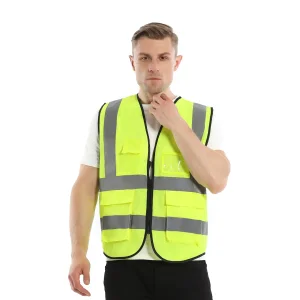
Coordinate container shipments by combining safety headgear with compatible high-visibility vests, safety footwear, and rigging equipment from our Tianjin logistics hub.