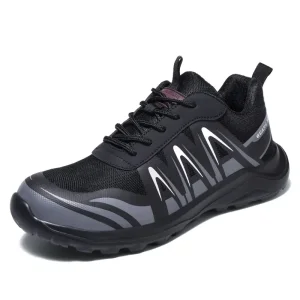
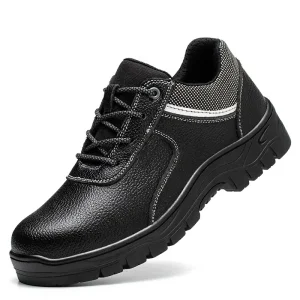
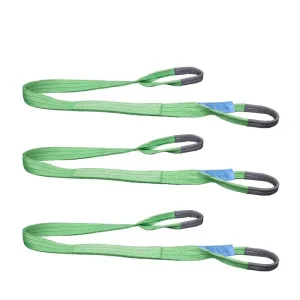
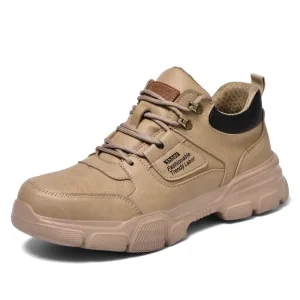
Explore our foundational range of certified height safety gear, heavy-duty rigging equipment, high-visibility apparel, and specialized protective footwear direct from the manufacturing plant floor.
A rigorous examination of cranial trauma mitigation, evolving safety statutes across North America and the European Union, and the manufacturing precision required for mission-critical personal protective equipment.
Industrial safety helmet hats represent the first line of biological preservation in heavy engineering, construction, deep mining, petrochemical refining, and utility power distribution. According to occupational health data compiled by OSHA (Occupational Safety and Health Administration) and Eurostat, traumatic brain injuries (TBIs) historically account for more than 20% of severe disabling workplace trauma. The shift toward stringent legal enforcement and heightened corporate ESG (Environmental, Social, and Governance) commitments has elevated safety helmets from commoditized PPE consumables into highly engineered kinetic energy management systems.
Across emerging markets in Asia-Pacific and established industrial belts in North America and Western Europe, capital investments into high-speed transit networks, renewable offshore wind infrastructure, and automated logistical nodes have spurred demand for specialized cranial protective solutions. Modern procurement officers no longer seek arbitrary plastic shells. The mandate today requires audited, multi-standard compliance (incorporating EN 397, EN 12492, and ANSI/ISEA Z89.1 Type I & II Class E), integrated accessory ecosystems, optimized thermal mitigation, and scalable custom branding directly integrated at the injection-molding stage.
Specifies performance benchmarks across North America, categorizing headgear into Type I (top impact) and Type II (lateral, front, back, and top off-axis impacts), with Class E (electrical isolation tested up to 20,000V phase-to-ground).
Governs industrial helmets and mountaineering/at-height climbing helmets. Crucial differences reside in chin-strap retention thresholds: EN 397 mandates release between 150N–250N to prevent strangulation, whereas EN 12492 enforces >500N to prevent helmet displacement during a fall.
Tier-1 manufacturers engineer hybrid shells featuring adjustable chinstrap selector toggles, enabling seamless switching between ground-level industrial compliance (EN 397) and high-altitude tower maintenance protocols (EN 12492).
A systematic analysis of polymer rheology, impact dispersal mechanisms, and thermodynamic stabilization under severe environmental stress.
The ballistic and impact-dispersion capabilities of an industrial safety helmet depend fundamentally upon its outer shell chemical architecture and internal harness geometry. In modern manufacturing facilities, virgin Acrylonitrile Butadiene Styrene (ABS), High-Density Polyethylene (HDPE), and modified Polycarbonate-PBT (Polybutylene Terephthalate) alloys serve as the core structural bases. Virgin ABS provides optimal dimensional stability, high impact deflection, and superior surface finishing for precision pad printing. High-density polyethylene exhibits exceptional chemical tolerance and electrical resistance, making it ideal for utility and petrochemical environments. Polycarbonate blends remain the premier choice for extreme thermal environments, maintaining impact deflection performance from -40°C arctic exploration to +150°C metallurgical foundry settings.
Internal suspension engineering has evolved past simplistic 4-point low-density polyethylene straps. Leading OEM/ODM manufacturers now engineer 6-point to 8-point high-tenacity woven textile cradles paired with high-density Expanded Polystyrene (EPS) or Expanded Polypropylene (EPP) multi-density crush-liners. This creates an engineered deceleration zone, extending impact impulse duration and dissipating peak g-force loads before energy translates through the cervical spine.
| Polymer Shell Material | Tensile Yield (MPa) | Notched Izod Impact (kJ/m²) | Dielectric Strength | Service Temp Window | Primary Industrial Sector |
|---|---|---|---|---|---|
| Virgin Impact-Grade ABS | 42 – 48 | 18 – 24 | Up to 20kV (Class E) | -30°C to +80°C | Civil Construction / Heights |
| High-Density Polyethylene (HDPE) | 26 – 32 | 10 – 16 | Up to 30kV (Class E) | -40°C to +75°C | Chemical / General Logistics |
| PC / PBT High-Heat Alloy | 55 – 65 | 35 – 50 | Moderate (Class G/C) | -40°C to +150°C | Foundry / Petrochem Flaring |
| Aramid & Carbon Fiber Reinforced | 110 – 140 | 60 – 85 | Conductive (Class C) | -50°C to +180°C | Aerospace / Heavy Mining / SAR |
End-to-end tooling, automated surface decoration, integrated accessories, and turnkey industrial customization workflows.
In-house CNC mold engineering capable of producing customized crown vents, lateral reinforcing ribs, integrated universal headlamp brackets, and modular face-shield click-rails within 30 days.
Automated 5-axis robotic pad-printing stations apply ultra-durable, chemical-resistant corporate logos, barcodes, and reflective safety striping that resist high UV solar degradation and abrasive blast media.
Engineered smooth-action wheel ratchets allowing fine micro-adjustments between 52cm and 64cm head circumferences, utilizing sweat-wicking antimicrobial forehead cushions and nape pads.
Injection integration of near-field communication (NFC) emergency responder chips, passive UHF RFID for fleet tool tracking, and mounting arrays for noise-canceling comms headsets.
Engineered to mitigate catastrophic occupational hazards across micro-climates, offshore marine platforms, and high-voltage energy corridors.
Wind energy technicians face sustained 40+ knot wind shear and confined nacelle interiors. These applications require ultra-compact, low-profile Type II helmets without protruding brims, fitted with secure 4-point chin straps (EN 12492) that keep the shell anchored during sudden gusts or arrested falls.
Exposed to extreme saline moisture, volatile hydrocarbons, and corrosive gases. High-visibility non-vented ABS/PC shells with Class E dielectric insulation prevent electrical arcs during offshore generator service, paired with chemical-resistant polycarbonate visors and anti-fog coatings.
Subterranean mining demands high-impact polycarbonate shells with integrated universal cap lamp mounting brackets, rear battery cable routing clips, and reflective prismatic contour decals that deliver 360-degree reflectivity in pitch-black stope shafts.
Optimizing procurement friction, inventory carrying costs, and compliance auditing through direct factory consolidation of PPE lines.
Global distributors and large-scale industrial contractors frequently suffer from fragmented supply chains: importing helmets from one regional supplier, fall arrest harnesses from another, lifting slings from a third, and safety footwear from a fourth. This fragmentation creates severe logistics overhead, disparate quality inspection regimes, unpredictable customs clearing delays, and compounded sea-freight costs. As a centralized manufacturer based in the industrial heartland near major shipping terminals, we provide unified procurement consolidation.
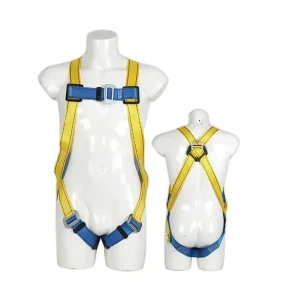
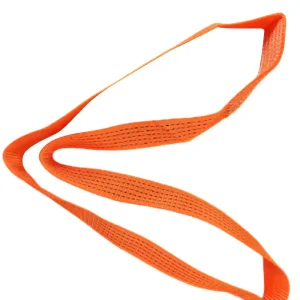
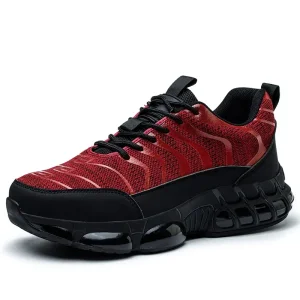
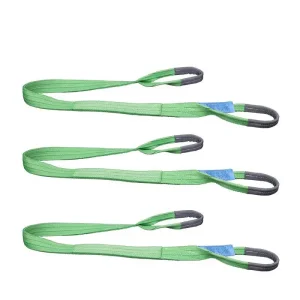
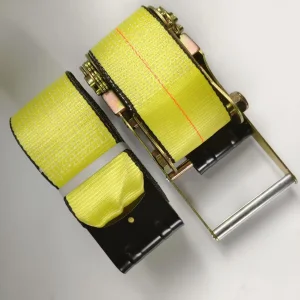
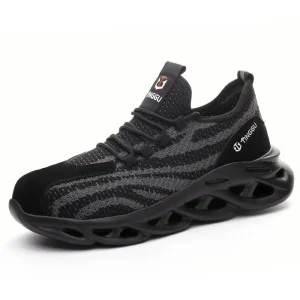
Our integrated manufacturing matrix enables B2B buyers to load mixed 40ft High Cube (HC) containers carrying certified fall-arrest body harnesses, high-tenacity lifting slings, ratchet lashing straps, safety footwear, and custom-branded safety helmets under one Master Bill of Lading (BOL). This consolidation slashes port clearing fees, guarantees synchronized batch quality across complementary safety systems, and reduces logistics overhead by up to 28%.
Every product batch is produced under an audited ISO 9001:2015 quality management system, complete with traceable mill certificates, destructive drop-tower impact tests, and load-elongation reports.
Direct positioning within easy reach of primary deepwater sea ports cuts domestic trucking transit to hours, expediting container staging and ensuring dependable production-to-vessel loading cadences.
Complete OEM packaging support ranging from barcode integration and multi-lingual user instruction booklets to branded full-color retail cartons and heavy-duty moisture-sealed export packaging.
The transformation of head protection through biometric monitoring, low-carbon bio-polymers, and advanced rotational impact mitigation.
Traditional tests historically evaluated only linear vertical impacts. The next generation of industrial safety helmets integrates low-friction internal slip layers that allow 10–15mm of omnidirectional movement during angled impacts, reducing rotational acceleration transmitted to the brain tissue.
Integration of ultra-lightweight micro-sensors capable of continuous core heat monitoring, fall/immobility detection (man-down alarms), hazardous ambient volatile gas sensing, and automated sub-GHz mesh distress broadcasts for high-risk confined spaces.
Transitioning toward bio-based polyamides synthesized from non-food castor crops and 100% depolymerizable closed-loop virgin ABS blends, reducing the embedded carbon footprint of cranial protective gear without compromising mechanical performance.
Direct technical answers to critical engineering, regulatory compliance, and OEM manufacturing questions.
ANSI/ISEA Z89.1 Type I industrial helmets are strictly tested and verified to mitigate vertical kinetic impacts directed only at the top (crown) of the head. In contrast, Type II helmets must incorporate lateral impact absorption systems—typically multi-density EPS/EPP liners surrounding the circumference of the shell—to protect the skull from frontal, rear, and lateral angular impacts, as well as crown impacts.
Under ANSI Z89.1 and CSA Z94.1 classifications, Class E (Electrical) safety helmets must withstand high-voltage proof-testing of 20,000 volts AC phase-to-ground for three continuous minutes, with total leakage current not exceeding 9 milliamperes. Class C (Conductive) helmets offer zero dielectric insulation and often feature functional ventilation apertures, making them unsafe around energized switchgear.
Industry standards and OSHA guidelines recommend replacing safety helmet shells every 3 to 5 years from the initial date of service, depending on exposure to solar UV radiation, airborne chemicals, and physical abrasion. Internal textile suspensions must typically be replaced every 12 months. Any helmet subjected to a substantial kinetic impact must be discarded immediately, even if visible surface cracking is absent.
Yes, provided the manufacturer utilizes tested resin-compatible masterbatch pigments and solvent-free screen/pad printing inks. Unregulated solvent paints or aftermarket adhesive stickers can induce environmental stress cracking (ESC) in ABS and Polycarbonate matrices, critically lowering kinetic impact strength. Our factory uses pre-approved, non-destructive automated ink systems.
Standard production runs for customized shell colors (matched to custom Pantone/RAL specifications) typically require an MOQ of 1,000 units per colorway. Pad-printing of company logos on stock shell colors can be accommodated at lower minimum thresholds (e.g., 300 to 500 units), while dedicated bespoke mold tooling requires custom tooling agreements.
Every production lot undergoes rigorous random sampling in accordance with ISO 2859-1 general inspection levels. In-house mechanical test labs execute high/low temperature pre-conditioning (-30°C to +50°C), calibrated guided-drop weight testing with piezoelectric force transducers, shell penetration resistance checks, and chinstrap buckle release force validations.
Complementary industrial protective equipment engineered to integrate seamlessly into corporate procurement contracts and unified container shipments.