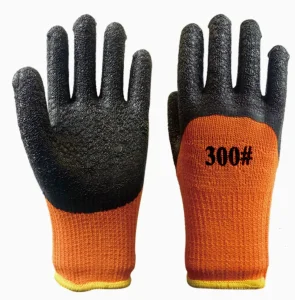
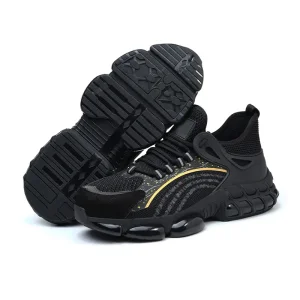
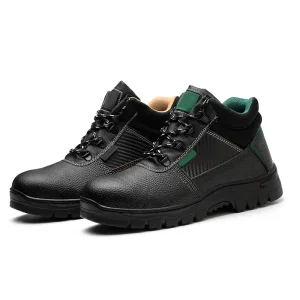
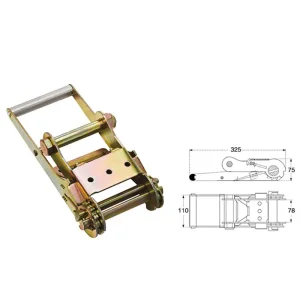
Direct-from-manufacturer protective personal equipment, heavy rigging slings, and industrial safety footwear engineered for harsh extraction and logistics environments.
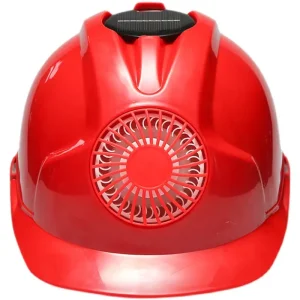
Navigating the stringent head protection mandates enforced across the Venezuelan state oil consortium (Petróleos de Venezuela, S.A.), ANSI/ISEA Z89.1, COVENIN 815, and European Norm EN 397.
In the hydrocarbon exploration, extraction, and refining sectors, industrial personal protective equipment (PPE) is not merely a consumable; it is a critical line of defense against complex multi-vector mechanical and electrical catastrophes. As an authoritative custom safety helmet PDVSA manufacturer, our engineering methodologies are purposefully calibrated to address the harsh climatic and chemical environments defined within the PDVSA Technical Specifications (Normas Técnicas PDVSA EM-36-01/01 and EM-36-02/01), as well as the Venezuelan national framework COVENIN 815 (Cascos de Seguridad para Uso Industrial).
Hydrocarbon processing zones—ranging from the high-humidity, high-salinity offshore installations of the Lake Maracaibo basin to the high-temperature inland upgraders of the Orinoco Heavy Oil Belt (Faja Petrolífera del Orinoco Hugo Chávez)—subject head protection gear to severe polymer degradation stressors. Generic hard hats formulated from standard commercial polypropylene or unconditioned polyethylenes rapidly suffer from environmental stress cracking (ESC), catastrophic ultraviolet (UV-A and UV-B) photochemical embrittlement, and rapid dielectric breakdown when exposed to aromatic hydrocarbons, corrosive hydrogen sulfide (H₂S) off-gassing, and intense equatorial sunlight.
Unlike conventional civil construction standards that only verify basic top-impact attenuation, authentic PDVSA-compliant industrial safety helmet manufacturing necessitates strict dual-tier testing: Type I (Top Impact) and Type II (Lateral Impact) force mitigation under -30°C cryogenic and +50°C high-heat conditioning. Furthermore, Class E (Electrical) certification mandates rigorous testing up to 20,000 volts AC proof testing with leakage current not exceeding 9 milliamperes, coupled with advanced static-dissipative masterbatches to preclude dangerous spark-producing electrostatic discharge in explosive Zone 0, Zone 1, and Zone 2 environments.
We utilize 100% virgin ultra-high-molecular-weight high-density polyethylene (UHMW-HDPE) and flame-retardant Acrylonitrile Butadiene Styrene (ABS) formulated with hindered amine light stabilizers (HALS) to eliminate chemical embrittlement.
Non-vented, monolithic injection-molded shells engineered without conductive hardware or micro-fissures, delivering tested dielectric resistance against 20,000V flashovers and arc flash phase boundaries.
Featuring heavy-duty 6-point and 8-point terylene woven cradle suspensions equipped with micro-ratchet adjustment mechanisms, effectively reducing transmitted impact forces well below the 4,450 N threshold.
Analyzing procurement requirements, vendor compliance matrixes, and strategic logistics for National Oil Companies (NOCs) and Engineering, Procurement, and Construction (EPC) contractors.
Enterprise procurement departments serving energy conglomerates, petrochemical operators, and international offshore drilling operations face a dual challenge: maintaining uncompromised safety compliance while mitigating international supply chain bottlenecks. Procurement officers managing requisitions for custom safety helmets PDVSA manufacturers must reconcile rigid technical specifications against fluctuating delivery lead times, batch consistency, and private-label customization demands.
In heavy industrial procurement, a helmet is an operational platform. Major operators require helmets configured with accessory mounting slots compatible with integrated arc-rated visors, hearing protection muff attachments conforming to EN 352-3, intrinsically safe helmet-mounted headlamps, and 4-point chin straps designed with dual-retention release breakaways (25-50 daN) to protect workers operating at height on drilling derricks and catalytic crack towers.
| Evaluation Parameter | Generic Construction Hard Hats | PDVSA Industrial Spec (Norma EM-36) | ZhongQi Engineered Enterprise Model |
|---|---|---|---|
| Shell Material Formulation | Recycled or lower-grade Polypropylene (PP) | Virgin High-Impact HDPE or Polycarbonate/ABS | 100% Virgin UHMW-HDPE + Dual UV Stabilizer Matrix |
| Dielectric Classification | Class C (Conductive / No Voltage Rating) | Class E (Dielectric Tested to 20,000 Volts) | Class E Certified (20,000V AC / 30,000V DC breakdown) |
| Chemical / Hydrocarbon Resilience | Rapid stress-cracking upon solvent contact | Impervious to crude distillates, lubricants, H₂SO₄ | ASTM D543 chemical immersion verified resilience |
| Static Dissipative Properties | Surface resistivity > 10¹² Ω (Ignition hazard) | Anti-static formulation recommended | Surface Resistivity < 10⁹ Ω for ATEX Zones 0, 1, 2 |
| Suspension Webbing Matrix | 4-point low-denier polyethylene strap | 6-point or 8-point high-tenacity woven textile | 8-point dense woven terylene with padded sweatband |
Tailored physical configurations designed to withstand extreme tropical marine salt mist, subsea drilling platform impacts, and high-temperature refinery operations.
Engineered for high windage offshore jacket rigs in the Gulf of Paria and Lake Maracaibo. Low-profile hydro-dynamically vented or solid configurations resist 120 km/h wind gusts, high UV radiation indices, and aggressive chloride-rich sea spray environments.
Deployments in Jose and Amuay industrial refinery complexes. Shell formulations withstand radiated heat fluxes up to 150°C without plastic deformation, combined with chemical splash resistance against amine solutions and sulfur recovery plant effluents.
Equipped for extensive cross-country crude pipeline inspection and pumping terminal maintenance. Enhanced with 360-degree retro-reflective prismatic micro-bead tapes conforming to EN ISO 20471 class 2 for night maintenance visibility.
From passive mechanical kinetic-absorption shells to sensor-fused smart protective ecosystems designed for digitalized oilfields of the future.
Elimination of weld-line structural weaknesses through automated hot-runner injection molding machines and multi-cavity precision molds ensuring exact uniform shell thickness across top and crown apexes.
Integration of carbon nanotubes (CNTs) into the masterbatch matrix, guaranteeing lifelong, non-leaching permanent static dissipation (< 10⁷ Ω) eliminating reliance on temporary hygroscopic surface sprays.
Embedded, intrinsically safe (ATEX/IECEx certified) micro-sensors monitoring toxic hydrogen sulfide (H₂S) gas concentrations, personal core body heat metrics, and tri-axial fall/man-down telemetry.
Development of chemically recyclable bio-derived engineering polycarbonates reducing lifecycle corporate carbon footprints while adhering fully to zero-loss energy-absorption impact thresholds under ANSI Z89.1.
Rigorous multi-stage destructive and non-destructive quality assurance auditing every production batch prior to shipping.
Operating under an integrated ISO 9001:2015, ISO 14001:2015, and ISO 45001:2018 management architecture, our testing laboratory subjects sample units from each production run to destructive validation before issuing formal Factory Acceptance Test (FAT) certificates.
Enterprise clients can commission bespoke production runs featuring full color-coded organizational hierarchies (e.g., White for Supervisors/Engineers, Yellow for General Operators, Blue for Electrical Technicians, Red for Emergency Responders):
Clear, engineering-grounded responses concerning testing compliance, chemical compatibility, and customization parameters.
PDVSA technical specifications require helmets to meet Venezuelan standard COVENIN 815 alongside ANSI/ISEA Z89.1 Type I or II, Class E (Dielectric up to 20,000V). The shell must be non-conductive, injection-molded from virgin HDPE or ABS without scrap regrind, withstand impact at extreme environmental temperatures, and resist common refinery chemicals such as crude fractions, diluents, and lubricating greases.
No. When executed in our automated facilities, we utilize non-conductive, solvent-free UV-curable polymer inks specifically formulated for dielectric PPE. Conventional commercial inks containing heavy metallic pigments or conductive carbon blacks can degrade dielectric insulation; our verified ink compositions preserve 100% of the Class E 20,000V insulation envelope.
Vented helmets feature ventilation apertures in the crown that allow upward airflow, which inherently violates Class E dielectric ratings (downgrading the helmet to Class C Conductive). Additionally, open vents present entry pathways for pressurized chemical splashes, molten sulfur droplets, or falling sparks in combustible hydrocarbon refining zones.
In equatorial high-UV environments like Venezuela, Colombia, and the Caribbean, standard industrial practices mandate shell replacement every 3 to 5 years, and suspension harness replacement every 12 months. Any helmet subjected to severe mechanical impact or chemical degradation must be withdrawn from service immediately, regardless of chronological service duration.
The suspension points determine the geometric distribution of kinetic impact forces across the skull. A 4-point cradle concentrates energy over fewer zones, whereas an 8-point terylene suspension distributes peak shock loads over an 8-point geometric webbing matrix, yielding noticeably lower transmitted force to the cervical spine.
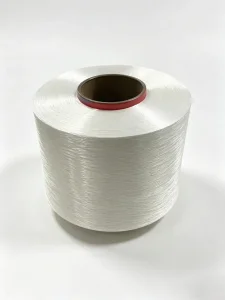
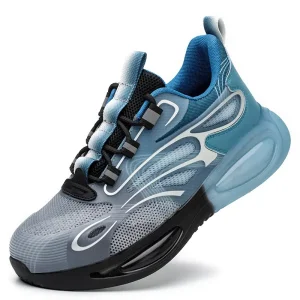
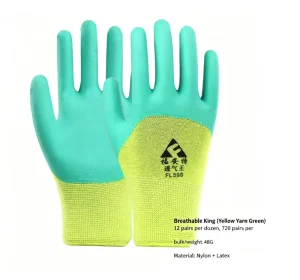
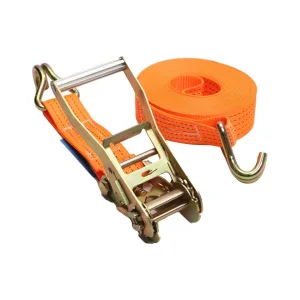
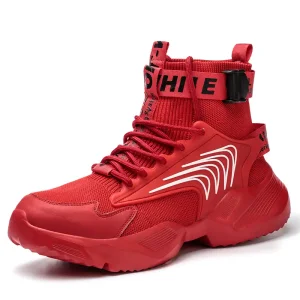
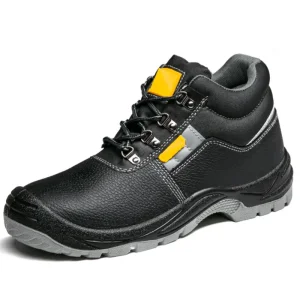
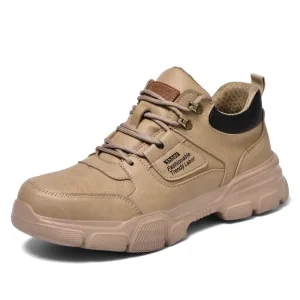
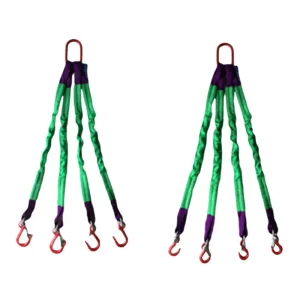
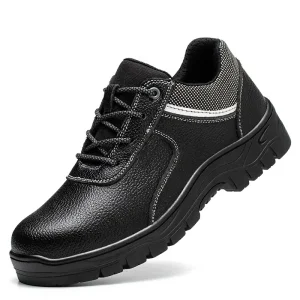
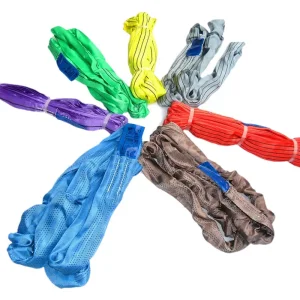
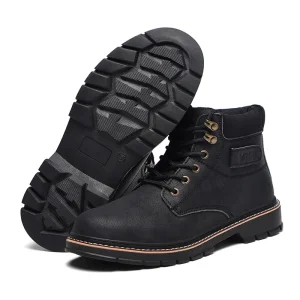
Located in Shuangjie Trusted Industrial Park, Tianjin, our manufacturing hub is directly adjacent to Tianjin Port. We provide mixed-container consolidation allowing enterprise clients to combine custom safety helmets with CE EN 361 fall protection harnesses, polyester lifting slings, cargo tie-downs, and industrial footwear in a single, cost-efficient shipment.
Explore complementary OEM/ODM certified industrial supplies for multi-category procurement consolidation.