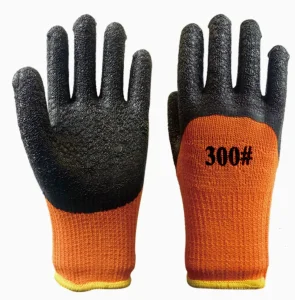
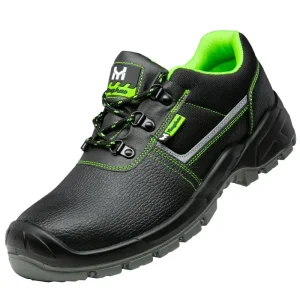
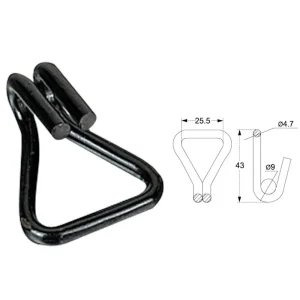
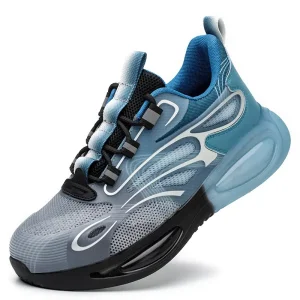
Direct factory-engineered products built from specialized high-tenacity yarns, high-tensile steel components, and certified technical safety polymers.
An in-depth engineering assessment of Polyethylene Terephthalate continuous filaments designed for mission-critical tensile, lifting, and load-securing manufacturing.
Industrial grade high-tenacity PET yarn derives its extraordinary tensile properties from high molecular weight polymer chips (Intrinsic Viscosity IV ≥ 0.84–1.05 dl/g). High draw ratios during hot-drawing yield molecular chain orientation above 92%, resulting in crystalline zones that resist plastic shear under sustained tension.
Unlike Polyamide (Nylon) which exhibits hygroscopic softening and significant elongation under dynamic loads, high-tenacity polyester features an initial tensile modulus exceeding 100–120 cN/dtex. This low-elongation behavior prevents slack and tension loss in transcontinental container transport and cargo lashing.
Polyester yarn demonstrates inherent resistance to mineral acids, biological microorganisms, oxidative aging, and aliphatic solvents. When fortified with hindered amine light stabilizers (HALS), the filament achieves outstanding retention against ultraviolet solar degradation in open marine and outdoor rigging environments.
| Polymer Parameter | High-Tenacity Polyester (PET) | High-Tenacity Polyamide 6.6 (PA 6.6) | Polypropylene High-Tenacity (PP) | Aramid (Para-Aramid) |
|---|---|---|---|---|
| Tensile Tenacity (cN/dtex) | 8.0 – 9.6 | 8.2 – 9.8 | 6.0 – 7.5 | 20.0 – 24.0 |
| Elongation at Break (%) | 12% – 16% | 18% – 24% | 16% – 22% | 2.5% – 3.8% |
| Specific Gravity (g/cm³) | 1.38 (High sinking stability) | 1.14 | 0.91 (Floats on water) | 1.44 |
| Wet vs Dry Strength Retention | 100% Unaffected | 85% – 90% (Softens) | 100% Unaffected | 100% Unaffected |
| UV Radiation Resistance | Class-Leading (Low Photodegradation) | Moderate (Requires Stabilizer) | Poor (High Degradation) | Sensitive to Direct UV |
| Global Cost/Performance Metric | Optimal (Industrial Standard) | High | Low Tenacity / Bulky | Extremely High Cost |
How the upstream petrochemical clustering, automated melt-spinning, and seaport logistics deliver structural cost resilience and strict lot-to-lot traceability for international buyers.
Tianjin ZhongQi Growth Technology capitalizes on China's massive, world-class continuous polymerization infrastructure. Direct pipeline and bulk supply of purified terephthalic acid (PTA) and monoethylene glycol (MEG) reduce raw polymer pricing volatility, shielding overseas enterprise contracts from spot-market commodity surges.
Unlike third-party conversion brokers, our production umbrella directly couples spinning spools to heavy needle looms, automatic electronic pattern-sewing machines, continuous pad-dyeing lines, and thermosol stretching ovens. This closed-loop manufacturing prevents fiber damage, contamination, and handling friction.
Situated in the Shuangjie Trusted Industrial Park, our plant operates within immediate proximity of Tianjin Port—the largest maritime gateway in Northern China. This strategic positioning guarantees seamless container haulage, reduced drayage charges, priority berth allocations, and frequent departures to Europe, North America, Southeast Asia, and the Middle East.
A rigorous roadmap for industrial procurement heads, quality assurance engineers, and OEM brand buyers to audit and qualify polyester yarn parameters for maximum field reliability.
The Coefficient of Variation (CV%) in yarn linear density governs uniform weaving tension. High CV% results in tight-spots, broken ends on high-speed looms, and localized weakness. Tier-1 buyers demand a CV% of linear density below 1.2% and tenacity CV% below 1.8% across full spinning cake packages.
The Oil Pick-Up (OPU%) rate and chemical composition of spin finishes dictate inter-filament cohesion, electrostatic dissipation, and frictional coefficients during weaving. Our formulation features non-yellowing, anti-static thermal lubricating esters calibrated for high-speed automated needle looms.
For applications exposed to post-weaving thermosetting or polyurethane coatings, yarn must feature strictly governed shrinkage curves. Super Low Shrinkage (SLS) and High Modulus Low Shrinkage (HMLS) filaments prevent dimensional distortion and bowing in finished safety webbing.
Analyzing the pivotal shifts in industrial textiles—from post-consumer recycled filaments to inline spectrophotometric quality controls.
Global regulatory mandates (EU CSRD, US federal procurement green standards) require audited recycled content. We deploy Solid-State Polycondensation (SSP) upcycling of bottle-grade flakes to restore intrinsic viscosity, producing recycled high-tenacity yarns that achieve over 95% of virgin tensile performance while reducing carbon footprint by 42%.
Traditional piece-dyeing of woven webbing expends tremendous water and heat while generating wastewater. We utilize masterbatch dope-dyeing directly at the extruder barrel. The color pigment becomes an intrinsic structural component of the filament core, providing unmatched colorfastness (Grade ≥ 4.5) under maritime salt spray and harsh UV sunlight.
Our extruders integrate real-time laser diffraction gauges and high-speed CMOS visual sensors that scan filament continuity at 3500 m/min. Micro-defects, filament fluffs, and denier fluctuations are flagged immediately, ensuring zero-defect packaging rolls dispatched to the loom batteries.
Real-world engineering implementations where our high-tenacity polyester yarns form the primary structural backbone for human safety and cargo protection.
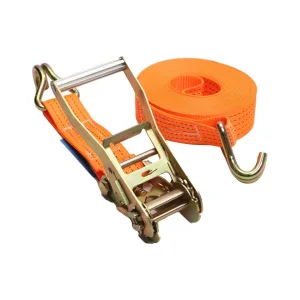
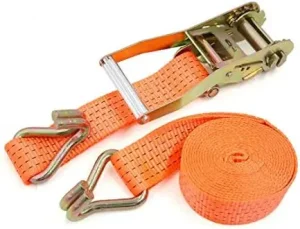
Flatbed transport and containerized sea-freight endure aggressive inertial shifts. Woven 2-inch to 4-inch tie-down webbing manufactured with our 1000D/1500D AA-grade yarn ensures minimal elongation under pre-tension, complying with EN 12195-2 and US WSTDA standards with working lashing capacities up to 5,000 daN.
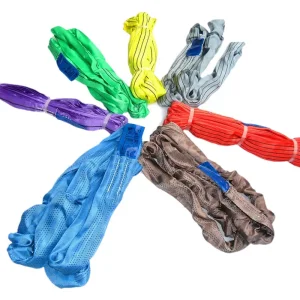
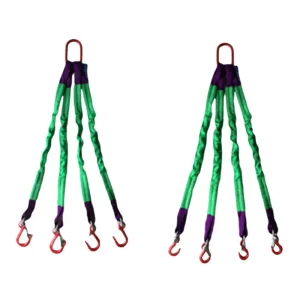
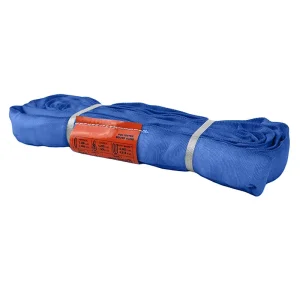
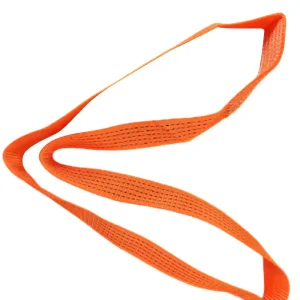
Engineered round slings and duplex flat webbing slings utilize our high-tenacity yarns to achieve safety factors of 7:1 (Europe) and 6:1 / 5:1 (Americas). The core load-bearing yarn bundles in endless round slings distribute tensile stress evenly across tens of thousands of filament loops, lifting up to 100 tons safely.
At-height industrial safety demands zero structural failure. Our safety harness webbing is precision-woven from select 1000D high-tenacity polyester, delivering static breaking strengths exceeding 25 kN. When subjected to drop-tower dynamic shock loads, the controlled tensile modulus decelerates human impact safely.
Ensuring complete peace of mind for international customs entry, distributor compliance files, and end-user liability protection.
Our manufacturing protocols are certified and audited to harmonized EU standards. We supply complete Technical Files (TF), Declarations of Conformity (DoC), and accredited third-party notified body certificates (TUV, SGS) ensuring zero regulatory friction at Hamburg, Rotterdam, or Antwerp customs.
For US and Canadian corporate accounts, our production runs follow Web Sling & Tie Down Association standards (WSTDA-T-1, WSTDA-RS-1) and OSHA/ANSI fall arrest regulations. Each production lot comes accompanied by continuous tensile testing charts certified by calibrated load cells.
We empower regional safety brands and industrial distributors by offering comprehensive OEM customization. From custom jacquard-woven logos along the webbing face to customized multi-language warning labels, full color retail packaging, and barcoded export cartons, we build your brand identity.
Exhaustive answers to technical inquiries frequently raised by procurement directors, quality inspectors, and safety apparatus manufacturers.
AA-grade industrial polyester yarn possesses an ultra-consistent molecular weight profile with intrinsic viscosity IV ≥ 0.92 dl/g, delivering tenacity ≥ 8.5 to 9.2 cN/dtex and tenacity CV% ≤ 1.5%. A-grade yarn typically features IV between 0.82–0.86 dl/g with tenacity around 7.5–8.0 cN/dtex and wider variance. For critical lifting slings and CE-certified harnesses, AA-grade is required to prevent localized failure.
Polyester features low working elongation (typically <7% at working load vs. 15%–20% in Nylon) and does not absorb water (moisture regain <0.4% vs 4.5% for Nylon 6.6). When wet, Nylon loses up to 15% of its tensile strength, whereas polyester remains completely unaffected. Furthermore, polyester resists acidic road spray and severe solar UV far better than polyamide.
Twist per meter (TPM) binds individual continuous filaments together. Zero-twist yarn is cheaper but prone to filament shearing and fluffs on needle looms. Moderate twisting (typically 40 to 80 TPM for warp yarns) improves abrasion resistance and weave cohesion without sacrificing package density or causing torque distortion across the woven web.
Under European Standard EN 1492-1, synthetic flat webbing slings require a Safety Factor (SF) of 7:1 (a 1,000 kg WLL sling must break at not less than 7,000 kg). In North America (ASME B30.9 / WSTDA), lifting slings typically mandate a 5:1 SF. Cargo lashing straps (EN 12195-2), however, operate on a 2:1 safety factor based on Lashing Capacity (LC) relative to ultimate breaking force.
Yes, provided that the rPET flake undergoes advanced Solid-State Polycondensation (SSP) to re-polymerize chain lengths back to an IV of ≥ 0.90 dl/g, coupled with micro-filtration down to 15 microns. Our GRS-certified rPET continuous filaments achieve tenacity ≥ 8.2 cN/dtex, fully meeting EN 1492-1 structural criteria while allowing brands to fulfill mandatory corporate ESG commitments.
Every master yarn spool and finished webbing lot passes through our internal ISO 17025 compliant laboratory. Testing protocols include automatic single-yarn tensile testers (Uster style), spectrophotometric Delta-E color-variance monitors, accelerated xenon-arc UV weatherometers, and a 100-ton hydraulic horizontal tensile test bed for destructive proof-break testing. Mill Test Certificates (MTC) accompany every Bill of Lading.
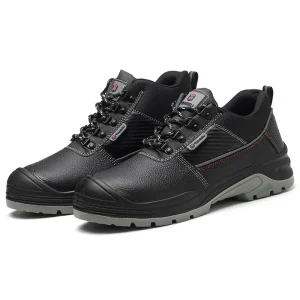
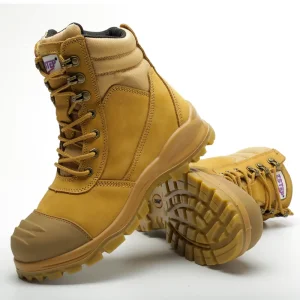
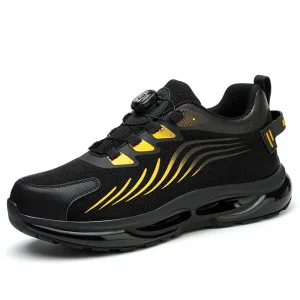
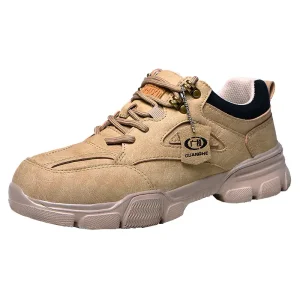
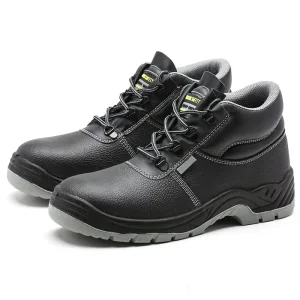
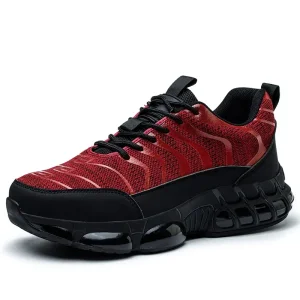
Explore heavy-duty lifting assemblies, wire rope combinations, protective industrial footwear, and one-way cargo containment belts manufactured to international standards.
Whether you require custom tenacity matching, tailored shrinkage profiles, specialized dope-dyed color formulations, or private-label container consolidation, our technical engineers provide comprehensive data packages within 24 hours.
Initiate Factory Technical Consultation