Integrate certified head-to-toe workplace defense equipment. Tested to strict international benchmarks, designed for rapid global deployment and extreme industrial resilience.
A comprehensive technical analysis of injection mold metallurgy, polymer flow mechanics, cavity balance, and automated cycle optimization for mass head protection manufacturing.
In modern industrial manufacturing, head protection represents the frontline of defense against workplace mortalities. As governments worldwide update mandatory personal protective equipment (PPE) directives—such as the transition from European Council Directive 89/686/EEC to Regulation (EU) 2016/425—the procurement focus of safety equipment manufacturers has shifted dramatically toward tooling capability. A safety helmet's ability to resist piercing impacts, withstand lateral deformation, and maintain chemical resistance is inherently determined before the first polymer pellet enters the barrel: it is hardcoded directly into the safety helmet mold geometry, cooling line topology, and gating layout.
Purchasing enterprise engineering managers and injection molding contractors can no longer rely on commoditized single-cavity prototype tools. Contemporary mass production mandates hot runner multi-cavity injection molds engineered with premium core/cavity steels (such as 718H, NAK80, or mirror-finished S136) to prevent differential cooling stresses. A poorly balanced mold produces hidden weld lines (knit lines) directly across the helmet’s central apex ridge, creating structural weak points that catastrophic impact testing instantly exposes.
How cutting-edge thermodynamic simulations and robotic automation are rewriting productivity metrics in head protection manufacturing.
By employing direct metal laser sintering (DMLS) 3D printing for critical cavity inserts, conformal cooling lines trace the complex curvature of the helmet shell and harness suspension tabs, decreasing cycle times by over 28% while eliminating residual thermal warping.
Multi-drop valve gating controlled via servo-electric or hydraulic timing prevents knit-line formation near critical apex zones. Resin flow fronts merge seamlessly at non-impact perimeters, ensuring uniform density in high-viscosity ABS and polycarbonate blends.
Modern helmets require integrated 30mm universal slots for earmuffs, face shield brackets, chinstrap anchors, and headlamp rails. Precision hydraulic side-core pullers allow complex negative draft angles to demold effortlessly without manual secondary drilling.
Integrated tooling architectures capable of injecting high-impact rigid shells (ABS/HDPE) alongside soft elastomeric cushions (TPE/TPU) in a single rotary platten cycle. This eliminates secondary manual gluing of rim protectors and visor seals.
How fully connected industrial ecosystems in North China and the coastal manufacturing hubs deliver uncompromised lead-time fidelity, raw material agility, and cost-volume competitiveness.
Our tooling workshop utilizes automated high-speed 5-axis Makino and DMG Mori machining centers integrated with robotic tool changers and coordinate measuring machines (CMM). Cavity blocks are milled directly from vacuum-degassed forged pre-hardened tool steel without human intervention across 72-hour continuous runs, maintaining surface roughness tolerances of Ra < 0.05µm.
Located in the heart of China's heavy industrial manufacturing corridor adjacent to Tianjin Port, our plant eliminates supply chain friction. Steel stock, precision hot-runner manifolds (Yudo/Mold-Masters), customized copper-beryllium inserts, and standard mold bases (LKM) are procured within a 50-kilometer radius. Tooling iterations that take European or American shops 12 weeks are completed here in less than 28 days.
Before steel is cut, our R&D engineering team conducts comprehensive finite element analysis (FEA) and mold filling simulations. We calculate shear rates, volumetric shrinkage, and fiber orientation for reinforced polymers. This preventative simulation ensures that zero-defect status is achieved on the very first mold trial (T1), minimizing development expenditures for private-label brands.
Beyond mold manufacturing, we engineer complete turnkey manufacturing cells. We provide custom robot end-of-arm tooling (EOAT) for automated part extraction, in-mold labeling (IML) systems for indelible branding, ultrasonic welding fixtures for internal harnesses, and high-speed multi-color pad printing stations.
| Mold Specification Parameter | Standard Commercial Grade | Our Industry 4.0 Export Grade | Operational Advantage for Buyers |
|---|---|---|---|
| Core / Cavity Metallurgy | P20 (HRC 28-32) | DIN 1.2738 / S136 ESR (HRC 36-52) | Eliminates abrasive wear; extends mold lifespan past 1,000,000 shots. |
| Hot Runner System | Cold Runner or Generic Hot Tip | Yudo / Synventive Sequential Valve Gate | Zero sprue scrap, optimized resin injection, invisible weld lines. |
| Cooling Design Method | Straight Gun-Drilled Bores | DMLS 3D Printed Conformal Cooling Lines | Uniform thermal dissipation cuts cycle time from 55s to 36s. |
| Ejection Mechanism | Basic Knockout Pins | Two-Stage Hydraulic Stripper + Air Poppet Valves | Prevents pin marks or stress whitening on consumer-facing shell faces. |
| Trial Validation (T1 to Mass) | Manual visual inspection | Zeiss CMM 3D Scanning + Laser Rheology | Guaranteed zero dimensional deviation from original 3D CAD files. |
Matching helmet shell geometry, structural ribbing, and resin selections to regional certification standards and rigorous field environments.
Requires compliance with EN 397 and ANSI/ISEA Z89.1 Type I Class E (tested up to 20,000 volts). Molds are cut with heavy-duty top ribs, rain gutters, and internal shock-absorbing suspension clip mounts engineered for heavy impact deflection.
demands antistatic, non-sparking polymers molded under extreme pressures to prevent internal micro-voids. Polypropylene or PC/PBT blends require specialized mold gate dimensions to prevent high shear stress induced brittleness.
Adhering to EN 12492 climbing standards. Molds feature low-profile, brimless shells with 4-point chinstrap mounting cores designed to stay attached during high-energy falls, plus integrated sliding ventilation shutters.
Molded with engineering thermoplastics like Ultem PEI or glass-filled polyamide capable of resisting temperatures exceeding 150°C. Molds feature high-temperature cartridge heaters and oil-temperature controllers up to 180°C.
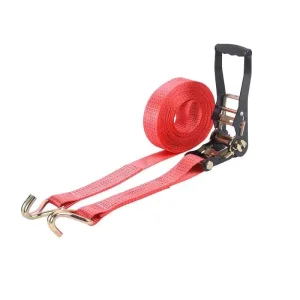
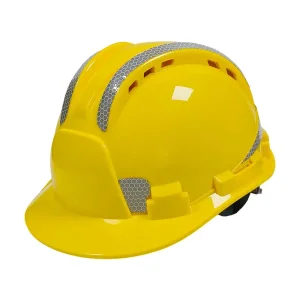
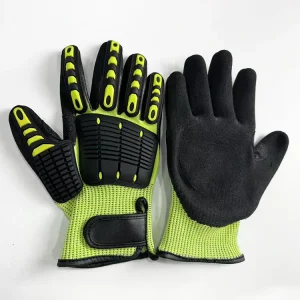
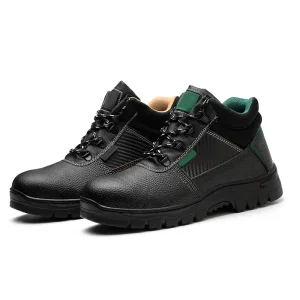
Complete container consolidation directly from our factory gates to international shipping terminals. Explore certified protective equipment built for rugged industrial use.
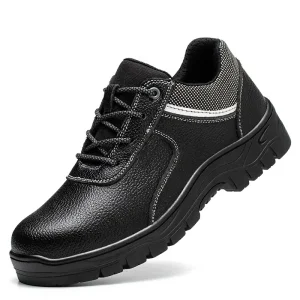
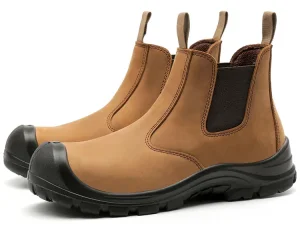
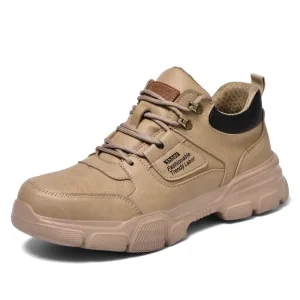
Direct technical feedback covering mold lifespan, gating configurations, resin shrinkage, and OEM compliance certifications.
For standard single or two-cavity safety helmet injection molds with side-action cam slides, our average T1 trial lead time is 30 to 35 business days. Complex 2K dual-color molds or tools requiring specialized laser texturing (e.g., Mold-Tech leather or micro-matte finishes) take approximately 45 days, followed by comprehensive 3D scanning inspection reports.
We deploy Sequential Valve Gating (SVG) hot-runner systems. Instead of injecting all nozzles simultaneously, our PLC controls the pin-lift timing so that the molten front flows past the central apex ridge in a continuous wave. This completely prevents opposing flow fronts from colliding in safety-critical areas, satisfying ANSI Z89.1 penetrative drop tests.
For high-viscosity ABS and Polycarbonate (PC), which produce higher injection pressures and mildly corrosive gases, we recommend DIN 1.2344, NAK80, or S136 stainless steel heat-treated to HRC 48-52. For high-volume HDPE helmet manufacturing, DIN 1.2738 pre-hardened steel provides an optimal cost-to-longevity ratio for exceeding 1,000,000 cycles.
Yes. Over 60% of our tooling is exported globally to North America, Europe, Southeast Asia, and the Middle East. We build to DME, HASCO, or MISUMI standard component specifications so our clients can source ejector pins, bushings, and springs locally. Full 2D/3D CAD tool design files and water circuit schematics are provided upon delivery.