
Trek Ready
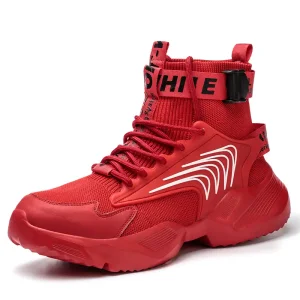
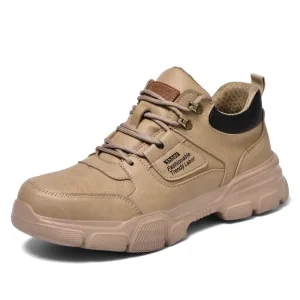
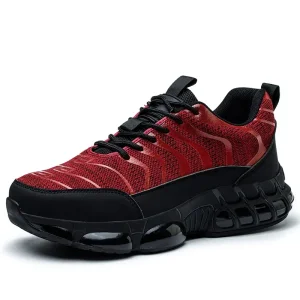
Engineered for multi-terrain versatility, combining anti-smash protective toe caps with deep-lugged anti-torsion outsoles suitable for rugged sub-Himalayan industrial and commercial trekking paths.
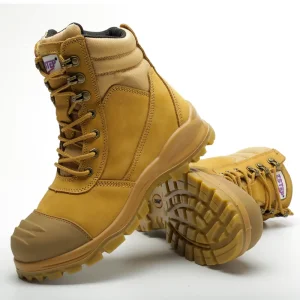
Why domestic production bottlenecks in India create substantial competitive whitespace for cost-optimized, factory-direct technical footwear imported from tier-1 Chinese manufacturing clusters.
The Indian commercial mountaineering, trekking, and highland occupational footwear market is undergoing an unprecedented structural transition. Valued in the outdoor recreational segment alone at a compounded annual growth rate (CAGR) exceeding 13.8%, demand across Himachal Pradesh, Uttarakhand, Ladakh, Sikkim, and the Western Ghats has surged beyond the operational capabilities of local artisan footwear clusters. While historic manufacturing centers such as Kanpur and Agra maintain exceptional scale in traditional cemented leather formals and basic industrial footwear, they face critical technological voids when producing modern, technical mountaineering boots that require direct-injection polyurethane (PU), waterproof breathable membrane integration, multi-density EVA shock dispersal, and cold-resistant vulcanized rubber outsoles.
Consequently, institutional buyers—ranging from commercial trekking agencies in Manali and Leh to heavy infrastructure contractors operating along the Border Roads Organisation (BRO) mountain corridor—face an unsustainable polarization: either pay exorbitant import markups for European mountaineering brands exceeding ₹18,000–₹35,000 per pair, or procure substandard domestic rubber gumboots and low-grade hiking shoes that lead to acute ankle inversion injuries, moisture blisters, and cold-weather trench foot. Sourcing directly from specialized Chinese OEM/ODM manufacturing ecosystems eliminates this polarization, delivering technical mountaineering footwear engineered to international safety standards (CE EN ISO 20345 / 20347 and BIS IS 15298 equivalency) at wholesale FOB pricing between $12.00 and $24.50 USD.
In B2B industrial procurement, the term "cheap" must never translate to compromised structural integrity. When Indian distributors partner with established Chinese export manufacturers, cost-efficiency is unlocked through structural and supply-chain advantages rather than material downgrading:
Utilizing computerized Italian DESMA 24-station direct-injection molding units, soles are chemically bonded to uppers without solvent glues, eliminating sole delamination at sub-zero Himalayan altitudes.
Direct proximity to synthetic microfiber, ballistic Cordura nylon, and TPU shank producers in Fujian and Zhejiang enables raw material acquisition at 25-35% lower cost than Indian import landing rates.
Incorporation of automated seam-sealing tape and King-Tex or Hydroguard 4-layer bootie socks, yielding hydrostatic head resistance >10,000mm and moisture vapor transmission rate (MVTR) >8,000g/m²/24h.
| Performance Criterion | Indian Traditional Workshop Build | European Commercial Brand | Our China Factory OEM Solution |
|---|---|---|---|
| Upper Construction | Split leather with cotton backing; prone to water saturation | Full-grain Perwanger / Nubuck leather; heavy weight | Hydrophobic 1.8mm Suede + Ballistic 1000D Cordura Nylon |
| Sole Attachment | Cold cement with solvent adhesive; fails at -10°C | Hand-crafted welt or double PU cement | Dual-density PU/Rubber Direct Injection or High-Pressure Cement |
| Waterproofing Barrier | Surface wax spray or standard PU coating (permeable) | GORE-TEX membrane (expensive licensing cost) | Hydroguard / Dintex 4-Layer Bootie with Heat-Welded Seams |
| Torsional Rigidity | Cardboard or thin steel shank (bends on rocky scree) | Carbon fiber or full-length nylon shank | Molded Ergonomic TPU / High-Strength Composite Shank |
| FOB Unit Cost Range | $14.00 – $18.00 (lacks high-altitude durability) | $85.00 – $160.00 (prohibitive retail landing price) | $12.50 – $22.80 (Optimal Margin & Field Reliability) |
To successfully market mountaineering footwear in India, foreign procurement specialists and domestic brand managers must align product construction with distinct geographic and operational requirements:
Routes such as Roopkund, Kedarkantha, Chadar Frozen River Trek, and Stok Kangri demand aggressive 6.0mm multidirectional lugs for loose scree, moraine, and wet ice. Footwear lasts must accommodate thicker merino wool thermal socks while delivering reinforced rubber rand protection against sharp slate and granite boulders.
Units deployed along high-altitude border posts (ITBP, Assam Rifles, BSF) require lightweight tactical boots combining speed-lacing eyelets with sub-zero thermal insulation (-15°C to -25°C). Weight minimization is paramount: reducing boot weight from 1100g to 680g preserves critical kinetic energy during mountainous patrol ascents.
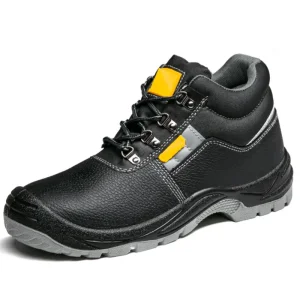
Infrastructure megaprojects under the PM Gati Shakti National Master Plan involve deep rock excavation in Jammu & Kashmir and Arunachal Pradesh. Workers require hybrid mountaineering-safety boots equipped with composite anti-crush toe caps (200J) and puncture-proof Kevlar midsoles, coupled with alpine climbing outsoles.
Tier-1 and Tier-2 urban outdoor retail outlets (Delhi NCR, Bengaluru, Mumbai, Pune, Dehradun) are witnessing unprecedented demand for mid-cut, visually modern trail and alpine boots. Private-label OEM packaging, branded footbeds, and contemporary color blocking allow Indian retailers to secure 60%+ gross retail margins.
Procuring industrial footwear across international borders requires rigorous compliance coordination. Successful Indian importers utilize the following structural blueprints to maintain lean logistics pipelines and avoid regulatory bottlenecks at customs:
1. Footwear BIS Compliance (IS 15298: Part 2 & Part 3): Under the Indian Quality Control Orders (QCO) for footwear, safety and occupational footwear must demonstrate conformity to Bureau of Indian Standards mandates. Our export manufacturing facilities provide verified documentation, chemical test reports (azo dyes, heavy metals, pentachlorophenol), and mechanical impact resistance certificates to expedite your Authorized Economic Operator (AEO) clearing workflows.
2. Ergonomic Last Customization for South Asian Foot Morphology: A frequent failure point of generic European-derived footwear molds in the Indian market is the toe box width. Statistical anthropometric scans reveal that Indian male and female feet possess an average forefoot width 4.5% to 7.2% broader than Caucasian profiles. Our factory molds incorporate wide-fit (EE / EEE fitting) ergonomic lasts, dramatically lowering blister returns and enhancing end-user stability on uneven alpine scree.
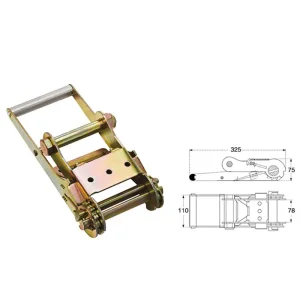
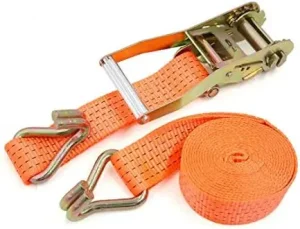
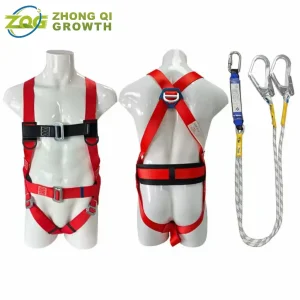
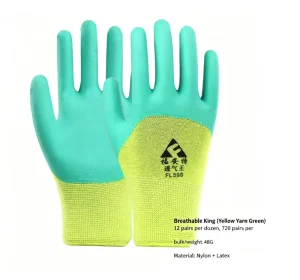
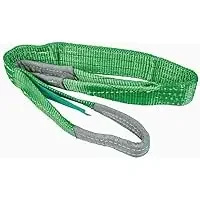
3. Mixed Container Loading & Logistics Aggregation: To maximize capital turnover for Indian B2B buyers, we provide flexible container load consolidation. Buyers can combine high-altitude mountaineering boots, industrial safety shoes, CE EN361 safety harnesses, and heavy-duty cargo securing straps in a single 40HQ container shipped from Tianjin Port directly to Nhava Sheva (Jawaharlal Nehru Port) or Mundra, reducing unit ocean freight overhead by up to 28%.
Crucial commercial, regulatory, and technical considerations for Indian brand owners and commercial procurement managers.
Our standard production MOQ is typically 500 to 1,000 pairs per style across an assorted run of sizes (EU 38–46 / UK 5–12). For enterprise clients developing completely bespoke outsole mold toolings, initial minimum test runs can be structured to support initial market sampling, with brand logo injection and custom carton packaging included.
Every single waterproof bootie liner is subjected to automated centrifuge pneumatic air-immersion testing before lasting. Following upper assembly, completed footwear undergoes 20,000 to 50,000 cycles in our dynamic flexing water-bath simulators (SATRA TM77 standard equivalent) to guarantee zero moisture penetration along critical stitch lines.
Yes. We formulate customized high-abrasion rubber (HAR) compounds with tailored Shore-A hardness ratings (58–65 Durometer) engineered for sub-zero temperature elasticity. Our proprietary alpine lug geometry evacuates loose mud and slush dynamically, mirroring high-end Italian grip ratings while lowering mold licensing costs by more than 60%.
Shipping from Tianjin Port directly to Nhava Sheva (Mumbai) or Mundra averages 18 to 22 transit days. Shipments destined for Chennai or Kolkata take approximately 16 to 20 days. Our export department handles complete bill of lading (B/L), commercial invoice, packing list, and Certificate of Origin (COO) documentation to ensure frictionless Indian customs clearance.
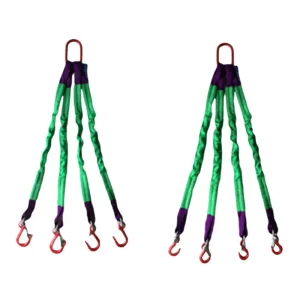
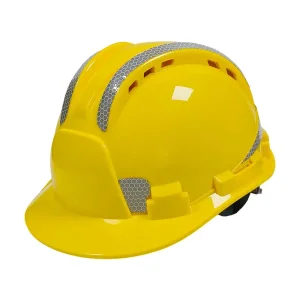
Absolutely. As an integrated industrial PPE and safety webbing manufacturer, we routinely consolidate technical mountaineering boots with full body fall-arrest harnesses, synthetic cargo lashing belts, high-tenacity lifting slings, and safety helmets inside a single container shipment, giving Indian distributors superior inventory turns across multiple SKU lines.
Consolidate your purchasing: high-altitude footwear, anti-puncture tactical boots, extreme load tie-downs, and CE-certified full body harnesses ready for immediate containerized export.
Request an itemized FOB export price list, custom brand mockup, or physical test samples. Our sales engineers deliver detailed quotation sheets within 24 hours.