Targeted solutions answering Portuguese work site demands: ultra-breathable mesh for Alentejo heat, flexible puncture-resistant midsoles for metropolitan construction in Lisbon, and spark-safe designs for northern industrial workshops.
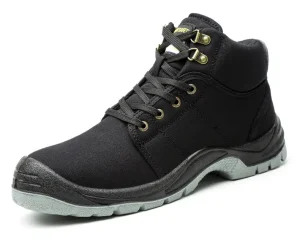
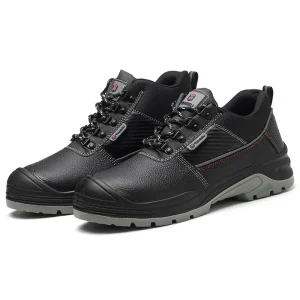
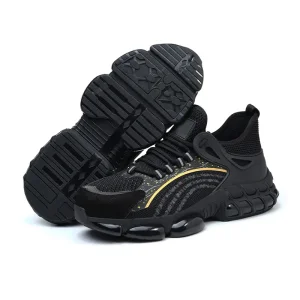
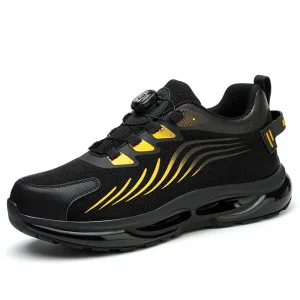
An authoritative analysis of sectoral shifts, infrastructure expansion, and why Portuguese B2B PPE distributors balance local high-end production with direct Chinese volume manufacturing.
Portugal's national Recovery and Resilience Plan (PRR) has mobilized billions into transportation grids, expansion at Port of Sines, metropolitan light rail expansions in Porto and Lisbon, and residential retrofitting. Civil contractors require massive volumes of standardized, affordable EN ISO 20345 S1P/S3 safety footwear that delivers certified 200J toe protection without inflating overhead project expenses.
While northern Portugal (Felgueiras, Guimarães, São João da Madeira) is globally recognized for premium leather dress fashion footwear via APICCAPS, rising domestic labor and raw material costs make high-volume basic work boots economically challenging to produce locally. Portuguese distributors bridge this operational gap by partnering with large-scale Chinese factories for high-yield, competitive base-tier safety shoes.
Industrial complexes in Palmela (Autoeuropa supply ecosystem), Marinha Grande's tooling and injection molding sector, Leiria's cement works, and Alentejo's intensive agricultural/olive facilities require specialized slip resistance (SR), anti-static (ESD) protection, and fuel/oil resistance (FO). Sourcing standardized platforms with customized outsoles ensures reliable worker welfare and statutory labor inspection compliance.
| Target Sector in Portugal | Predominant Risk Profile | Recommended Standard | Upper & Soling Architecture | Procurement Advantage (China Direct) |
|---|---|---|---|---|
| Logistics & Fulfillment (Azambuja, Vila Franca de Xira) | Repetitive foot fatigue, toe crush risk, smooth warehouse floor slip | EN ISO 20345:2022 S1P / SR | Breathable 3D mesh or Oxford cloth; Dual Density PU Outsole | 40-55% unit cost reduction compared to local spot buys; lightweight ergonomics. |
| General Construction (Lisbon Metrô, Porto Metro, Rail Link) | Protruding rebar, falling masonry, uneven terrain, muddy conditions | EN ISO 20345:2022 S3 / LG / SC | Water-repellent embossed cowhide; Steel/Kevlar Plate; PU/Rubber | Full CE Type-Examination documentation; high abrasion scuff caps for durability. |
| Automotive & Precision Parts (Setúbal, Mangualde) | Electrostatic charge accumulation, slick machining fluids, fine stamping scraps | EN ISO 20345:2022 S1 / ESD / FO | Microfiber / Suede; Conductive PU insole; Oil-resistant Nitrile rubber | Batch-tested electrical resistance (100kΩ to 1000MΩ); flexible OEM branding. |
| Cork Processing & Woodworking (Santa Maria da Feira, Évora) | Sawdust slip hazard, splinter punctures, prolonged standing shifts | EN ISO 20345:2022 SB / S1P / PS | Split leather; Non-metallic composite toe; Non-metal anti-puncture Kevlar | Zero-metal architecture preventing magnetic interference; lower shipping weight. |
A granular look at the critical regulatory and material evolutions separating baseline shoes from engineered personal protective equipment under European Regulation (EU) 2016/425.
The implementation of EN ISO 20345:2022 has eliminated ambiguity in slip and penetration resistance classifications, introducing stricter testing protocols that direct-import Portuguese enterprises must comprehend to protect against regulatory non-conformity penalties from ACT (Autoridade para as Condições do Trabalho):
Factory Compliance Verification: Every batch manufactured in our facility for Portuguese delivery is verified against EU Type-Examination Certificates issued by accredited Notified Bodies (such as SATRA, INSPEC, or CTC), accompanied by batch test records and multi-language Portuguese Declaration of Conformity (DoC).
Scalable smart injection and cementing lines engineered to support both national tenders and regional Portuguese private-label wholesale distribution.
Evaluating trade-offs between physical protection, thermal comfort during Mediterranean summers, and total landed cost efficiency.
Traditional carbon steel toe caps provide the slimmest profile and lowest tooling unit cost, making them ideal for budget-conscious municipal tenders. However, for technicians working near electrical infrastructure in Coimbra or cold-storage facilities in Lisbon, our ultra-lightweight fiberglass and composite toe caps eliminate thermal bridging, deliver zero magnetic interference, and decrease worker fatigue by reducing pair weight by up to 180 grams.
While stainless steel midsoles offer impenetrable resistance against narrow, hardened nails on demolition zones, they restrict longitudinal foot flexibility. Our multi-layer woven aramid (Kevlar) puncture plates cover 100% of the insole footprint (unlike steel which leaves a 3-5mm perimeter clearance), facilitating natural foot flexion on scaffolding and reducing knee joint strain during long shifts.
Dual-density Polyurethane (PU/PU) offers superior cushioning and light weight for indoor warehousing, yet degrades rapidly under extreme surface temperatures. For road paving crews in Alentejo and heavy metal workshops in Braga, our PU/Nitrile Rubber outsoles provide exceptional contact heat resistance (HRO up to 300°C for 60 seconds) and resistance to hot asphalt and hydraulic petroleum fluids.
Minimizing transit volatility and ensuring tariff predictability from North China export docks to Atlantic deepwater gateways.
Located in Shuangjie Trusted Industrial Park, Tianjin, our manufacturing hub sits directly adjacent to Tianjin Port (Xingang), the preeminent maritime container terminal in North China. This proximal advantage provides several clear operational efficiencies for Portuguese corporate buyers:
We assist your customs despachante with accurate classification, documentation, and chemical declarations.
TARIC Code: 6403 40 00 (Footwear with metal toe-cap) or 6402 91 00 (Outer soles/uppers of rubber/plastics).
EU REACH Compliance: Complete laboratory testing for Hexavalent Chromium (Cr VI <3 mg/kg in leather uppers), banned azo dyes, organotin compounds, and nickel release.
Portuguese Labeling: Custom stitched tongue labels with CE mark, Portuguese sizing (EUR 36–48), standard references, and importer brand details.
Engineered for harsh environments, thermal challenges, and rigorous European workplace safety standards. Ready for container volume distribution across Portugal.
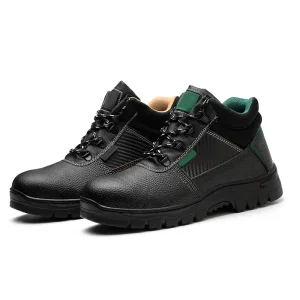
Cheap Customizable Safety Shoes High And Low upper Anti-Smash Anti-Puncture Supplier, Suppliers
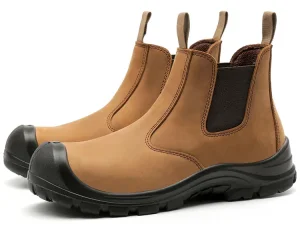
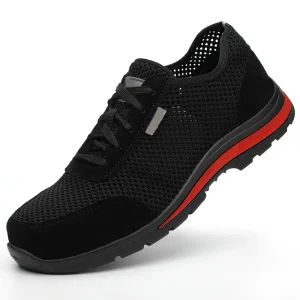
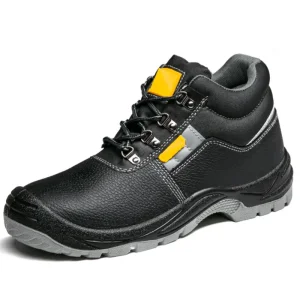
China Wholesale Factory Direct Supply Anti-Smash Anti-Static Men's Safety Shoes Supplier, Factories
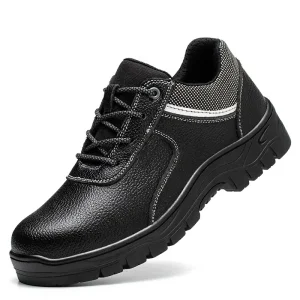
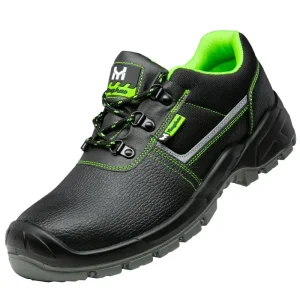
Custom Iron head iron sole cowhide safety shoes,high-top and low-top Supplier, Factory
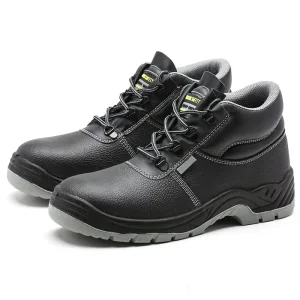
Cheap Cowhide High-Cut Low-Cut Anti-Puncture Anti-Slip Men's Safety Work Boots Suppliers, Factories
Direct answers addressing European certifications, minimum order quantities, private labeling, and port-to-warehouse logistics.
Whether you are bidding on upcoming Portuguese infrastructure tenders, expanding regional PPE wholesale distribution across Lisbon and Porto, or creating your private-label footwear catalog, our engineering and export team is ready to assist with samples, CE documentation, and direct volume quotes.
Send Inquiry Now