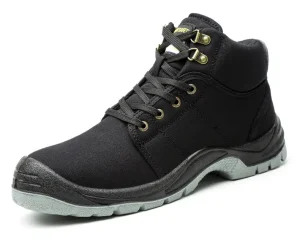
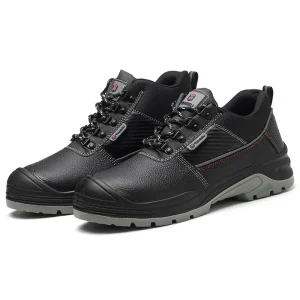
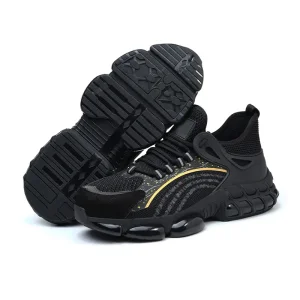
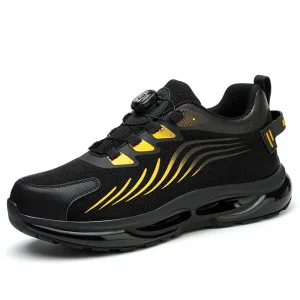
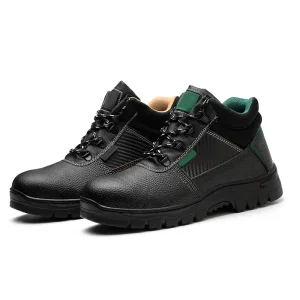
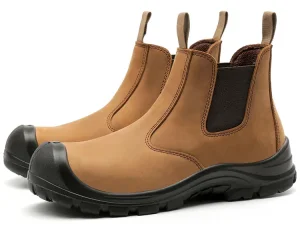
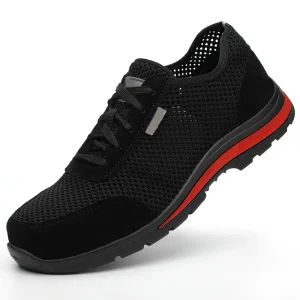
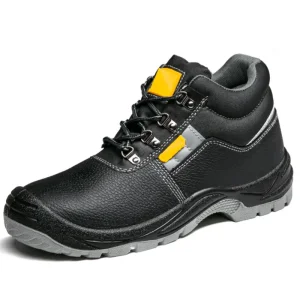
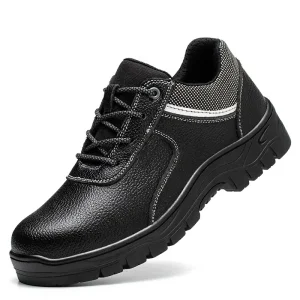
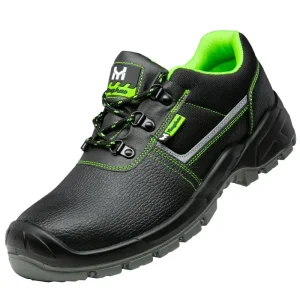
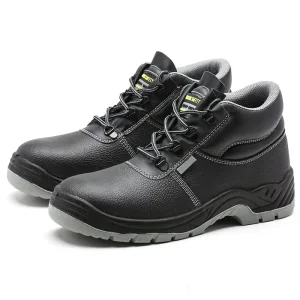
High-demand, rapid-turnaround standard models custom-built to satisfy Southern California high-throughput warehousing, intermodal logistics, and manufacturing requirements.
Navigating the intersection of intensive 24/7 cross-dock distribution, stringent Cal/OSHA Title 8 mandates, and shifting commercial procurement dynamics.
The Port of Los Angeles and Port of Long Beach form the preeminent maritime import gateway into North America. Over 175,000 regional logistics, intermodal rail, and longshore workers require continuous equipment replenishment. Safety shoes in this corridor endure extreme mechanical abrasion against concrete terminal decks, oil-slicked container yards, and continuous heavy machinery foot traffic.
Spanning Ontario, Rancho Cucamonga, Fontana, and Moreno Valley, the Inland Empire encompasses over 1 billion square feet of warehouse space. Workers in these e-commerce fulfillment centers average between 15,000 to 25,000 steps per shift on unyielding polished concrete. Footwear must balance rigorous impact resistance with ultra-lightweight athletic ergonomics to minimize fatigue-induced workplace claims.
California maintains the strictest workplace safety enforcement regime in the United States. Under Cal/OSHA Title 8, Section 3385, employers are legally mandated to verify that all protective footwear meets or exceeds ASTM F2412-18a and ASTM F2413-18. Sourcing direct from certified manufacturing facilities with verified third-party laboratory accreditations eliminates liability exposure for Los Angeles enterprises.
The confluence of dedicated industrial cluster ecosystems, vertical raw material integration, and advanced direct-injection automation enables unprecedented cost-to-performance ratios.
Operating within major Chinese safety manufacturing clusters—including Gaomi, Wenzhou, and the coastal industrial corridors—our facilities benefit from complete verticalization. High-tensile steel caps, non-metallic composite toes, puncture-resistant aramid midsoles, and vulcanized rubber polymers are sourced within a 30-mile radius, radically suppressing bill-of-materials overhead.
Direct vessel departures from Qingdao, Ningbo, and Shanghai to the Port of Los Angeles provide unmatched transit logistics. With average port-to-port maritime journeys of 14 to 18 days, West Coast distributors avoid inland multi-modal delays, securing lower landed container costs than importers servicing East Coast or Gulf hubs.
Departing from legacy cement bonding processes, our facilities utilize state-of-the-art dual-density polyurethane (PU/PU and PU/TPU) DESMA direct injection molding. This automated fusion eliminates glue degradation, guarantees watertight soling bond integrity, and produces exceptionally lightweight soles with integrated shock-absorption channels.
| Evaluation Parameter | China Direct Factory Production | US Domestic Intermediary / Wholesaler | Southeast Asia Alternative Sourcing |
|---|---|---|---|
| Raw Material Supply Elasticity | Immediate in-house weaving, compounding & stamping | Dependent on tier-3 finished imports | Heavy dependence on imported Chinese fabrics & hardware |
| Bespoke Tooling & Mold Costs | $1,500 - $3,500 per size-run mold | $12,000+ (outsourced contract machining) | $4,500 - $8,000 (extended CNC lead times) |
| Production Capacity / Month | 250,000+ Pairs per facility | Limited inventory buffer | 40,000 - 80,000 Pairs (capacity bottlenecks) |
| Landed Cost to LA Harbor | Optimal (Direct container volume discounts) | 35% - 60% wholesale markup applied | Competitive labor, higher freight & sub-component tariffs |
| ASTM Testing Validation | Full batch-level third-party testing (SGS/Intertek) | Secondary relabel certification | Variable lab infrastructure availability |
A granular technical breakdown of performance ratings, impact thresholds, and material specifications required for compliance within California commercial work sites.
Our reinforced toe caps—available in cold-rolled alloy steel, lightweight aeronautical aluminum, and non-magnetic carbon composite—undergo strict drop testing. Under ASTM F2413-18, the protective cap withstands an impact of 75 foot-pounds (101.7 Joules) and compressive loads of 2,500 pounds (11,121 Newtons), maintaining interior clearance safety limits of at least 0.50 inches (12.7 mm) for men's sizes.
Addressing hazardous construction debris common across Downtown Los Angeles skyscraper sites and demolition zones, our shoes feature multi-layer high-tenacity woven Kevlar/aramid penetration barriers. These midsoles resist a minimum piercing force of 270 pounds (1,200 Newtons) according to ASTM protocols while preserving sole flexibility and thermal insulation without conducting electricity.
We provide engineered compounds tailored to workplace hazards: Non-conductive Electrical Hazard (EH) outsoles capable of withstanding 18,000 Volts at 60 Hz for one minute with zero leakage current exceeding 1.0 milliampere under dry conditions; or Static Dissipative (SD 100) soling matrices that safely bleed electrostatic charges into the floor plane for sensitive electronics warehousing in Hawthorne.
The primary driver of worker wear compliance across California industrial facilities is footwear weight and plantar pressure distribution. Heavy, stiff boots lead to chronic musculoskeletal complaints, increased fatigue, and non-compliance with PPE mandates. Our factory specializes in dual-density PU midsoles engineered with low Shore A hardness (45-50 Shore A) for shock attenuation, paired with high-density outer tread profiles (65-70 Shore A) formulated for oil-, acid-, and slip-resistance exceeding ASTM F2913 coefficient of friction thresholds.
Every industry within the Southern California ecosystem imposes distinct environmental stress factors on protective footwear.
Central industrial zones like Vernon, Commerce, and City of Industry host dense food packaging, meat processing, and light fabrication plants. Footwear deployed here requires high-grade waterproof microfiber or treated cowhide leather uppers that resist animal fats, cleaning detergents, and organic oils, integrated with self-cleaning, micro-channeled tread patterns to prevent slip-and-fall incidents on wet tiles.
Facilities operating across El Segundo, Hawthorne, and Torrance demand high-precision cleanroom and flight-hardware assembly environments. Safety shoes require non-sparking, 100% metal-free non-metallic composite toe architectures that pass through facility metal detectors without triggering alerts, combined with Class 1 Static Dissipative (SD) parameters to preserve micro-electronic payloads.
Driven by continuous Los Angeles International Airport renovations and multi-billion-dollar preparations for the 2028 Olympic Games, heavy construction trades face punishing terrain. Puncture-resistant steel midsoles, abrasion-resistant TPU toe bumpers, high-ankle support counters, and water-repellent full-grain leather uppers are essential for heavy site demolition and concrete framing operations.
Proven frameworks for navigating customs valuation, quality assurance, private labeling, and port congestion mitigation.
Every production run adheres to internationally recognized ISO 2859-1 (AQL) standards. Critical dimensional verifications, toe cap impact resistance drop verification on random samples, seam tensile strength checks, and adhesive peel tests are conducted prior to master carton consolidation. Third-party verification reports from SGS, TÜV, or Intertek are furnished prior to bill of lading generation.
We support US industrial brands, national distributor chains, and regional safety houses in creating differentiated commercial lines. Customization includes laser-etched logos, branded molded eyelets, woven label tongues, bespoke ergonomic orthotic footbeds, and full four-color retail packaging optimized for US retail display or high-density distribution center racking.
Understanding US Harmonized Tariff Schedule (HTS) classifications is critical for maintaining margin health. Footwear duty rates vary significantly based on upper material composition, sole construction, and outer surface area percentages. Our export compliance engineers collaborate with your customs brokerage to optimize component formulations and ensure compliant documentation under Section 301 frameworks.
Select from our volume-proven production lines ready for container consolidation, regional distribution branding, or customized engineering specifications.
Critical insights for procurement directors, safety coordinators, and footwear brand managers sourcing protective footwear from China into the California market.
Cal/OSHA requires protective footwear to conform directly to ASTM F2412-18a and ASTM F2413-18. Our factory partners with ISO 17025 accredited third-party laboratories (such as Intertek and SGS) to test every major lot for Impact (I/75), Compression (C/75), and Metatarsal or Puncture resistance where specified. Each pair contains sewn-in compliance labels citing the exact ASTM designation, version year, and protection codes required for legal verification during workplace site audits.
Production cycles for standardized volume orders generally range between 25 to 35 calendar days following final pre-production sample approval. Direct ocean passage from Qingdao or Ningbo to the San Pedro Bay ports requires approximately 14 to 18 transit days. Including US Customs clearance and drayage processing, delivered dock-to-dock timelines into Inland Empire warehouses typically finalize within 45 to 55 days from purchase order confirmation.
For high-throughput indoor fulfillment centers across the Inland Empire, composite toes are heavily favored. Composite architectures reduce overall boot weight by 15-20%, do not conduct ambient radiant heat during intense summer months (where warehouse temperatures routinely cross 90°F), and allow staff to navigate electronic metal detectors without disruption. Steel toes remain our primary recommendation for heavy structural construction and coastal terminal environments where concentrated crush hazards exist.
Our standard production MOQ is typically 500 to 1,000 pairs per style, which can be distributed across standard US men's size runs (Sizes 7 through 14). For customized outsole molds or proprietary tread tooling, higher initial volumes or amortized tooling fees apply. For standard factory chassis with custom branded insoles, tongue tags, and packaging, flexible minimums can be structured for market entry testing.
Slip incidents represent over 35% of total workers' compensation outlays in California warehouse environments. Our outsoles are tested under ASTM F2913 (Whole Footwear Slip Resistance) across multiple surface conditions: dry polished quarry tile, wet stainless steel, and oil/glycerol contaminated surfaces. Outsoles with multidirectional micro-siping patterns achieve dynamic coefficients of friction (COF) well exceeding 0.40 to 0.50, delivering superior traction across slick loading docks.
Yes. As part of our comprehensive PPE manufacturing infrastructure, buyers can consolidate safety shoes with complementary category items, including CE-certified fall protection harnesses, industrial polyester lifting slings, cargo ratchet tie-downs, cut-resistant gloves, and high-visibility safety apparel. This consolidation drastically reduces landed freight cost per unit by maximizing 40-foot High-Cube container cube utilization.
Partner directly with a proven industrial manufacturing leader. Eliminate broker tiers, secure documented ASTM F2413-18 compliance, and lock in volume factory pricing delivered straight into the Port of Los Angeles.