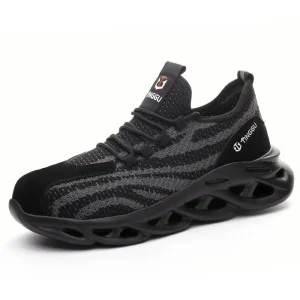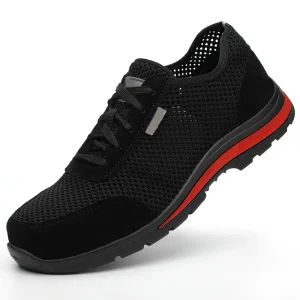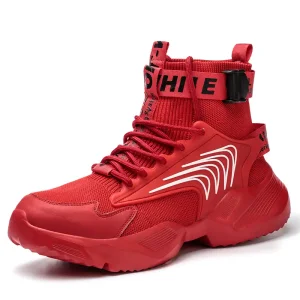
Pre-selected tactical mountaineering, waterproof trek, and safety footwear customized for Central American terrain profiles.
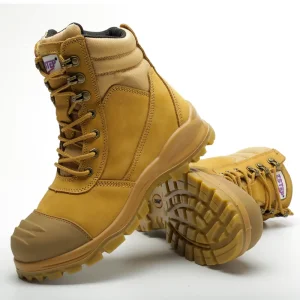
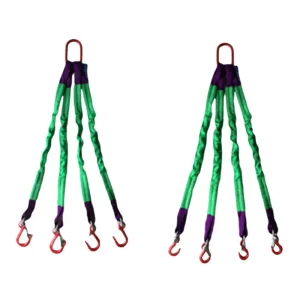
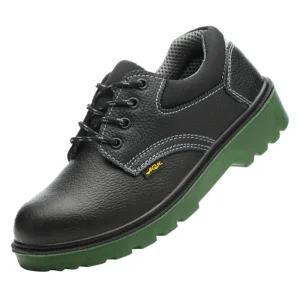
Addressing the shifting dynamics between eco-tourism expansion, infrastructure demands, and humid microclimates.
Costa Rica hosts over 28 national parks, including high-altitude traverses across the Cordillera de Talamanca. Professional trail guides, park rangers (SINAC), and scientific expedition teams demand mountaineering boots that survive constant mud, wet root exposure, and sudden barometric shifts.
Tropical rainforests and cloud forests present extreme relative humidity levels (often 90%+). Traditional Polyurethane (PU) outsoles degrade rapidly due to microbial-induced hydrolysis. Chinese OEM production integrates modified thermoplastic polyurethanes (TPU) and high-density rubber to extend active boot lifecycle.
Beyond recreation, hydro-power projects, geothermal initiatives around volcanic corridors, and telecommunications towers situated on mountain peaks require mountaineering-grade footwear paired with certified EN ISO safety features (steel shank, anti-perforation, and ankle bracing).
How fully integrated supply chains, advanced automated lasting machinery, and port proximity outpace competing export zones.
| Evaluation Parameter | China (Tianjin Cluster / Integrated) | Southeast Asian Hubs | Traditional European Ateliers |
|---|---|---|---|
| Raw Material Supply Chain | In-house technical yarn, mold making, and cowhide processing within a 50km radius. | Heavy dependency on imported synthetic textiles and specialized hardware. | High quality leather, but high supply lead times and fragmented component sources. |
| Production Capacity & Scalability | Automated DESMA injection lines; 20,000+ pairs weekly per dedicated cell. | Moderate to high volume, manual-labor focused with higher cycle variances. | Low-to-medium batch volumes, strictly suited for ultra-niche premium retail. |
| OEM/ODM Mold Customization | Rapid CNC tooling prototypes delivered in 7–10 days; fully digitized lasts. | Tooling usually outsourced back to China or Taiwan, delaying development. | Custom tooling is cost-prohibitive for commercial-scale tenders and distributors. |
| Quality Standardization | CE EN ISO 20345, EN 361, ANSI Z41 fully integrated into on-site testing labs. | Variable conformity based on contractor sub-tier quality assurance. | Strict conformity with high regulatory assurance, accompanied by high unit costs. |
Customizing boots for volcanic ash, mud saturated soil, wet rock scrambles, and alpine plateaus.
Areas surrounding Volcán Arenal, Irazú, and Poás expose outsoles to abrasive volcanic scree and acidic condensation. Our Chinese factory formulates deep-lug, high-shore-hardness rubber compounds that resist premature wear against sharp volcanic rock.
Monteverde and Braulio Carrillo require breathable waterproof membranes. Our multi-layer ePTFE laminated boot lining provides water vapor permeability while keeping feet completely dry in wet foliage, avoiding skin maceration on prolonged treks.
Scaling Chirripó's crests demands torsional rigidity. Built-in fiberglass or composite shanks prevent arch fatigue and underfoot contusions, while high-cut padded collars prevent ankle twists on loose descents under heavy expedition loads.
How smart supply chains and advanced polymers are redefining technical safety footwear for international tenders.
Global defense forces, outdoor retailers, and commercial buyers are replacing heavy steel elements with carbon fiber shanks, nano-composite toe caps, and Kevlar puncture-resistant midsoles. This reduces worker and hiker foot fatigue by up to 28% without sacrificing ISO impact or puncture ratings.
Costa Rica emphasizes national sustainability and low-carbon initiatives. Our Chinese factory supports this goal by supplying mountaineering boots featuring GRS-certified recycled upper textiles, plant-based water-repellent treatments (PFC-free DWR), and non-toxic waterborne adhesives.
Essential trade, compliance, and material engineering considerations for procurement directors.
We specifically swap standard PU midsoles for hydrolysis-resistant EVA or dual-density TPU, preventing sole detachment common in humid climates. In addition, all leathers undergo hydrophobic silicone-tanning to prevent rapid water absorption and mold accumulation during storage.
Our standard production MOQ is typically 500 to 1,000 pairs per style/colorway, depending on outsole mold sharing. For repeat distribution programs or commercial contract trials, we offer phased volume consolidation across mixed sizes (EU 38 to 47).
Yes. Our in-house testing laboratory subjects boots to dynamic flexing (100,000 flex cycles), toe-impact resistance (200 Joules), puncture-proof penetration testing (1,100 N), and water-column waterproofing tests before bulk container shipment.
Shipments depart directly from our nearby Tianjin Port. Transit times to Central American ports (via Balboa or direct regional feeder lines) generally range from 28 to 35 days, with complete export documentation (Bill of Lading, Certificate of Origin, Packing List) provided.
Complete certified gear and workwear options directly supplied from our integrated industrial facility.