Direct-from-factory fall arrest harnesses, structural climbing systems, and ultra-high-tenacity lashing straps built to withstand rigorous industrial cycles across Bratislava, Žilina, Nitra, and Trnava.
Evaluating fall protection demands across the world's most vehicle-intensive production economy and Central Europe's critical transit arterial corridor.
The Slovak Republic occupies a pivotal engineering and manufacturing nexus within the European Union. Boasting the world's highest per-capita automobile production rate, Slovakia is an industrial powerhouse anchored by sprawling mega-plants in Bratislava (Volkswagen Group), Trnava (Stellantis), Žilina (Kia Motors), and Nitra (Jaguar Land Rover), further amplified by the emerging Volvo electric vehicle facility in Valaliky near Košice. Beyond automotive assembly, Slovakia's industrial backbone comprises expansive metallurgical clusters (such as U. S. Steel Košice), extensive chemical complexes (Slovnaft in Bratislava, Duslo Šaľa), hydroelectric infrastructure along the Váh cascade, and high-capacity freight transit corridors connecting Western Europe with Eastern transit lanes.
In this heavy manufacturing and automated environment, the occupational safety threshold is extraordinarily rigorous. Fall arrest harnesses (Bezpečnostné postroje) are not merely passive personal protective equipment (PPE); they are mission-critical life-support hardware embedded in stringent preventative maintenance, crane operation, automated storage and retrieval system (ASRS) servicing, and civil structural maintenance protocols. European Standard EN 361:2002, alongside EN 358:2018 (work positioning) and EN 813:2008 (sit harnesses), dictates rigorous biomechanical criteria to mitigate suspension trauma, arrest dynamic drop kinetic energy, and survive corrosive chemical and thermal exposures.
How smart sensing, ergonomic weight distribution, and high-performance polymer fibers are revolutionizing safety harnesses for OEM/ODM distributors across Europe.
Modern Slovak automotive plants demand digitized asset management. Modern harnesses embed UHF RFID microchips and NFC telemetry chips that automatically log inspector identification, dynamic load cycles, UV degradation index, and statutory annual inspection status under Slovak NIP requirements.
Prolonged suspension without proper pressure attenuation leads to fatal suspension trauma (orthostatic intolerance). Next-gen designs utilize 3D breathable moisture-wicking lumbar padding, memory elastomeric core leg loops, and dorsal sub-pelvic straps engineered to disperse fall energy below 6 kN to the human femur framework.
Meeting European corporate sustainability standards (ESG), harness webbing leverages closed-loop chemically recycled industrial polyester that retains unbroken tensile durability. Fluoropolymer hydrophobic and oleophobic nano-coatings prevent dirt, grease, and moisture ingress in Slovak metallurgy and construction sites.
Why Slovak industrial procurement directors, PPE brands, and safety distributors establish strategic hybrid supply lines combining domestic warehousing with China 4.0 contract manufacturing.
Industrial procurement managers in Slovakia face a multifaceted challenge: European occupational safety legislation mandates that every harness distributed within the EU internal market carry CE marking, backed by an EU Declaration of Conformity (DoC) and certified by an accredited Notified Body (such as APAVE, SATRA, or VVUÚ in the neighboring Czech Republic) under Personal Protective Equipment Regulation (EU) 2016/425 (Category III risks). Simultaneously, severe inflation across European manufacturing centers, soaring regional energy tariffs, and acute labor shortages in Central Europe have dramatically increased local manufacturing overhead.
While domestic Slovak distributors maintain localized stocking facilities, fast-response technical calibration centers, and on-site training seminars in cities like Trnava and Košice, over 78% of the core high-tenacity webbing, drop-forged alloy steel/aluminum carabiners, quick-connect buckles, and sewn harness subassemblies originate from highly specialized, vertically integrated production bases in China. Sourcing managers achieve optimal margin resilience and zero-defect consistency by partnering directly with Tier-1 Chinese manufacturers equipped with in-house yarn extrusion, high-speed automated needle looms, computer-guided pattern stitching, and full-spectrum drop towers.
| Evaluation Parameter | Local European Fabricators | China 4.0 Smart Factory (ZhongQi) | Strategic Advantage for Slovak Importers |
|---|---|---|---|
| Raw Material Integration | Outsourced third-party yarn & hardware | In-house 210D AA industrial polyester extrusion | 100% batch-to-batch polymer molecular consistency |
| Stitching Automation | Manual / Semi-automated sewing machines | Programmable multi-axis CNC stitching stations | Zero human error in lock-stitch pitch and tensile load |
| OEM / ODM Customization | High MOQ; rigid standard product catalogs | Complete flexibility: custom web color, logo, packaging | Private-label brand creation for Central European market |
| Cost Efficiency | High labor and regional energy surcharges | High-throughput economies of scale & automated lines | 30% - 45% gross margin optimization for distributors |
| Quality Assurance & Testing | Sample batch verification | 100% proof-load hardware test + dynamic drop tower | Zero-defect warranty compliant with EU 2016/425 Cat III |
Deconstructing the vertical manufacturing advantages of Tianjin ZhongQi Growth Technology Co., Ltd. for European industrial clients.
Unlike standard assembly workshops that source webbing from external mills and fittings from third-party trading brokers, ZhongQi operates an end-to-end manufacturing campus located in the Shuangjie Trusted Industrial Park, adjacent to Tianjin Port. The process initiates with virgin high-molecular polyester chips, drawn into 210D AA-grade high-tenacity industrial continuous filaments. These filaments undergo precision thermodynamic heat-setting to guarantee elongation characteristics under 4% under normal working conditions.
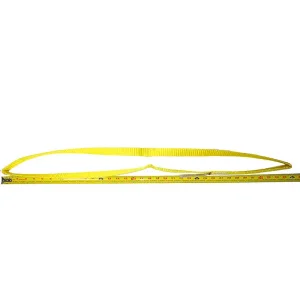
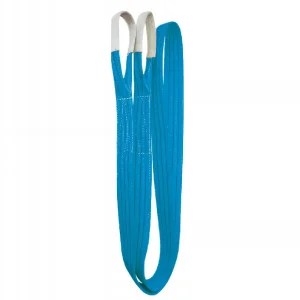
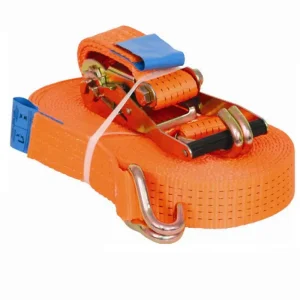
Our heavy-duty shuttled and needle looms weave structural webbing ranging from 44mm to 50mm for safety harnesses, and up to 100mm for heavy-duty lifting slings and cargo lashing. Webbing edges are finished with custom selvedges that resist abrasion against sharp steel scaffolding and automotive chassis assembly jigs.
Human error in manual sewing is the leading cause of safety harness failure under dynamic shock loads. ZhongQi mitigates this vulnerability through fully computerized, multi-axis CNC pattern-stitching machines. Every single structural joint—whether the dorsal D-ring junction, sternal attachment, or lateral positioning loops—is secured via automated lock-stitch trajectories using Bonded Polyester filament thread (size V-138 or V-207).
Our Quality Assurance protocol operates on a zero-tolerance inspection gate:
Targeted fall protection, positioning, and load-securing configurations engineered for specific Slovak operational environments.
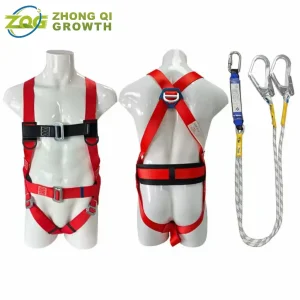
Maintenance personnel traversing elevated overhead monorails, robotic welding cells, and conveyor carriers rely on our 5-Point Full Body Harness featuring lightweight aluminum dorsal rings and rapid-donning chest buckles that eliminate snag hazards.
High-altitude bridge deck construction traversing the Carpathian mountains demands EN 361 harnesses paired with integrated energy-absorbing twin lanyards (EN 355) and high-abrasion polyester webbing resistant to jagged rebar and concrete dust.
Extreme thermal radiation, molten metal spatter, and corrosive sulfur vapors require flame-retardant aramid/Kevlar-reinforced safety harness options or specialized silicone-coated protective webbing sleeves to ensure zero structural degradation.
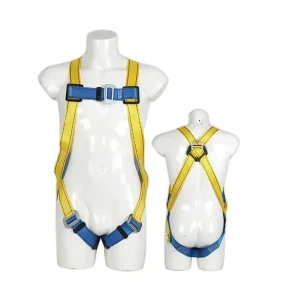
Order pickers and high-bay crane technicians operating up to 30 meters high need ultra-comfortable, lightweight 3-point fall arrest harnesses that permit full range of motion while transitioning between vertical ladders and horizontal lifelines.
Direct engineering answers addressing testing, CE certification, European standards, logistics, and customized OEM production.
All safety harnesses destined for the Slovak Republic and the broader EU single market are manufactured in full conformity with Regulation (EU) 2016/425 governing Category III personal protective equipment (risks that may cause very serious consequences such as death or irreversible damage to health). Our harnesses are tested according to EN 361:2002 (Full body fall arrest), EN 358:2018 (Work positioning), and EN 813:2008 (Sit harnesses). Each unit carries permanent indelibly sewn labeling featuring CE marking with the 4-digit identification number of the auditing Notified Body, traceability batch serial numbers, date of manufacture, and pictograms instructing user compliance with Slovak language instruction manuals.
An EN 361 attachment point (identifiable by the uppercase letter 'A' or 'A/2' for twin sternal loops) is an engineered dynamic fall arrest point positioned at the dorsal or sternal zone, designed to arrest a free-fall and maintain the body in an upright position. EN 358 lateral side D-rings are solely intended for work positioning (holding the operator hands-free on a pole or tower) and must NEVER be used to connect a fall arrest shock absorber. EN 813 ventral waist rings are designed for rope access, suspension, and work seat descent. ZhongQi custom-engineers hybrid harnesses that synthesize all three certifications for multi-disciplinary industrial workers.
Yes. ZhongQi has over 15 years of dedicated OEM/ODM experience. For Slovak brands, PPE distributors, and safety consortia, we provide end-to-end customization: custom color-coded high-visibility webbing (e.g., lime green, safety orange, cobalt blue), woven jacquard branding or silicone corporate logos, laser-etched hardware branding on forged buckles and D-rings, UV-resistant multilingual sewn-in warning labels (including Slovak, Czech, German, and English), and bespoke retail boxes or waterproof Cordura storage bags.
Our manufacturing facility in Shuangjie Trusted Industrial Park, Beichen District, Tianjin, is situated directly adjacent to Tianjin Port (Xingang), one of North China's premier international container hubs. Ocean freight shipments depart directly from Tianjin Port to the Adriatic ports of Koper (Slovenia) or Rijeka (Croatia), or Northern range ports (Hamburg/Rotterdam), followed by rapid intermodal rail freight directly into Slovak container terminals in Bratislava or Dunajská Streda. Door-to-door ocean transit typically ranges from 28 to 35 days. For urgent sample verification or fast-turnover component orders, express air freight via Vienna International Airport (VIE), located just 45 minutes from Bratislava, delivers in 4 to 6 business days.
While both synthetic polymers offer high tensile strength, Polyester (PES) is the superior choice for industrial safety harnesses and lifting slings. Polyester has an exceptionally low moisture absorption rate (<0.5% compared to nylon's 4-5%), meaning it maintains 100% of its rated breaking strength even in saturated, wet, or freezing conditions. Furthermore, polyester exhibits outstanding UV resistance under outdoor sunlight, higher resistance to industrial acidic atmospheres, and controlled elongation properties that ensure predictable dynamic shock-absorption without excessive elasticity.
Speak directly with our senior PPE engineering team. Receive detailed technical drawings, CE documentation files, and comprehensive volume pricing within 24 hours.
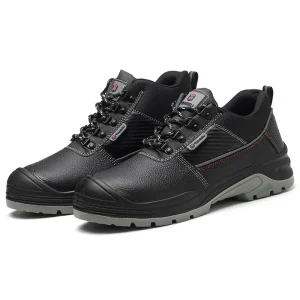
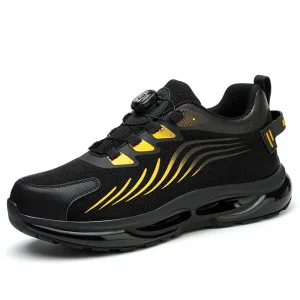
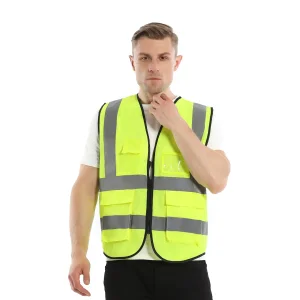
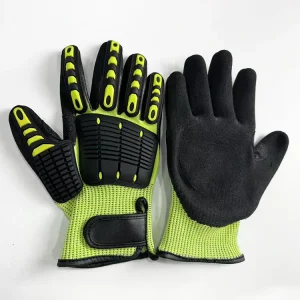
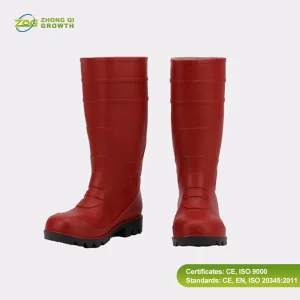
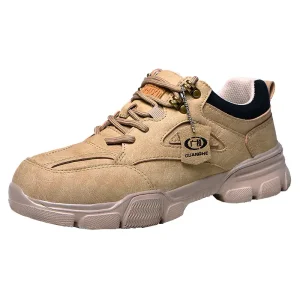
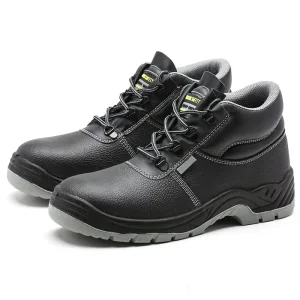
Explore our certified portfolio of heavy-duty welding footwear, industrial lifting slings, high-visibility protective apparel, and impact-resistant gloves for container consolidation.