
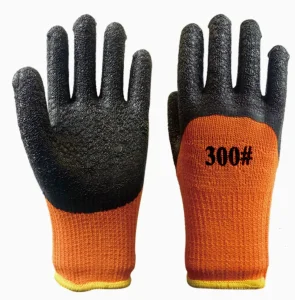
Direct supply line allocations engineered to withstand high shear, puncture hazards, and heavy rigging environments.
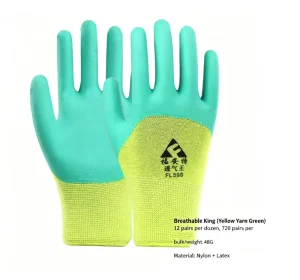
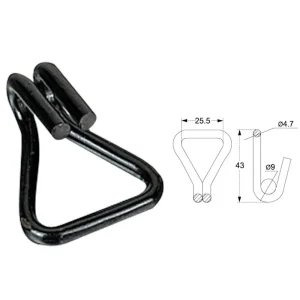
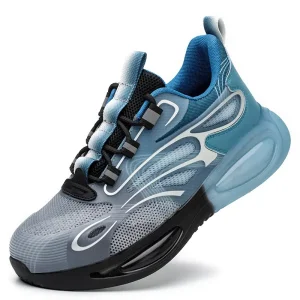
Istanbul, together with its contiguous manufacturing periphery in Kocaeli, Sakarya, and Bursa, serves as Turkey’s undeniable economic beating heart. Over 40% of the republic's manufacturing output is concentrated along this corridor. The localized industrial demands in areas such as Tuzla’s drydocks, İkitelli Organized Industrial Zone (OSB), and Dudullu OSB present some of the harshest mechanical cut and abrasive stress environments in Southern Europe and Western Asia.
Within automotive body-in-white (BIW) operations and stamping facilities, operators handle razor-sharp, untreated cold-rolled steel coils, sharp stamped panels, and oily aluminum stampings. Ordinary split-leather or basic synthetic knit gloves break down within hours under these conditions. The micro-burrs along sheared automotive body panels can slice clean through insufficient yarns, posing severe tendon and nerve damage hazards. Compliance teams across Turkey are systematically phasing out general-purpose work gloves in favor of engineered HPPE (High-Performance Polyethylene) composite gloves infused with tungsten-carbide or steel filaments.
Furthermore, mega-infrastructure ventures—including the continued expansion of the Istanbul Airport logistics hinterlands, high-speed rail networks, and seismic-reinforcement developments across Bakırköy and Kadıköy—have escalated demand for Level D to Level F cut-resistant solutions capable of multi-hazard protection against severe mechanical cuts, oily slippage, and crushing impact.
Overcoming the conventional compromise between cut prevention, tactical sensitivity, and heat accumulation.
By blending ultra-high-molecular-weight polyethylene (UHMWPE) with core-wrapped glass and stainless steel fibers, we achieve ISO Level E/ANSI A5 protection within a featherweight, second-skin 18-gauge knit matrix. Ideal for precision electronics assembly in Pendik.
Utilizing micro-suction capillary pore technology, our nitrile dipping draws lubricating industrial oils away from the glove surface. This maintains an iron grip on lubricated stamped sheet metal while preventing chemical seepage directly onto the epidermis.
Integrated low-profile TPR armor direct-welded across metacarpal channels protects against heavy back-of-hand pinch points and dropped-tool impact common to Tuzla shipyard maintenance and underground infrastructure drilling.
While local Turkish PPE distributors provide localized off-the-shelf support, large-scale original equipment manufacturers (OEMs), Tier-1 automotive integrators, and multinational contractors operating from Istanbul require cost stability, massive production scalability, and zero-defect consistency that only Tier-1 automated facilities can guarantee.
Our centralized manufacturing compound in Beichen, Tianjin, incorporates fully automated Industry 4.0 knitting halls. Computerized Japanese-standard knitting machines run continuously under controlled climate conditions to prevent filament micro-snags. Automatic robotic arms execute dipped polymer coatings with microscopic thickness consistency, eliminating the heavy hand fatigue associated with inconsistent immersion depth.
By bypassing multiple tiers of trading middlemen, Istanbul procurement departments unlock direct mill pricing. Furthermore, our consolidation hub near Tianjin Port allows Turkish buyers to combine full-container loads (FCL) spanning cut-resistant gloves, EN 361 fall-arrest harnesses, cargo lashing systems, and safety footwear into unified logistics streams, dramatically compressing landed container costs at Ambarlı Port.
Fully certified personal safety gear and heavy-load control hardware built to strict European Harmonized Standards.
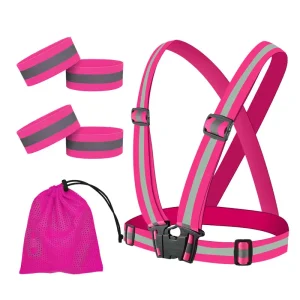
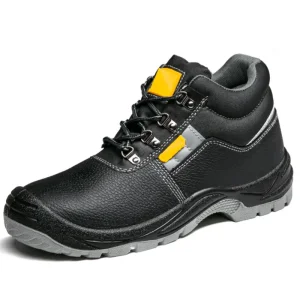
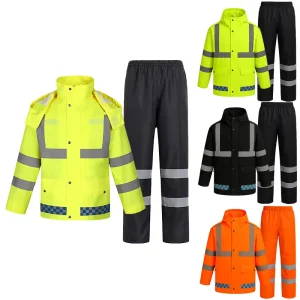
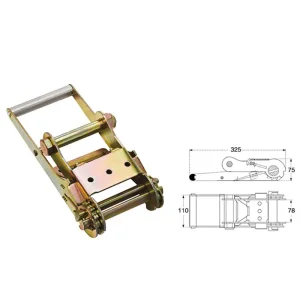
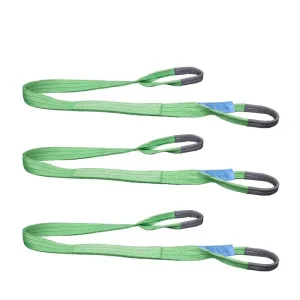
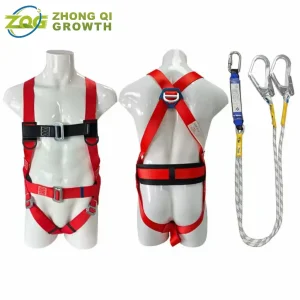
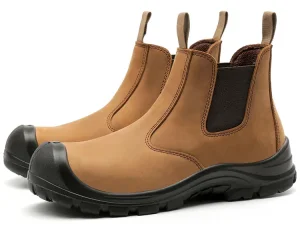
Full legal adherence to Turkish Ministry of Family, Labour and Social Services occupational mandates.
Every batch of cut-resistant gloves is subjected to rigorous Coup Test and TDM-100 cut resistance evaluations (ISO 13997). Test certificates from accredited European notified bodies are maintained on file for straightforward importer compliance.
Importing into Ambarlı or Gebze requires precise documentation to avoid punitive tariffs or customs delays. We supply accurate Certificates of Origin, fully translated Turkish user manuals, standardized CE conformity declarations, and batch test reports.
We empower Turkish safety distributors to grow their proprietary brands. Our factory provides custom heat-transfer silk screen logo application, high-density silicone labeling, custom barcode/EAN tags, and retail-ready packaging designed for European retail shelves.
Direct technical answers addressing standards, yarn engineering, and B2B import workflows for Turkey.
Under EN 388:2016, the circular blade Coup Test measures cut resistance on a 1-5 index. However, when highly abrasive filaments like glass fiber or steel wire are woven into HPPE yarns, they dull the circular blade, yielding inaccurate scores. In such cases, the TDM-100 test (ISO 13997) is legally required. This method uses a fresh straight razor blade under varying contact force to determine the cut threshold in Newtons (Levels A through F). Level D (15N), Level E (22N), and Level F (30N) represent modern industrial benchmarks for handling sheet metal and stamped automotive components across Istanbul factories.
For stamping shops in Kocaeli where lubricating oils and coolants are present, micro-foam nitrile or sandy nitrile coatings perform best. Micro-foam nitrile acts like a microporous sponge, channeling oil away from the contact plane to preserve mechanical friction. For dry abrasive tasks, such as masonry, concrete framing, and glass installation, crinkle latex coatings offer superior tear resistance and elastic grip across broad temperature spans.
Yes. That is a foundational competitive advantage of our Tianjin manufacturing complex. You can consolidate multiple product lines—including cut-resistant gloves, EN 361 fall-arrest full body harnesses, EN 1492-1 polyester lifting slings, and ISO 20345 safety footwear—into a single 20GP or 40HQ container. This streamlines customs clearance at Ambarlı, minimizes forwarding fees, and reduces inventory carrying costs for Turkish distributors.
Standard OEM manufacturing lead time ranges between 20 and 30 business days, depending on custom branding complexity. Direct ocean freight from Tianjin Port to Istanbul container terminals (Ambarlı Kumport, Marport, or Haydarpaşa) averages 28 to 35 days transit. Urgent small-batch orders or engineering samples can be dispatched via air freight directly to Istanbul Airport (IST) or Sabiha Gökçen (SAW) within 4 to 6 business days.