Comprehensive Analysis on Northern Italy's PPE Sourcing Ecosystem, EN 388/EN ISO 374 Compliance Frameworks, and Direct-from-Factory Manufacturing Synergies
As the powerhouse of Southern Europe's manufacturing economy, the Milan metropolitan region and the broader Lombardy industrial corridor demand high-specification Personal Protective Equipment (PPE). This technical dossier provides industrial buyers, safety directors, and wholesale importers with the data necessary to navigate supply chain resilience, CE compliance, and direct factory engagement.
Precision-manufactured items engineered for immediate integration into Lombardy's automated warehousing, metalworking, and logistics operations.
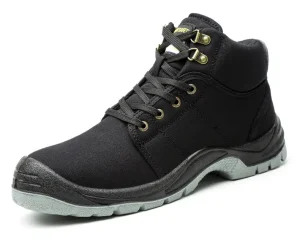
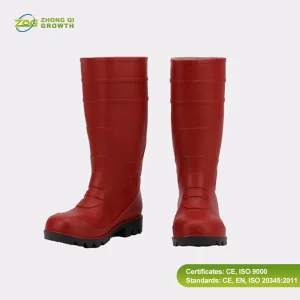
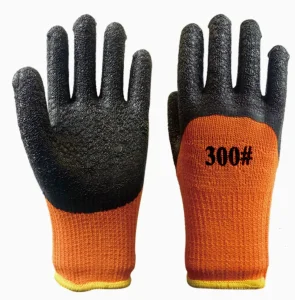
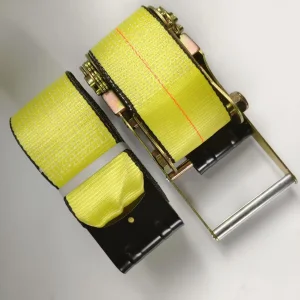
An empirical evaluation of the industrial forces shaping glove consumption in Northern Italy's prime manufacturing territories.
The Metropolitan City of Milan and the wider Lombardy region constitute the indisputable economic engine of the Italian Republic, generating over 22% of Italy's national Gross Domestic Product. Far beyond its international renown as a capital of haute couture and commercial banking, Milan anchors one of Europe's dense concentrations of precision manufacturing, chemical synthesis, advanced robotics, and intermodal freight transit.
The manufacturing architecture surrounding Milan—stretching across Monza Brianza, Bergamo, Brescia, and Varese—relies upon intricate supply chains where mechanical risk mitigation is strictly codified under Italian Legislative Decree 81/08 (Testo Unico sulla Salute e Sicurezza sul Lavoro). In this hyper-regulated environment, industrial work gloves cease to be commoditized expendables; they represent critical operational assets directly linked to factory uptime, operator dexterity, and legal occupational compliance.
Centering on the Brescia-Bergamo-Milan axis, thousands of high-precision CNC turning, stamping, and automated milling facilities process stainless steel, aeronautic titanium, and aluminum alloys, generating intense demand for ISO 13997 Cut Level D, E, and F gloves.
Lombardy hosts Italy's largest biochemical and pharmaceutical cluster. From bulk chemical manufacturing in Rho and Sesto San Giovanni to cleanroom formulation, operations mandate strict EN ISO 374 Type A chemical permeation barriers with extreme pinhole integrity (AQL ≤ 0.65).
As Southern Europe's primary intermodal nexus, logistics complexes around Milan Malpensa Airport (CargoCity) and the inland dry ports of Melzo and Pioltello require millions of high-abrasion, ergonomic micro-foam nitrile gloves for rapid parcel routing.
Historically, procurement directors in Milanese industrial firms have procured hand protection through domestic regional distributors or pan-European catalog merchants. While this provides short-order accessibility, it saddles Tier-1 and Tier-2 manufacturers with crippling intermediary markups ranging between 35% and 55%. Furthermore, European warehouse stockpiles frequently suffer from supply chain bullwhip disruptions during global freight re-alignments.
Consequently, progressive procurement organizations across Milan, Varese, and Monza are bypassing secondary distributors. By forming direct supply alliances with certified manufacturing powerhouses equipped with in-house automated knitting and dipping infrastructure, enterprise buyers lock in stable raw material indexing, bespoke branding, and uninterrupted containerized deliveries.
Under Regulation (EU) 2016/425, industrial gloves are classified under strict risk categories. Sourcing directors must verify technical dossiers and Notified Body certification.
Compliance in the European Union is governed by precise harmonized technical standards. Supplying enterprise clients in Milan requires rigorous laboratory validation to ensure that claims printed on back-of-hand heat transfers correspond to certified protective thresholds.
The standard evaluates six parameters: Abrasion Resistance (cycles to breakthrough via Martindale testing, Levels 1-4), Blade Cut Resistance (Coup Test ratio, Levels 1-5), Tear Resistance (peak Newton force, Levels 1-4), Puncture Resistance (steel stylus breakthrough, Levels 1-4), ISO 13997 Cut Resistance (TDM test measured in Newtons from Level A to F), and Impact Resistance (P rating under EN 13594 testing for dorsal impact protection).
For chemical formulation across Lombardy's pharmaceutical facilities, gloves must be categorized as Type A (minimum breakthrough time ≥ 30 minutes against at least 6 test chemicals), Type B (breakthrough ≥ 30 min against at least 3 chemicals), or Type C (breakthrough ≥ 10 min against at least 1 chemical), accompanied by EN ISO 374-2 air and water leak tests confirming zero micro-perforations.
Vital for Milan's electronics manufacturing, automotive powertrain integration, and ATEX explosive atmospheres, requiring vertical electrical resistance (Rv) of less than 1.0 × 10⁸ Ω.
| Industrial Sector (Milan Hub) | Core Threat Profile | Applicable EU Standard | Target Substrate / Coating | Mandatory Spec Level |
|---|---|---|---|---|
| Brescia Precision Tooling | Sharp burrs, high shear edges, stamping oils | EN 388:2016 | 13G HPPE + Tungsten / Sandy Nitrile | Cut Level E/F (4X43E) |
| Monza Tier-1 Automotive | Fine assembly, component sorting, minor abrasions | EN 388:2016 | 18G High-Flex Polyamide / Water PU | Tactile 4131A (Dexterity 5) |
| Rho Chemical & Coatings | Aggressive solvents, aromatics, ketones | EN ISO 374-1:Type A | Dual-Dipped Unsupported Nitrile / FKM | Permeation Class 6 (AJKLOPT) |
| Malpensa High-Speed Logistics | Continuous cardboard abrasion, thermal friction | EN 388:2016 | 15G Seamless Spandex / Micro-Foam | Abrasion 4 (4131X) + Oeko-Tex |
| Milan Heavy Metro Construction | Pinch points, structural steel impact, rebar | EN 388:2016 + Impact | HPPE Liner + Thermoplastic TPR Dorsal | Cut D + Impact P (4X42DP) |
How integrated yarn spinning, automated Japanese knitting arrays, and North China deep-water port access yield unassailable advantages for Milanese enterprise importers.
The global Personal Protective Equipment manufacturing landscape has undergone massive consolidation. While design and specification parameters are frequently established within European engineering headquarters, the physical realization of ultra-consistent, cost-optimized hand protection resides in advanced Chinese manufacturing ecosystems.
Unlike secondary converters who procure cut-and-sewn fabrics or trade-dipped shells on external markets, our manufacturing operations in Shuangjie Trusted Industrial Park, Tianjin, execute true end-to-end production verticality. We manage:
• Engineered Yarn Formulation: In-house core-spinning machinery wrapping ultra-high-molecular-weight polyethylene (UHMWPE), glass fibers, and basalt filaments in protective nylon and spandex matrices.
• Computerized High-Density Knitting: Hundreds of automated 13-gauge, 15-gauge, 18-gauge, and ultra-fine 21-gauge computer knitting units operating under continuous laser tension control to eradicate micro-flaws.
• Automated Polymer Dipping: Robotic dipping lines with automated compound temperature, viscosity, and chemical coagulant monitoring, producing uniform micro-foam, sandy nitrile, latex crinkle, and solvent-free water-based polyurethane (PU) finishes with zero solvent off-gassing (DMFa < 5 ppm).
Proximity to Tianjin Port—one of the largest deep-water multimodal maritime hubs in East Asia—provides a direct, frictionless pipeline to the Mediterranean. Containerized shipments sail directly to Genoa or La Spezia, entering Milan's southern freight corridors within 24 to 30 transit days. This keeps inland freight drayage minimal, reduces container handling risk, and enables seamless single-container consolidation of diverse PPE portfolios: pairing high-volume nitrile gloves alongside safety footwear, CE EN 361 fall-arrest harnesses, and heavy-duty polyester cargo tie-down webbing.
Targeted engineering configurations solving exact operational hazards across Milan's specialized industrial facilities.
Aeronautical machining facilities require lint-free, silicone-free handling gloves that prevent fingerprint contamination on titanium fuselage alloys while providing certified Level D cut protection during composite sheet trimming.
Automated vehicle assembly lines rely on 18-gauge ultra-thin nylon/spandex gloves with conductive copper fiber fingertip threading, enabling operators to toggle digital diagnostic tablets without glove removal.
Milan's expanding urban transit and commercial infrastructure requires heavy-duty double-dipped nitrile gloves fitted with sonically welded TPR back-of-hand exoskeletons protecting metacarpal bones from crushing impact.
Emerging regulatory and technical advancements redefining global glove manufacturing for forward-thinking enterprise buyers.
The global hand safety sector is experiencing a monumental paradigm shift driven by stringent European environmental governance, Corporate Sustainability Due Diligence Directives (CSDDD), and heightened ergonomic awareness on industrial shop floors.
Enterprise buyers across Italy and the European Union are actively de-risking their supply chains from fossil-heavy disposable PPE. In response, our R&D divisions have commercialized:
• Recycled Polyethylene Terephthalate (rPET): Knit glove liners utilizing GRS-certified (Global Recycled Standard) yarn derived from reclaimed post-consumer plastic bottles, reducing virgin polyester consumption by up to 60%.
• Accelerated Biodegradable Nitrile: Incorporating organic bio-additives that attract anaerobic microbes in landfill environments, accelerating glove degradation under ASTM D5511 testing from centuries to under 2.5 years without any premature degradation during warehouse shelf storage.
Traditionally, high cut-resistance (ISO Level D through F) required thick, abrasive 10-gauge or 13-gauge shells that impaired tactile feedback, leading operators to remove PPE during delicate fastener assembly. Utilizing micro-engineered tungsten-carbide filament cores enveloped in high-tenacity polymer sheaths, our latest 18G and 21G gloves deliver Level E cut resistance while weighing under 32 grams per pair—providing a true 'second-skin' sensation that dramatically curtails hand fatigue and worker non-compliance.
Checkpoints required to validate offshore glove manufacturers and ensure total legal and qualitative conformity.
Never accept supplier self-declarations for Category II or III gloves. Procurement contracts must demand certified CE Type Examination Certificates issued by recognized EU Notified Bodies (e.g., SATRA, CTC, INSPEC, Centexbel) with verifiable certification numbers.
To adhere to Italian corporate governance requirements, manufacturing plants must demonstrate valid social audit reporting, including BSCI (Business Social Compliance Initiative), Sedex SMETA 4-Pillar, and ISO 14001 environmental management certification.
Mandate AQL 1.5 or AQL 0.65 inspection thresholds under ISO 2859-1. Each export carton must display traceable batch identification matching factory retention samples to safeguard against lot variation.
Clear, authoritative technical answers addressing customs, testing, private-label branding, and shipment logistics.
Importing into Italy (ports of Genoa, La Spezia, or Malpensa cargo) requires the commercial invoice, packing list, bill of lading, the manufacturer's EU Declaration of Conformity (DoC), and official CE Type-Examination Certificates from an accredited EU Notified Body. The gloves must feature legible CE marking, standard pictogram markings, and sewn-in or printed batch numbers.
Under EN 388:2016, the rotary circular blade Coup test (indexed 1 to 5) dulls when testing high-abrasion fibers like glass or steel filament. When dulling occurs, the ISO 13997 TDM test (measured in Newtons, rated from A [2N] to F [30N]) becomes the legally binding metric on the CE marking.
Yes. We offer complete OEM and ODM customization. This includes custom back-of-hand silicone or heat-transfer logos, customized cuff elastic coloration, multilingual user instruction sheets (IFUs in Italian, English, French, and German), individual retail hanging cards, and custom barcode export cartons.
Standard OEM mass production averages 30 to 45 days following final pre-production sample approval. Direct ocean freight from Tianjin Port to Genoa or La Spezia typically takes 26 to 32 days, providing reliable 60-to-75-day replenishment cycles for Italian regional distribution hubs.
Absolutely. Because our Tianjin industrial manufacturing base encompasses certified production facilities for CE EN 361 full-body harnesses, polyester lifting slings, EN ISO 20345 safety footwear, and industrial gloves, buyers can consolidate multiple product lines into a single 40ft HQ container to maximize logistics efficiency.
All finished glove liners and polymeric coatings are tested for residual chemicals, ensuring zero banned azo dyes, organotin compounds, or toxic phthalates. Our water-based polyurethane and nitrile dipping processes maintain skin-neutral pH balances and meet OEKO-TEX Standard 100 criteria.
Factory-direct protective footwear, safety vests, lifting slings, and heavy cargo control gear engineered for European compliance.
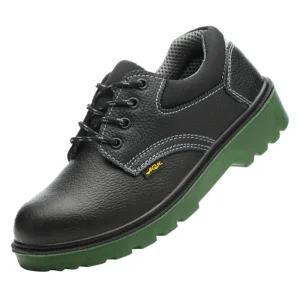
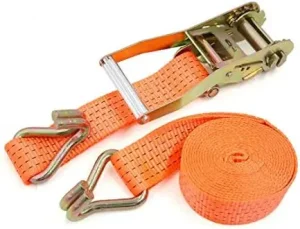
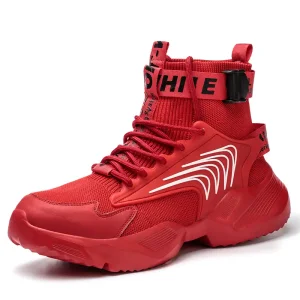
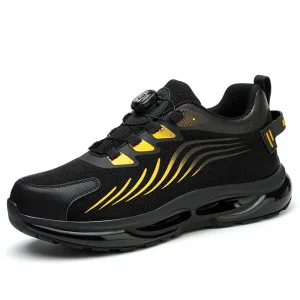
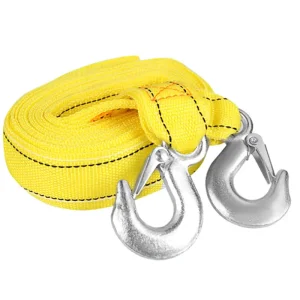
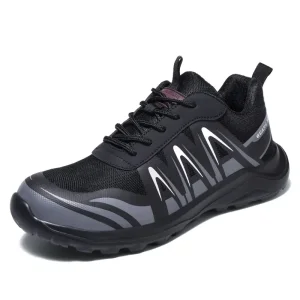
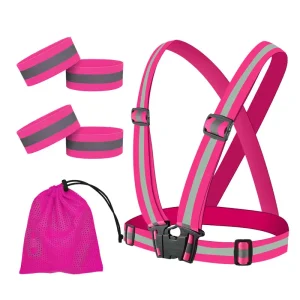
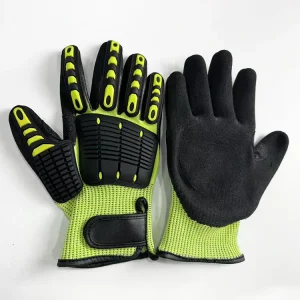
Connect directly with our export engineering department in Tianjin. Secure full technical dossiers, CE conformity certificates, and competitive FCL/LCL pricing tailored for the Italian and European markets within 24 hours.
