
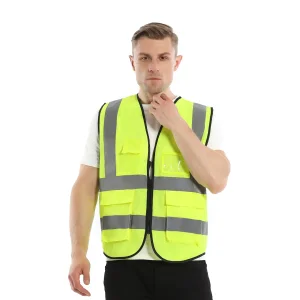
Engineered to deliver exceptional chromaticity and retroreflection, these flagship items cater directly to heavy construction along Corridor X, municipal services, and multi-modal logistics networks.
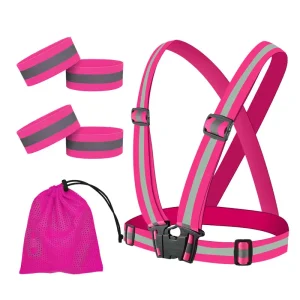
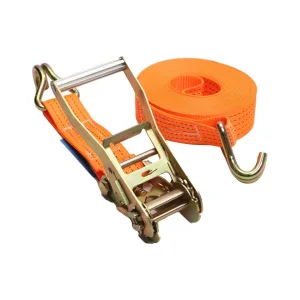
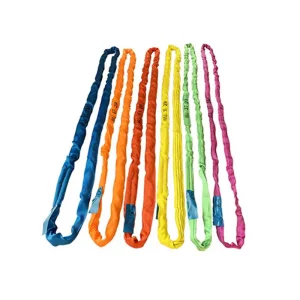
Serbia's strategic resurgence as the central transportation, infrastructure, and re-industrialization nexus of Southeastern Europe has sparked exponential demand for certified Personal Protective Equipment (PPE).
The ongoing modernization of pan-European transport conduits—notably the Corridor X highway and railway networks, the high-speed Belgrade-Budapest rail link, and extensive civil expansions in the Belgrade Waterfront and Novi Sad industrial hubs—places worker visibility at the center of institutional safety agendas. Serbian occupational safety legislation (Law on Safety and Health at Work / Zakon o bezbednosti i zdravlju na radu) increasingly harmonizes with European Union directives. Consequently, standard non-certified safety vests are being decisively phased out across public tenders in favor of verified SRPS EN ISO 20471 garments.
Moreover, large-scale automotive manufacturing clusters across Kragujevac, mining and smelting complexes in Bor and Majdanpek, and logistics warehousing developments near Niš demand specialized high-visibility profiles. Workers face complex optical environments: transition from direct sunlight to underground heavy machinery operations, high oil-and-grease contamination, and extreme winter shifts along the Balkan mountain corridors.
Requires Class 2 and Class 3 fluorescent orange-red and yellow garments equipped with micro-prismatic or high-candlepower glass bead retroreflective banding. Resists premature degradation from asphalt heat, ballast friction, and continuous mechanical dust.
Vests deployed in copper mining and metal refining demand robust 150–300D Oxford polyester fabrics with anti-static and flame-retardant (EN ISO 14116) finishes, maintaining retroreflection even under heavy particulate and carbon loading.
Belgrade and Niš freight transshipment yards prioritize lightweight, tear-resistant breathable mesh vests featuring multi-pocket utility arrays (walkie-talkie loops, badge holders, tablet holsters) tailored for 24/7 cross-dock operations.
Bridging conventional passive safety apparel with active digital ergonomics, cold-climate engineering, and circular supply chain mechanics.
| Performance Dimension | Legacy Baseline | Current Industry Benchmark | Future Roadmap (2026+) |
|---|---|---|---|
| Base Fabric Resilience | Conventional 100% Virgin PES Mesh (60–80 g/m²) | 120–160 g/m² Warp Knit Breathable PES with DWR Hydrophobic Coating | Recycled rPET GRS-Certified Fibers with Bio-Based Antimicrobial & UV Cut |
| Retroreflective Matrix | Standard Glass-Bead Adhesive Strip (R > 330 cd/lx) | Segmented Heat-Transfer Glass Bead Ribbon (R > 500 cd/lx) with Flexible Stretch | Active Micro-LED Photonic Tracing + Dual-Mode Micro-Prismatic Radar Reflection |
| Thermal Adaptability | Static single-layer garment; poor winter fit over parkas | Dual-sizing zip gussets + modular fleece attachment | Phase Change Material (PCM) inner membrane for Balkan continental extremes |
| Laundering Durability | Loses retroreflectivity after 15–20 standard domestic washes | Certified 50 Cycles at 60°C ISO 6330 Industrial Laundering | Industrial Dry-Clean & 75°C Tunnel Finish Certified (ISO 15797) |
Traditional rigid solid silver strips often crack and impede breathability. Our contemporary production integrates segmented heat-transfer films. By providing discontinuous laser-cut patterns, garments achieve 30% higher elasticity and superior moisture evaporation, making them ideal for high-exertion utility personnel along rail lines and freight corridors.
In pilot programs across automated smart logistics terminals, safety vests are increasingly configured with concealed NFC chipsets and passive UHF RFID thread. This allows site safety supervisors to verify PPE compliance at automated site gates instantaneously, monitoring shift hours and PPE life-cycle tracking in accordance with ISO 45001 workflows.
Combining world-class manufacturing scale in Tianjin with direct Eurasian Belt & Road connectivity to streamline procurement pipelines for Balkan distributors.
Tianjin ZhongQi Growth Technology Co., Ltd. operates at the center of North China's premier industrial textile and synthetic polymer cluster. Unlike tier-3 assemblers who outsource yarn spinning, weaving, dyeing, and fabrication, our vertically integrated manufacturing ecosystem ensures uncompromised quality control from petrochemical filament sourcing (210D AA Grade polyester industrial yarn) to computerized multi-needle bar-tack sewing.
For Serbian procurement executives, this delivers decisive commercial benefits:
In terms of international freight corridors, maritime shipments moving from Tianjin to the Mediterranean/Adriatic reach the Port of Rijeka or Port of Bar, as well as the express rail corridor through the Port of Piraeus (China-Europe Land-Sea Express Line), landing goods directly at Belgrade multimodal terminals within 25–30 days—faster than standard overland European sub-contracting queues.
Across the European Union and North American industrial spheres, PPE procurement has shifted from a transaction-based cost center to a critical enterprise ESG asset. Rigorous auditing under the EU Corporate Sustainability Due Diligence Directive (CSDDD) requires importers to verify carbon footprint metrics, OEKO-TEX Standard 100 textile safety certifications (ensuring no harmful azo dyes or heavy metals touch the worker's skin), and fair labor practices across Tier-1 and Tier-2 factories. We provide our Serbian partners complete transparent documentation portfolios to meet these multinational standards with total confidence.
Zero-tolerance technical compliance for high-visibility garments, fall arrest safety systems, and personal protective footwear.
Governs high-visibility clothing. Garments are rigorously tested for chromaticity coordinates, luminance factors, dimensional stability post-wash, and photometer retroreflective coefficient verification across Class 1, 2, and 3 classifications.
All high-visibility apparel imported into Serbia requires valid CE certification from accredited European Notified Bodies (e.g., SATRA, SGS, INSPEC), backed by technical files and declarations of conformity (DoC) available on demand.
Full support for localized labeling: Serbian-language care tags (in Cyrillic or Latin script), batch tracking numbers, employer branding via silk-screening or heat-transfer, and barcoding for automated retail warehouse systems.
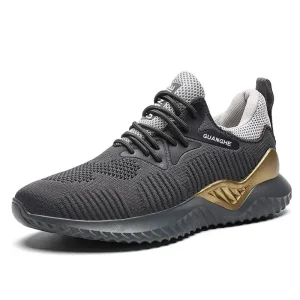
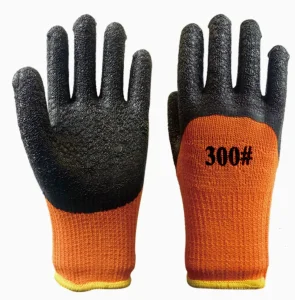
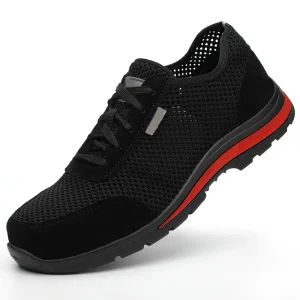
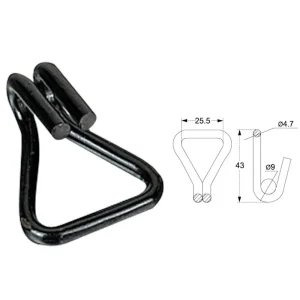
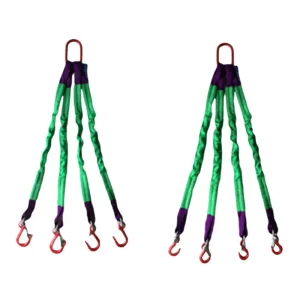
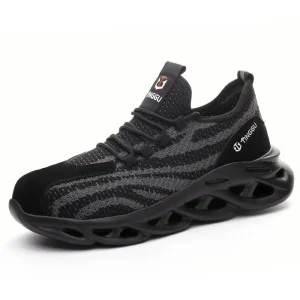
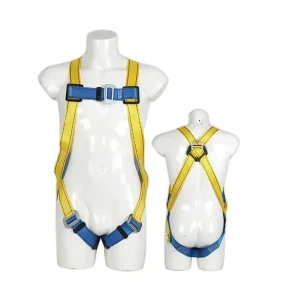
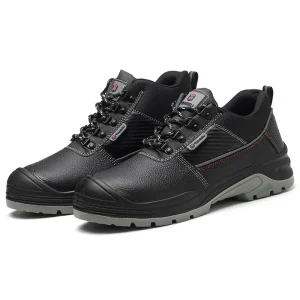
Optimize your container volume with our full line of safety shoes, construction gloves, fall arrest harnesses, and heavy rigging hardware designed to withstand demanding Serbian worksite conditions.
Essential regulatory, logistical, and technical insights for Serbian safety equipment importers and enterprise contractors.
Safety vests distributed in the Republic of Serbia must comply with SRPS EN ISO 20471 (the national adoption of the European standard for high-visibility clothing). This specifies minimum surface areas for fluorescent background material and retroreflective tape across Class 1 (0.14 m² background / 0.10 m² tape), Class 2 (0.50 m² background / 0.13 m² tape), and Class 3 (0.80 m² background / 0.20 m² tape). In addition, imports must carry an EU Type Examination Certificate issued by an accredited notified body and a localized Declaration of Conformity.
Yes. As a full-service OEM/ODM manufacturer, we customize all sewn-in technical care labels, user instruction manuals, and packaging with dual Latin/Cyrillic Serbian typography. Labels will detail mandatory maintenance instructions, max wash cycles (e.g., max 25 or 50 cycles), applicable standard classifications, and your registered enterprise trademark.
FCL and LCL shipments leave directly from our factory via Tianjin Port. Maritime cargo typically routes to the Port of Rijeka (Croatia), Port of Bar (Montenegro), or Port of Piraeus (Greece), from where containerized freight travels by rail or truck directly into Belgrade, Niš, or Novi Sad custom bonded warehouses. Typical door-to-door transit timelines range from 28 to 35 days. For urgent sample sets or prototype approvals, air freight through Belgrade Nikola Tesla Airport (BEG) delivers within 4 to 6 business days.
We provide full commercial export clearance files tailored to Serbian Customs (Uprava carina) requirements. This includes accurate Combined Nomenclature (CN) tariff codes (e.g., 6114.30 for synthetic high-vis vests), EUR.1 support documentation where applicable under bilateral trade agreements, Certificates of Origin, certified packing lists, and authenticated EN test reports from accredited international test institutes.
Absolutely. One of our main competitive advantages for Balkan distributors is comprehensive container consolidation. You do not need to order a full 20ft or 40ft container consisting entirely of high-visibility vests. You can combine safety vests, fall arrest safety harnesses, polyester cargo lashing straps, lifting slings, and safety footwear into a single shipment to optimize working capital and minimize shipping overhead.