Heavy Industry
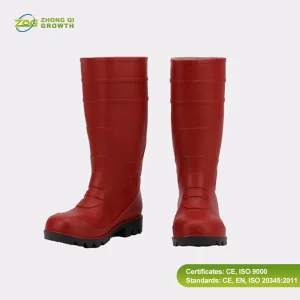
OEM and ODM batch-produced hardware engineered to meet and exceed Japanese Industrial Standards (JIS) and stringent Tokyo/Yokohama container terminal guidelines.
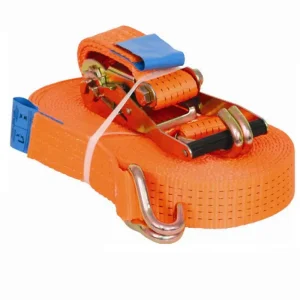
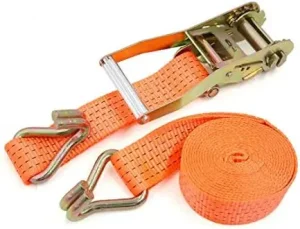
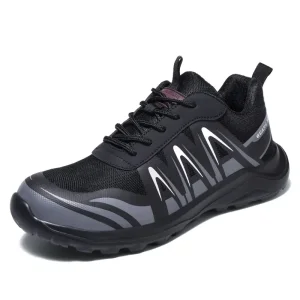
Navigating Japan’s high-density regulatory framework requires combining compliance with JIS T 8101 (Protective Footwear), JIS T 8103 (Electrostatic Discharge Footwear), and stringent food sanitation standards under the Ministry of Health, Labour and Welfare (MHLW). As Japan’s domestic industrial manufacturing base transitions to lighter, high-durability polymers, international buyers and local trading conglomerates (Sogo Shosha) are transforming their procurement models toward resilient, high-volume automated injection hubs.
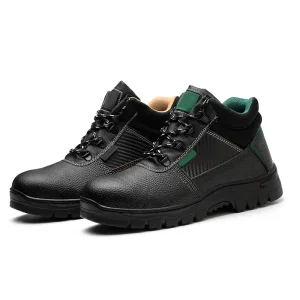
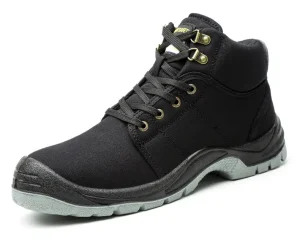
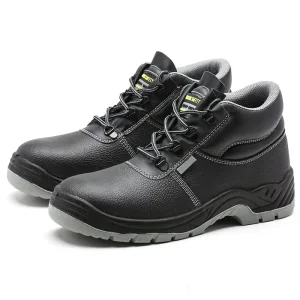
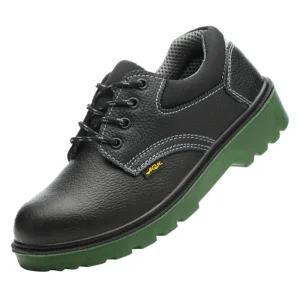
Japanese safety boots undergo rigorous drop tests: Heavy Impact (H) class requires enduring 100J impact energies, and Ordinary (S) class demands 70J. Our specialized injection molds integrate anatomically contoured steel toe-caps and polymer composite caps that prevent internal pinching under compressive forces of up to 15kN without adding unnecessary weight.
Standard commercial PVC boots suffer brittle failure and surface cracking when exposed to temperatures below -10°C. For Hokkaido’s coastal winter fisheries and industrial frozen logistics (Reizo Soko), we compound virgin PVC with specialized phthalate-free plasticizers (DOTP/DINCH) and Nitrile Butadiene Rubber (NBR) to maintain elasticity down to -35°C through 150,000 continuous Ross flex cycles.
In compliance with the Food Sanitation Act of Japan, our food-grade hygienic white and yellow boots are infused with silver-ion biocidal masterbatch to suppress Listeria monocytogenes and Salmonella. Soles are formulated with enhanced polymer density to resist swell and degradation from marine fish oils and animal lipids in high-throughput facilities like the Toyosu Market.
Evaluating structural integrity, chemical resistance, ergonomics, and cost efficiency across industrial footwear configurations used across Japanese civil infrastructure and maritime operations.
| Evaluation Parameter | ZhongQi Modified NBR-PVC Blend | Conventional Vulcanized Rubber | Thermoplastic Polyurethane (PU) |
|---|---|---|---|
| JIS T 8101 Compliance | Certified Class H / S (Steel Toe & Puncture Insole) | Class S Compliant (Varies by weight) | Class S / L Compliant |
| Shore A Hardness (Shaft/Sole) | 55A Shaft (Comfort) / 68A Sole (Abrasion-Resistant) | 65A Uniform (Heavy, lower flex) | 50A Shaft / 72A Sole |
| Hydrocarbon & Oil Swell Rate | < 2.5% volume change after 72h immersion | 8.0% - 14% volume expansion | < 3.0% volume change |
| Cold Crack Resistance | No fissure at -35°C (150k flex cycles) | Micro-cracking under -20°C | Brittle transition below -25°C |
| Weight per Pair (Size 26.5 cm) | 1,620g (Ergonomically lightened) | 2,350g (High fatigue factor) | 1,580g (High unit raw cost) |
| Cost Efficiency Index (FOB) | Optimal Benchmark (1.0x) | 1.85x - 2.2x High Cost | 2.4x - 3.1x High Cost |
ZhongQi combines state-of-the-art multi-station rotary injection molding with automated robotic flashing and 100% pneumatic hydro-testing. Situated in Northern China’s premier industrial corridor near Tianjin Port, we offer direct routes to Tokyo, Yokohama, Nagoya, Osaka, and Hakata.
Our factory deploys computer-controlled multi-station rotary injection units. By simultaneously feeding distinct Shore A compounds into the sole and shaft barrels, we eliminate delamination risks common in glued footwear, ensuring homogeneous molecular bonding and an impermeable water barrier.
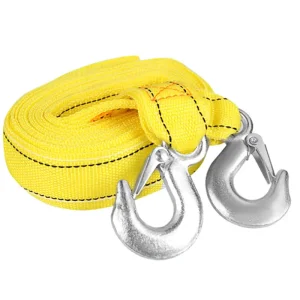
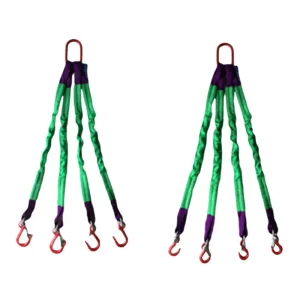
Japanese wholesale buyers frequently face container dead-space losses when importing single product lines. ZhongQi enables mixed-load shipping of industrial PVC boots alongside CE EN 361 full-body safety harnesses, high-tenacity lifting slings, and cargo ratchet straps in one unified export shipment from Tianjin Port.
From the damp wholesale seafood floors of Kanto to heavy seismic disaster preparedness reserves, our safety footwear delivers dependable operational security.
In bustling coastal centers such as Toyosu, Yaizu, and Shiogama, damp floors saturated with ocean brine and organic fats create continuous slip risks. Our non-marking, chevron-grooved outsoles achieve SRC anti-slip ratings, expelling slime and water to prevent slip injuries among processing teams.
Major Japanese infrastructure initiatives, such as the Linear Chuo Shinkansen and metropolitan flood diversion tunnels (G-CANS), demand puncture protection against sharp aggregate and rebar. Our embedded flexible stainless steel midsoles withstand penetration forces greater than 1,100 Newtons.
Prefectural disaster relief storehouses require long shelf-life safety footwear resistant to polymer degradation and ozone cracking during multi-year storage. ZhongQi's anti-aging stabilizers guarantee immediate deployment readiness during typhoon floods, volcanic ash cleanup, and earthquake emergency operations.
Key technical specifications, regulatory inquiries, and logistical checkpoints addressed by our engineering department.
We operate an in-house physical testing laboratory equipped with calibrated drop-weight impact towers, universal tensile/puncture testers, and Ross flexure chambers. We execute batch testing per every 1,000 pairs, measuring toe clearance under 100J impact energy and ensuring puncture resistance exceeds 1,100N. Full mill test certificates (MTC) and third-party lab verification reports (SGS/TÜV) accompany every export bill of lading.
Yes. Standard European and American lasts are often too narrow across the metatarsal area for Japanese workers, causing foot fatigue during long shifts. We maintain dedicated tooling lasts tailored for Asian foot ergonomics, offering 3E (EEE) and 4E (EEEE) widths with wider toe caps that eliminate lateral pressure points.
Our OEM capabilities include custom laser-engraved or injection-molded Japanese brand logos on the collar, bilingual Japanese/English care tags, Japanese Industrial Standard markings, serialized barcode stickers (JAN code compatible), and custom retail or bulk cartons ready for distribution across Japanese homeware chains and industrial supply distributors.
Our manufacturing facility in the Shuangjie Trusted Industrial Park is directly linked via highway to Tianjin Port (Xingang). Containerized consignments enjoy regular express sea departures to Tokyo, Yokohama, Nagoya, Osaka, and Kobe, with ocean transit requiring just 3 to 5 days. Standard OEM production cycles range from 20 to 30 days depending on mold configuration.
Explore our full line of industrial safety footwear, high-tenacity lifting slings, and heavy cargo control systems built for demanding industrial applications.