
Thailand Monsoon Ready
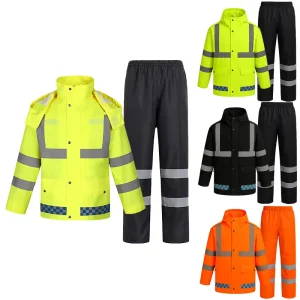
Engineered for tropical high-humidity environments, petrochemical hubs, and heavy construction infrastructure across the Bangkok and EEC metropolitan zones.
Understanding the structural shifts driven by Thailand 4.0, the Eastern Economic Corridor (EEC), and stringent OSH Department enforcement.
The Kingdom of Thailand has rapidly evolved from an agrarian-based economic model into Southeast Asia's powerhouse manufacturing hub. Under the state-sponsored Thailand 4.0 Initiative and the massive capital allocation into the Eastern Economic Corridor (EEC)—spanning Chonburi, Rayong, and Chachoengsao provinces—industrial operations have expanded significantly. With over 6,500 active industrial plants in automotive assembly, petrochemical refining, microelectronics, and deep-sea port logistics around Laem Chabang and Map Ta Phut, the procurement criteria for certified Personal Protective Equipment (PPE) and industrial safety clothing have transitioned from discretionary purchases to mandatory regulatory compliance.
Concurrently, the Occupational Safety, Health and Environment Act B.E. 2554 (2011), administered by the Department of Labour Protection and Welfare (DLPW) under the Ministry of Labour, mandates rigorous protective garment protocols across high-risk working environments. Factory inspectors now conduct unannounced audits across manufacturing complexes, assessing worker compliance with standardized high-visibility clothing, flame-resistant workwear, protective footwear, and head protection systems. Thai enterprise procurement managers can no longer afford generic, uncertified protective wear that fails under rigorous audit conditions.
Thailand's automotive hub in Rayong and Chonburi hosts global automotive OEMs. Assembly line technicians, robotic cell operators, and press shop personnel demand lint-free, anti-static, and spark-deflecting protective vests and heavy-duty coveralls with ergonomic articulation.
EEC Industrial ZonesMap Ta Phut Industrial Estate represents Southeast Asia's largest petrochemical cluster. Workers exposed to volatile hydrocarbons, cryogenic cracking, and chemical storage require EN ISO 11612 flame-resistant garments and inherently anti-static certified fabric matrices.
Map Ta Phut ClusterThe Bangkok High-Speed Rail connectivity, airport expansions at U-Tapao, and transit line constructions require high-visibility garments (EN ISO 20471 Class 3) that maintain intense photometric luminance through torrential monsoon downpours and low-light night shifts.
Nationwide InfrastructureWhy standard Western workwear fails in Thailand's 38°C / 85% RH conditions, and how our proprietary fabric technologies solve heat-stress attrition.
A primary operational friction point reported by safety officers across Thai industrial facilities is worker non-compliance due to thermal exhaustion. Thailand experiences an equatorial tropical savanna and monsoon climate where ambient dry-bulb temperatures frequently reach 36°C to 40°C, combined with relative humidity levels exceeding 80% to 90% during the rainy season (May through October). Traditional heavy 300+ GSM cotton or poorly ventilated PVC-coated workwear traps metabolic heat and sweat, accelerating dehydration, cardiovascular strain, and occupational accidents.
As a seasoned original design manufacturer (ODM), our technical textile engineers have resolved this dilemma through multi-layer, breathable microporous architecture and localized active ventilation engineering tailored specifically for Southeast Asian environmental realities:
| Performance Attribute | Standard European / North American PPE | Our Thailand-Adapted Safety Solutions | Operational Advantage for Thai Buyers |
|---|---|---|---|
| Base Fabric Weight (GSM) | 280 – 350 g/m² Heavy Drill | 140 – 190 g/m² Ripstop Micro-Weave | 42% reduction in metabolic heat entrapment |
| Moisture Management | Passive absorption (retains water weight) | Capillary wicking cross-section yarn | Sweat evicts 3.4x faster; dry garment weight maintained |
| Breathability Rating (Ret) | Ret > 25 m²Pa/W (low breathability) | Ret < 6 m²Pa/W (extreme breathability) | Prevents heat stroke in un-airconditioned Thai workshops |
| Rainstorm Protection | Heavy vulcanized rubber / thick PVC | Dual-layer micro-porous TPU membrane | 100% waterproof (15,000mm H₂O) with active vapor release |
| Tropical Anti-Microbial | Untreated (prone to mildew & odor) | Zinc-pyrithione anti-fungal yarn bath | Zero mold germination in high-humidity factory lockers |
| Reflective Microprisms | Standard glass-bead tape (clouds with water) | Hermetically sealed micro-prismatic tape | Retains >450 cd/(lx·m²) retroreflectivity in torrential rain |
Complete traceability, zero-defect laboratory testing, and seamless compliance with Thai Industrial Standards Institute (TISI) regulations.
Procuring protective safety wear for industrial applications in Thailand requires absolute alignment between the Thai Industrial Standards Institute (TISI / มอก.) frameworks and international conformity benchmarks. Sourcing from non-audited manufacturers introduces substantial liability risk under the Thai Civil and Commercial Code should an on-site failure occur.
Our production facilities operate an accredited internal QA/QC laboratory running destructive tensile tests, hydrostatic head testers, Xenon arc accelerated weathering chambers, and spectrometer retroreflectivity checks. We furnish comprehensive third-party test reports (SGS, TUV, SATRA) validating every batch:
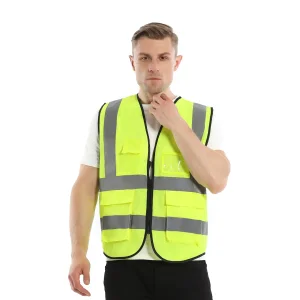
High-Visibility Garments: Colorimetric coordinates and luminance factors for fluorescent yellow-green and orange-red materials after 50 wash cycles. Certified Class 1, Class 2, and Class 3 layouts for highway and terminal personnel.
Protective Footwear: 200J steel or composite toe impact resistance, 1100N anti-puncture midsole barriers, ESD electrical resistance, and SRC slip resistance on ceramic tile with NaLS and glycerol lubrication.
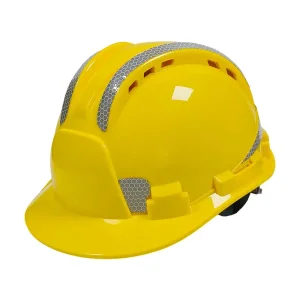
Industrial Hard Hats: Impact attenuation under high temperatures (+50°C), penetration resistance against sharp falling fragments, 440V electrical insulation, and side-impact structural rigidity using high-density ABS/HDPE shells.
Flame & Heat Retardancy: Limited flame spread (Index 3), convective heat resistance, radiant heat transfer shielding, and molten aluminum splash protection for foundries and Map Ta Phut petrochemical applications.
Working at Height: Full body safety harnesses utilizing 100% high-tenacity polyester webbing with static tensile strength surpassing 22kN and dynamic drop performance verified with a 100kg test mannequin.
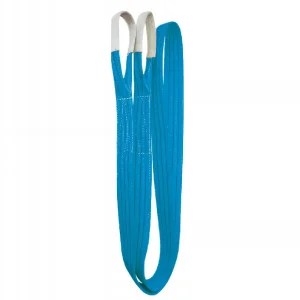
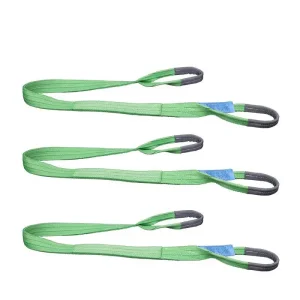
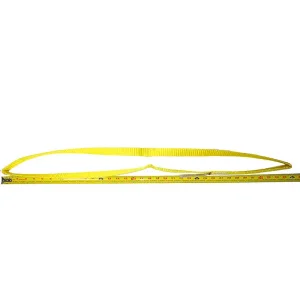
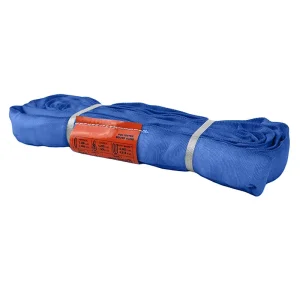
Synthetic Lifting Equipment: Flat woven and round slings engineered with a 7:1 safety factor, full color-coded load capacity labeling, trace-numbered batch tags, and anti-abrasion PU impregnation.
Direct ocean freight, RCEP zero-tariff preferential trade, and massive raw material integration deliver unmatched cost-efficiency for Thai wholesalers.
For corporate buyers, safety equipment distributors, and government contractors in Thailand, partnering directly with our Tianjin manufacturing plant delivers a profound structural advantage over local trading brokers or costly Western tier-one brands. Tianjin sits as North China's premier maritime departure hub, offering direct container feeder schedules to Laem Chabang Port and Bangkok Port (Klong Toey) within 5 to 8 transit days.
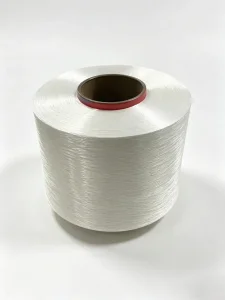
Unlike standard garment converters who purchase generic market fabric, we spin and weave our own AA-grade 210D high-tenacity industrial polyester yarn. This vertical integration guarantees batch tensile uniformity, strict dye-lot consistency, and substantial margin retention for our Thai partners.
Under the Regional Comprehensive Economic Partnership (RCEP) and the ASEAN-China Free Trade Area (ACFTA), our safety clothing and PPE shipments qualify for preferential zero-duty importation into Thailand via Form E or Form RCEP certificates of origin issued by China Customs.
Equipped with multi-axis automated laser cutters, ultrasonic edge binders, and programmable robotic pattern stitchers. Every safety garment, harness junction, and waterproof seam possesses micro-millimeter precision, ensuring zero thread slippage under load.
Bilingual technical labeling, Southeast Asian anthropometric sizing, and corporate identity integration for regional brands.
Global standard PPE lines often fail in the Thai domestic market due to generic Western sizing charts that run excessively large across chest and torso dimensions. Furthermore, the Thai Department of Labour Protection requires safety instructions and maintenance care data to be comprehensible to local line workers.
We build our garment blocks around the National Science and Technology Development Agency (NSTDA) Thai body sizing matrices. Our Small-through-3XL patterns eliminate hazardous fabric draping around active rotating machinery, providing clean, tailored fits that enhance mobility without sacrificing full PPE compliance.
Our OEM printing lines stamp woven labels with bilingual care instructions (Thai / English), TISI reference numbers, lot tracking codes, wash-cycle counters, and custom company crests. This documentation empowers procurement heads to pass Ministry of Labour site checks with zero friction.
Whether you require a pilot run of 300 customized high-visibility coveralls for an offshore maintenance shutdown in Songkhla or a continuous 40ft container program for an EEC logistics park, our R&D team outputs physical pre-production samples within 3 to 5 business days via express air courier direct to Bangkok.
Complete safety gear suite for one-stop container consolidation shipped directly to Bangkok and Laem Chabang ports.
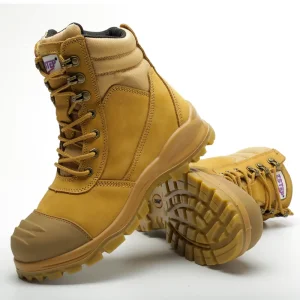
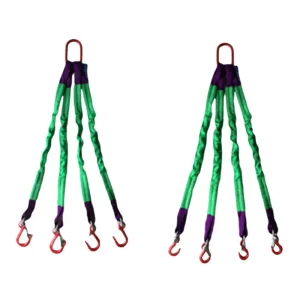
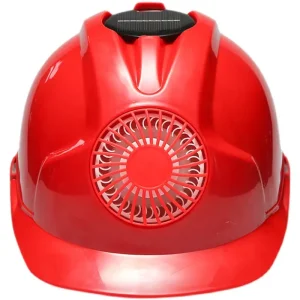
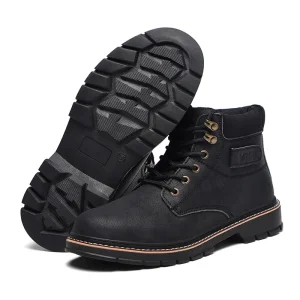
The convergence of ESG mandates, smart sensor integration, and recycled polymer fabrics.
The industrial safety garment sector is undergoing rapid structural transformation across Southeast Asia. Driven by corporate ESG (Environmental, Social, and Governance) targets set by multinational enterprises operating in Thailand, procurement directors are aggressively seeking innovative textile solutions that satisfy both protective standards and corporate sustainability audits.
We now manufacture high-visibility vests and protective garments using 100% post-consumer recycled polyethylene terephthalate (rPET) yarns. These fabrics match virgin polyester in tensile tenacity and chromatic saturation while offering complete Global Recycled Standard (GRS) traceability for corporate carbon reporting.
Addressing the intense heat index in unconditioned Thai manufacturing facilities, our next-generation pilot vests incorporate ultra-slim passive RFID asset trackers and moisture-activated heat-stress indicators that visually alert supervisors when a worker reaches critical thermal limits.
Rather than layering multiple heavy garments, Thai chemical and semiconductor maintenance operators are adopting unified single-layer workwear combining EN 1149-5 anti-static fibers, EN ISO 11612 arc-flash resistance, and fluorocarbon oil-and-chemical repellency in an ultra-lightweight 190 GSM weave.
In-depth technical answers addressing import compliance, customs procedures, and testing validation.
Every commercial order destined for Thailand is supported by an official Certificate of Origin (Form E or Form RCEP) issued by the Chinese authorized inspection authority. This legal documentation allows your licensed Thai customs broker to file under HS Code 6114.30 (safety apparel), 6211.33 (workwear), or 6307.90 (webbing slings) to secure complete 0% customs import duty exemption, paying only standard domestic VAT (7%).
Yes. Thai industrial laundries typically employ harsh alkaline detergent cycles at 60°C to 75°C to eliminate industrial grease. Our premium high-visibility garments utilize heat-sealed segmented microprisms and vat-dyed polyester-cotton yarns rated for a minimum of 50 industrial wash cycles under ISO 6330 standards without losing chromaticity or luminance.
Absolutely. Our workshop features industrial multi-head computerized embroidery machines and heat-transfer screen printers. We regularly produce corporate-branded protective clothing for contractors serving PTT Global Chemical, SCG, and Thai construction consortiums, with bilingual English-Thai department identifiers and flame-resistant thread options.
Standard manufacturing for a full 40ft High Cube container (approx. 25,000–35,000 units of mixed safety garments, harnesses, and footwear) spans 20 to 25 calendar days. Direct ocean transit from Tianjin Port to Laem Chabang Port requires only 6 to 8 days, yielding a dependable dock-to-dock timeline of approximately one month.
Every synthetic lifting sling and safety harness carries an indelible traceability label stamped with a unique batch number, CE mark, production date, and Working Load Limit (WLL). We maintain archived digital tensile test records for every manufacturing run, accessible to your technical safety committee upon request.
We support multiple international procurement settlement channels, including standard Telegraphic Transfer (T/T), Irrevocable Letters of Credit at Sight (L/C), and direct regional settlements in Thai Baht (THB), Chinese Yuan (RMB), or US Dollars (USD) to hedge currency fluctuation risks.
Accelerate your supply chain efficiency, guarantee rigorous TISI and European technical compliance, and capture factory-direct pricing for your enterprise workwear tenders.