
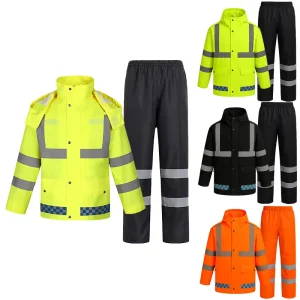
Engineered for high-precipitation Pacific Northwest ports, intermodal container rail hubs, and regional aerospace tooling installations.
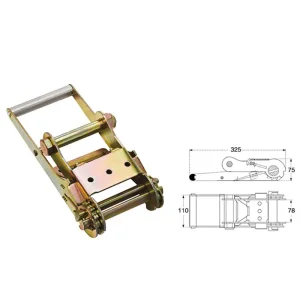
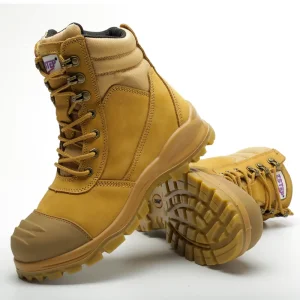
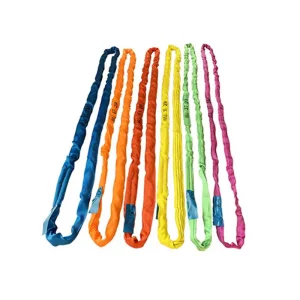
The Puget Sound industrial corridor presents one of North America's most demanding operational theaters for industrial safety clothing. Our manufacturing facility bridges overseas mass production with hyper-localized Seattle requirements.
Stevedoring, container transfer, and gantry crane operations at Terminal 5, 18, and 46 operate in severe maritime salt-mist, perpetual rainfall, and dense mechanical traffic. Workers require ASTM F1671 bloodborne pathogen/hydrostatic head resistance, Class 3 high-visibility fluorophore garments, and heavy saltwater-resistant lashing apparatus.
Encompassing Everett, Renton, and Auburn's aerospace production hubs, workers interface with composite curing, high-voltage avionic testing, and overhead wing assembly lines. This sector demands anti-static (ESD), lint-free cleanroom-compatible coveralls, Arc Flash NFPA 70E Category 2 protection, and non-marring synthetic rigging slings.
With ongoing regional rail extensions, I-405 transit infrastructure expansions, and massive tech enterprise campus constructions in Bellevue and Redmond, contractors must meet Washington Administrative Code (WAC) 296-155 fall protection and high-visibility mandates under low daylight conditions.
Global logistics bottlenecks, tariff reclassifications, and intensifying occupational standards require Seattle procurement directors to partner directly with primary manufacturing plants capable of end-to-end trace control.
| Industrial Pillar | Legacy Broker / Sourcing Model | ZhongQi Factory Direct Architecture | Seattle Regional Advantage |
|---|---|---|---|
| Raw Material Integrity | Multi-tiered middleman markups; fragmented yarn origin; inconsistent tensile ratings across dye lots. | In-house extrusion of 210D AA-grade high-tenacity polyester; 100% molecular polymer traceability. | Zero lot-to-lot degradation in salt-air marine or damp Seattle forest environments. |
| Regulatory Traceability | Generic CE/ANSI declarations without batch test reports or factory audits available. | Full batch tensile certification, hydrostatic column verification, and ISO 9001:2015 laboratory logs. | Instant inspection clearance during Washington Department of Labor & Industries (L&I) job-site audits. |
| Freight Economics | Costly inland drayage across inland China plus unoptimized consolidated container loading. | Direct adjacent transport to Tianjin Port; tailored mixed-container consolidation (Webbing + Rainwear + Footwear). | Shortest trans-Pacific transit route to the Port of Seattle & Tacoma container freight terminals. |
| OEM / ODM Customization | High MOQs; catalog-only items; no tailored fit for cold-weather layer ergonomics. | Custom sizing (S to 6XL), gusseted articulations, corporate pantone matching, custom RFID tags. | Optimized for layering over Pacific Northwest thermal undergarments without binding movement. |
By bypassing third-party trading agencies, Seattle distributors establish direct technical contact with factory R&D teams. Our manufacturing campus in Beichen District, Tianjin, is situated adjacent to Tianjin Port—the primary maritime gateway of North China. Cargo departing Tianjin operates on streamlined North Pacific Great Circle shipping lanes directly calling the Pacific Northwest.
This geographic positioning minimizes transshipment delays, eliminates multi-depot inland handling damage, and cuts maritime lead time by up to 9 business days compared to southern export hubs.
Safety equipment sourcing typically forces procurement teams to manage separate suppliers for technical textile clothing, forged hardware, and safety shoes. Our production model eliminates freight deadhead by offering combined FCL (Full Container Load) programs:
A single 40ft High Cube container seamlessly combines high-bulk waterproof rainwear suits, high-density ratchet tie-down straps, round lifting slings, and steel-toe composite boots, drastically reducing landed unit cost per SKU.
Operating in Washington State mandates adhering to Washington Industrial Safety and Health Act (WISHA) rules, which in multiple operational categories exceed Federal OSHA baselines.
Compliant with Type R, Class 2 and Class 3 configurations. Designed specifically for low-lux overcast days in Puget Sound, utilizing fluorescent lime-yellow and orange-red dyes with chromaticity coordinates measured after 50 continuous wash cycles.
Washington L&I enforces stringent fall restraint rules at 4 feet in general industry and 10 feet in specific erection tasks. Our full-body harnesses feature alloy steel or aluminum dorsal D-rings with minimum breaking strength of 5,000 lbs (22.2 kN), conforming to ANSI Z359.11 and CE EN 361.
Standard PVC coatings trap sweat, inducing worker hypothermia in 40°F (4°C) damp Seattle winters. We employ microporous PU film laminates and seam-sealed dual-stitch welding, yielding 10,000 g/m²/24hr moisture vapor permeability with complete rain imperviousness.
From deep-draft container ships on Elliott Bay to automated logistics centers in the Kent Valley, our safety clothing and load-securing equipment are calibrated for distinct regional operating conditions.
Longshore crews operating near overhead reach stackers work in constant 30 knot wind gusts, continuous rain, and machinery pinch hazards. The required gear profile includes reinforced waterproof parka jackets, abrasion-proof knee panels, anti-crush composite boots with oil-resistant non-marking soles, and rapid-tension 5000kg ratchet lashing belts for timber and heavy equipment export securement.
As the primary warehousing corridor for the Pacific Northwest, Kent Valley operations demand high-dexterity cut-resistant gloves (ANSI A4 to A6), lightweight breathable mesh safety shoes for workers taking 20,000+ steps per shift on polished concrete, and durable cargo straps for regional linehaul fleet distribution.
Hydraulic excavators and logging transport navigating steep mountain grades require ASME-compliant endless polyester round slings and grade 80/100 chain tie-downs. Crews require chainsaw-resistant ballistic chaps, high-visibility insulated thermal outerwear, and steel shank puncture-resistant logging boots.
Aligning with Washington State’s rigorous climate and circular-economy mandates, our factory R&D group is actively transitioning materials toward carbon-neutral performance fabrics and smart worker monitoring.
Transitioning safety vest fabric and webbing yarns to 100% post-consumer recycled PET bottles without forfeiting mechanical tensile strength or colorfastness standards.
Engineered zero-fluorine C0 DWR coatings conforming to Washington State's pioneering toxics reduction laws, delivering durable rain roll-off without environmental persistence.
Thermally encapsulated NFC/RFID chips woven directly into lifting slings and fall harness labels for instantaneous smartphone inspection logging and automatic retirement auditing.
Integration of ultra-light atmospheric vapor detection, hypothermia warnings, and proximity radar chips embedded in high-visibility garments for automated port equipment zones.
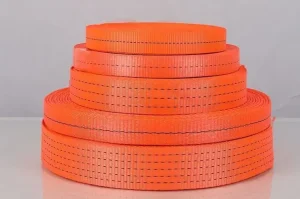
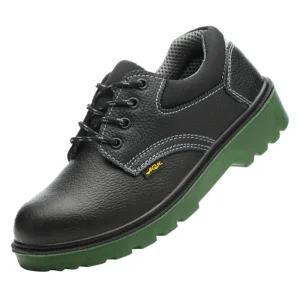
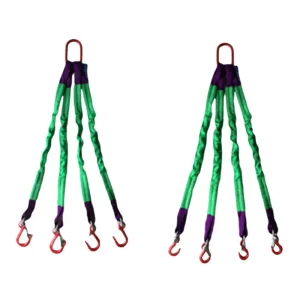
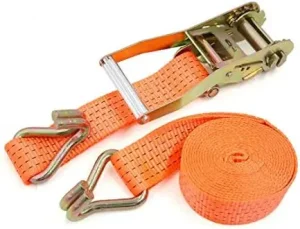
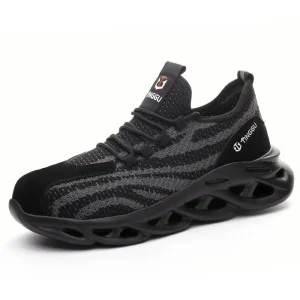
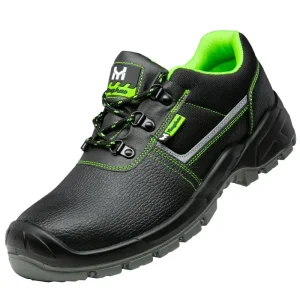
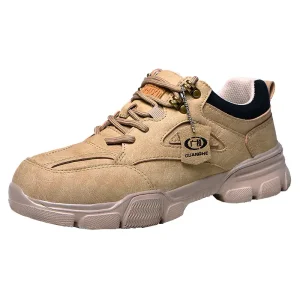
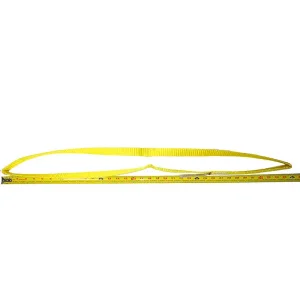
Comprehensive protective footwear, heavy rigging, tie-down systems, and job-site accessories ready for immediate OEM production and container shipment.
Authoritative technical guidance covering Washington L&I compliance, ocean container freight consolidation, and private-label OEM manufacturing.
Standard export rainwear uses impermeable PVC coating which traps sweat vapor inside the garment, creating cold condensations when ambient temperatures hover around 40°F to 48°F in Seattle. Our garments utilize a technical 300D Oxford polyester woven base coupled with a hydrophobic breathable polyurethane membrane. This achieves over 10,000 g/m²/24hr moisture vapor transfer rate while withstanding a 15,000mm hydrostatic water column, complemented by hot-melt PU seam taping across all needle perforations.
Yes. Washington Department of Labor & Industries enforces WAC 296-155 fall restraint and fall arrest standards. Our harnesses meet both ANSI Z359.11-2021 and CE EN 361 criteria. Hardware components (dorsal D-rings and mating buckles) undergo 100% proof-load testing at 3,600 lbs, with full structural harness breaking strength exceeding 5,000 lbs (22.2 kN). Each harness includes a heavy-duty vinyl inspection tag displaying production batch date, serial ID, and QR-code accessible factory test certificates.
Our manufacturing complex is situated in Shuangjie Trusted Industrial Park, Beichen District, Tianjin, directly connected via container highway to Tianjin Port. Sea voyage transit from Tianjin Port directly to Seattle/Tacoma terminal gates takes approximately 16 to 21 days on direct trans-Pacific strings. Production lead times average 25–35 calendar days for full container loads (FCL), allowing regional distributors to operate on lean inventory rotations.
Absolutely. One of our core competitive advantages is integrated production and multi-category consolidation. We allow Seattle commercial clients to mix high-visibility rainwear, safety shoes, endless lifting slings, and ratchet tie-downs within a single 20ft or 40ft High Cube container. This eliminates the requirement to manage 3 to 4 distinct overseas vendors, drastically lowers LCL shipping costs, and simplifies customs entry via US CBP at the Puget Sound port of entry.
We provide full-spectrum OEM branding including jacquard woven logos along harness webbing, heat-transfer silicone badging on weather-resistant outerwear, custom molded rubber outsoles with distributor logos, custom-printed high-visibility wash care labels, barcoded hangtags, and retail-ready color packaging boxes. All private-label programs strictly preserve compliance markings (ANSI, ASTM, CE, OSHA, WAC) per US federal and state trade requirements.
Washington State has enacted progressive legislation targeting Per- and polyfluoroalkyl substances (PFAS) in industrial apparel. Our wet-weather textile coatings utilize certified fluorine-free C0 durable water repellent finishes. We supply third-party laboratory chemical verification (SGS / Intertek) confirming non-detectable levels of organic fluorine, heavy metals, and forbidden AZO dyes, ensuring seamless distribution across King County and the broader Pacific Northwest.