Precision-manufactured protective equipment engineered in Tianjin's industrial cluster, meeting rigorous EN, ANSI, and ISO benchmarks with factory-direct OEM/ODM capabilities.
Across global civil construction, offshore petrochemicals, and renewable energy sectors, cranial trauma from falls remains the single largest vector of catastrophic industrial mortality. The traditional Type I bump cap is rapidly being replaced by multi-impact, rotational energy-attenuating safety systems.
In modern industrial safety protocols, the designation "Fall-Resistant Safety Helmet" has evolved beyond a marketing descriptor into a distinct structural safety discipline. In complex work-at-height (WAH) environments—spanning high-voltage transmission lines, telecommunication micro-sites, wind turbine nacelles, and industrial scaffolds—an operative who slips or enters fall arrest faces severe secondary collision risks against trusses, ladders, or vertical facades. Standard industrial hard hats designed merely under basic vertical penetration criteria (EN 397 Type I) consistently dislodge upon initial impact or during the decelerative arrest arc, exposing the bare cranium to blunt-force trauma.
Chinese advanced injection molding and composite safety gear factories have engineered hybrid platforms synthesizing mountaineering retention mechanics (EN 12492) with severe industrial electrical and lateral deformation metrics (EN 397 / ANSI Z89.1 Type II). By deploying variable-retention 4-point chinstraps, high-density expanded polypropylene (EPP) multi-axial shock liners, and virgin acrylonitrile butadiene styrene (ABS) or polycarbonate (PC) outer shells, tier-1 Chinese manufacturers provide global EPC contractors with unified head protection solutions that eliminate regulatory bifurcation.
Exploring the mechanical interaction between shell elasticity, internal EPS/EPP compression kinetics, and non-linear multi-axis deceleration curves under extreme dynamic strain.
High-impact virgin polymers compounded with organotin heat stabilizers and UV-resistant masterbatches hinder photo-oxidative embrittlement over extended UV exposure. The structural shell dissipates concentrated point impact (e.g., scaffolding bolts, rebar tips) over a macroscopic radial surface area prior to core transfer.
Unlike traditional brittle expanded polystyrene (EPS) which crushes irreversibly upon single impact, modern Chinese engineering implements high-resilience Expanded Polypropylene (EPP). EPP retains plastic geometric recovery, absorbing secondary lateral rebound collisions during complex multi-stage dynamic falls.
Modern factory lines incorporate low-friction slip planes to decouple the helmet shell from cranial rotation during glancing angular impacts. Mitigating rotational acceleration substantially reduces shear deformation within deep cerebral tissues, mitigating severe diffuse axonal injury (DAI).
A granular technical comparison between global testing standards, providing procurement directors with verified criteria to navigate regional liability frameworks.
| Testing Parameter | EN 397 (Industrial Hard Hat) | EN 12492 (Mountaineering / Height) | ANSI/ISEA Z89.1 (Type II) | China GB 2811-2019 (Special) |
|---|---|---|---|---|
| Primary Impact Direction | Top crown vertical drop (5.0 kg striker, 1m) | Crown (5kg, 2m), Front/Side/Rear (5kg, 0.5m) | Omni-directional: Top, lateral, front, and rear | Crown drop (5kg, 1m) + Optional lateral impact |
| Peak Force Transmission Limit | ≤ 5.0 kN | ≤ 10.0 kN | ≤ 4.45 kN (Top) / ≤ 150g acceleration | ≤ 4.9 kN |
| Chinstrap Retention Threshold | 15 daN ≤ Break ≤ 25 daN (Strangulation prevention) | ≥ 50 daN (Preventing detachment during fall) | User-configured / Optional testing protocol | 150 N ≤ Break ≤ 250 N (Standard) |
| Lateral Deformation (LD) | Optional specification (Max 40mm transverse) | Not specified in baseline mountaineering standard | Mandatory lateral stiffness criteria (Type II) | Mandatory lateral rigidity test metric |
| Electrical Insulation Classes | 440V AC optional; EN 50365 Class 0 up to 1000V | Non-conductive vent requirements (typically absent) | Class E (Proof-tested at 20,000V AC dielectric) | Class T (440V) to Class E options available |
| Extreme Cryogenic Rating | -20°C or -30°C optional conditional testing | -20°C baseline environmental conditioning | -30°C Lower Temperature (LT) mark available | -30°C Low temperature cold crack test |
A primary dilemma for multinational safety directors is the contradiction between EN 397 (requiring the chinstrap to break between 150-250 N to prevent worker strangulation if caught on scaffolding) and EN 12492 (requiring release above 500 N to keep the helmet secured through multiple impacts during a dynamic fall). Tier-1 Chinese manufacturing partners resolve this through dual-mode micro-switch chinstrap buckles: operators can toggle the mechanism's release threshold based on site hazard classification—setting it to 25 daN for ground-level industrial operations, or 50 daN for work-at-height operations.
Situated in the Shuangjie Trusted Industrial Park, Beichen District, Tianjin, our production infrastructure leverages North China's dominant industrial webbing, composite molding, and heavy PPE cluster. Sourcing yarn, hardware, mold tooling, and chemical resins locally minimizes lead-time vulnerabilities and mitigates trans-provincial supply disruptions.
Sourcing fragmented PPE catalogs from disparate regional vendors exposes distributors to multiplied port handling fees, customs processing overhead, and mismatched factory lead times.
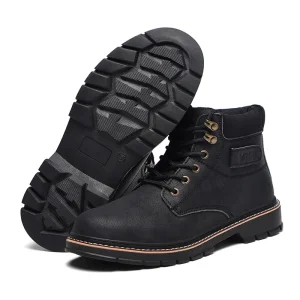
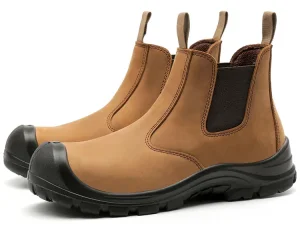
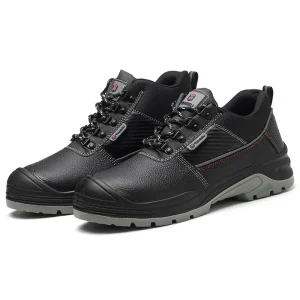
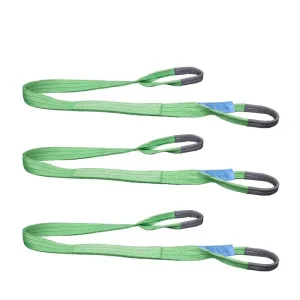
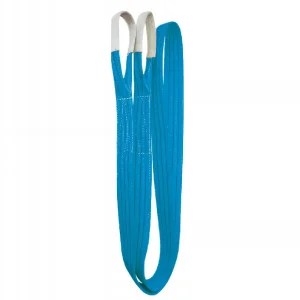
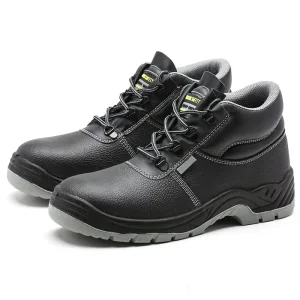
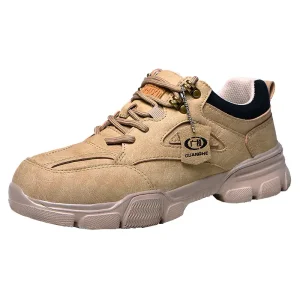
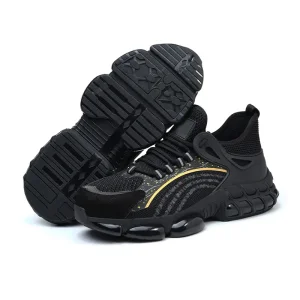
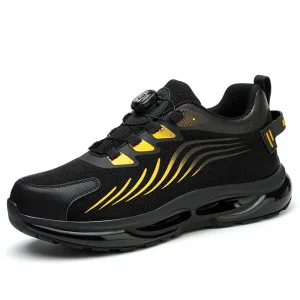
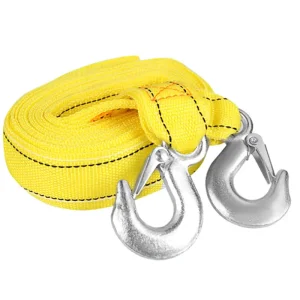
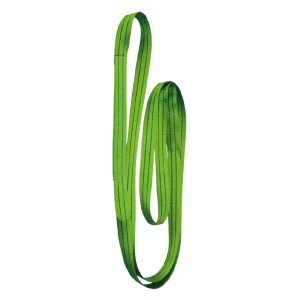
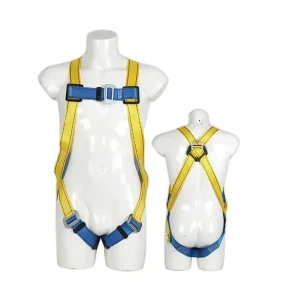
Our Tianjin facility enables importers to consolidate a complete work-at-height container manifest—including fall-resistant helmets, CE EN 361 full-body harnesses, polyester flat webbing slings, and Kevlar-lined protective footwear—under a single verified bill of lading (BOL).
Evaluating technical helmet specifications tailored for the distinct operational hazards encountered across heavy industry and utilities.
Compact, short-peak or brimless geometry engineered to maximize upward sightlines during vertical mast ascent, integrated with Euro-slot 30mm adaptors for visor integration and noise-cancelling ear defense.
Restricted-space climb profiles require low-profile outer shells that eliminate snag hazards on internal nacelle ladder rungs, combined with non-ventilated electrical Class E protection against arc hazards.
High-wind structural ironworking where accidental tool drops and wind gusts require high-rebound multi-impact lateral (Type II) dampening coupled with 6-point textile crown suspensions.
Impact-resistant ABS composites with integrated headlamp brackets, moisture-wicking antibacterial brow pads, and flame-retardant exterior additive chemistry for heavy subterranean environments.
Structuring private-label production programs with zero margin for dimensional, cosmetic, or certification failures.
In-house CAD/CAM tooling shops validate custom vent paths, aerodynamic profiles, and wall thickness uniformity via advanced Moldflow simulations prior to hardening tool steel, accelerating production cycles.
Automated spectrophotometer color dosing yields batch-to-batch delta-E tolerances below 0.8. Custom options include four-color pad printing, high-temperature thermal transfer labeling, and reflective prismatic striping.
Each export lot ships accompanied by a comprehensive technical file: calibrated drop tower force traces, chinstrap tensiometer readouts, dielectric proof certificates, and raw resin melt flow index (MFI) verification.
Definitive technical solutions address friction points in specification validation, standard dual-compliance, operational lifespan, and supply chain management.
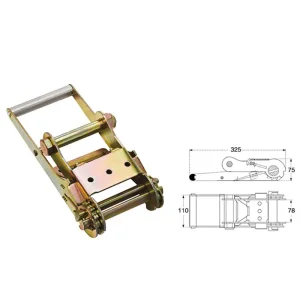
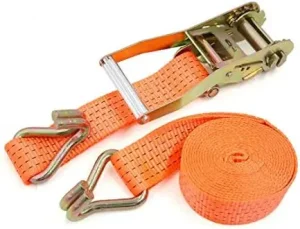
Streamline your supply chain by pairing certified head protection with Tianjin-manufactured lifting hardware, impact-resistant safety footwear, and heavy-duty cargo control equipment.