Direct-from-factory equipment engineered to withstand severe industrial impacts, dynamic kinetic loads, and extreme operational stresses across civil engineering and manufacturing.
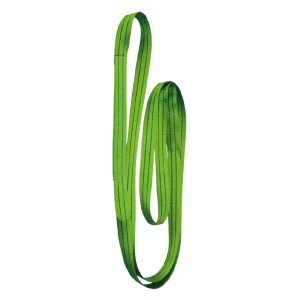
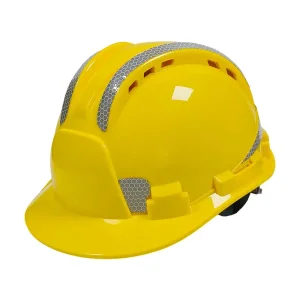
Industrial headgear safety has shifted from simple passive deflection shells to integrated biomechanical retention ecosystems. The chin strap and internal suspension belt represent the critical line of defense between impact survivability and catastrophic dislodgement.
Modern work environments demand versatile retention. Under EN 397 (traditional industrial ground operations), the strap must release between 150 N and 500 N to prevent strangulation hazard. Conversely, EN 12492 (work-at-height and mountaineering) mandates a release resistance exceeding 500 N to ensure the helmet remains locked onto the skull during multiple rotational impacts.
Sweat accumulation, salt crystallization, and microbial colonization lead to dermal abrasion and premature degradation of synthetic polymers. Leading suppliers integrate antimicrobial silver-ion infusions and dual-layer hollow filament polyester to accelerate wicking, preventing skin irritation during 12-hour shifts in high-temperature zones.
With the advent of Industry 4.0 connected worker platforms, safety helmet belts now host conductive yarn pathways, micro-lanyard load cells, and non-invasive pulse oximetry sensors. Chin cup topological design must isolate ambient vibrations while maintaining secure contact with skin without localized pressure spikes.
Information Gain Insight: According to global occupational incident registries, over 42% of fatal traumatic brain injuries (TBIs) occur after the initial impact displaces an inadequately secured safety helmet. Optimizing webbing elasticity, chin-cup contouring, and buckle friction coefficients dramatically reduces traumatic dislodgement risk.
When global EPC contractors and Tier-1 PPE distributors audit custom belt suppliers for safety helmets, they look far beyond raw tensile strength. The following engineering matrix governs procurement validation.
| Evaluation Parameter | EN 397 (Industrial Ground) | EN 12492 (Mountaineering / Height) | ANSI / ISEA Z89.1 (Type I & II) | ZhongQi Custom OEM Standard |
|---|---|---|---|---|
| Retention Release Limit | 150 N ≤ Release < 500 N | Failure Load > 500 N | Dynamic Roll-off Tested | Switchable Dual-Mode Buckle (150N–550N) |
| Webbing Elongation | ≤ 15% at peak yield | ≤ 10% dynamic yield | ≤ 12% static pull | ≤ 6.5% Pre-shrunk High-Tenacity PES |
| Thermal Resistance | -10°C to +50°C base | -20°C to +35°C | -30°C to +49°C | -40°C to +150°C (Aramid Core Option) |
| Flame Retardancy | Self-extinguish < 5s | N/A standard mandatory | No flashover / burning | UL94 V-0 Rated Polypropylene/Aramid |
| Hardware Corrosion | Grade 2 (24h salt spray) | Grade 3 (48h salt spray) | ASTM B117 (50h) | ISO 9227 Neutral Salt Spray > 96h |
| Abrasion Endurance | 5,000 cycles Martindale | 8,000 cycles Martindale | Abrasion to 80% strength | > 15,000 cycles Hexagonal Bar Test |
We utilize 210D to 1000D AA-grade high-tenacity polyester (PES) and continuous filament nylon 6.6. Weaving structures are optimized with twill or herringbone patterns to maximize lateral flexibility against the jawline while preventing dimensional necking under longitudinal impact stress.
Options include POM (Polyoxymethylene), Polyamide 6, and patented magnetic self-locking mechanisms (Fidlock-compatible architectures). Fastener designs undergo high-speed mold injection with automated deflashing to eliminate skin-contact micro-burrs.
Operating from the Shuangjie Trusted Industrial Park in Beichen District, Tianjin, our smart manufacturing infrastructure bridges the gap between customized agile prototyping and heavy industrial mass production.
High-speed computerized needle looms ensure micro-calibrated tension control across all warp and weft fibers, mitigating batch thickness deviations to within ±0.05 mm.
Programmable multi-axis electronic pattern bar-tackers execute high-density box-X and structural stitches with laser edge-sealing, preventing any loose threads or micro-fraying.
Automated machine vision inspection units verify dimensional alignment, stitch density, and buckle snap-fit locking before individual bagging, ensuring a zero-defect escape rate.
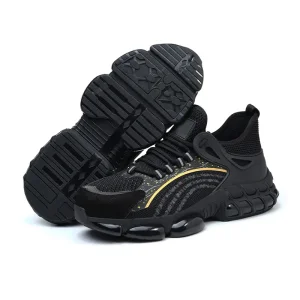
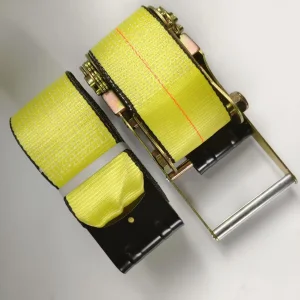
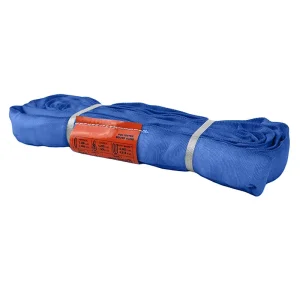
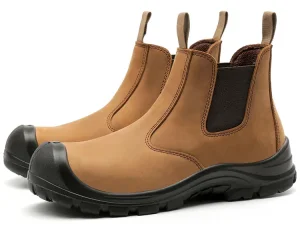
Located adjacent to Tianjin Port—North China’s maritime gateway—we offer direct container stuffing, short domestic drayage, and combined container shipments with slings, harnesses, and safety footwear.
Different operational environments challenge the mechanical endurance of safety helmet belts in unique ways. Our specialized OEM configurations meet these exact environmental stresses.
Turbine technicians navigate tight nacelles and climb 100-meter ladders under constant high-wind gusting. Chin straps require high-retention 4-point anchoring with quick-adjust cam buckles that prevent creeping when buffeted by gale-force winds.
Humid, dust-laden mine galleries create severe abrasion from suspended silica particles. Webbing must feature hydrophobic silicone coatings and self-flushing quick-release buckles that operate smoothly even when encrusted in wet mud.
Refinery turnarounds and high-voltage line work introduce flash-fire and arc-flash dangers. We engineer belts with Nomex/Kevlar woven filaments that resist ignition, will not melt onto the skin, and comply with NFPA 70E arc flash thermal performance criteria.
Direct answers from our product engineers regarding custom design, certifications, testing regimes, and production lead times.
Yes. We specialize in switchable buckle mechanisms. By incorporating a mechanical dual-action selector inside the buckle assembly, the user can toggle between a 150 N–500 N release threshold (for ground industrial safety) and a >500 N release threshold (for working at height), satisfying both standards in a single SKU.
We supply straps in high-tenacity polyester (PES), polyamide (Nylon 6 / 6.6), and flame-retardant aramid fibers. Chin cups can be molded from medical-grade silicone, flexible TPU, or constructed from breathable thermoformed EVA lined with antibacterial mesh fabric.
Every batch of raw yarn undergoes denier, elongation, and break testing before winding. During needle weaving, warp tension is constantly monitored by digital sensors. Finished stitchings and assembled straps undergo statistical tensile load testing on our computerized testing beds with calibrated load-cell certificates.
Full OEM/ODM customization is standard. Options include jacquard woven logos, silicone heat transfers, laser engraving on plastic and aluminum buckles, bespoke compliance labels with QR codes, and custom retail blister cards or eco-friendly polybags with your brand graphics.
Standard prototype samples with existing tooling take 3 to 5 business days. Custom buckle molding and specialized yarn dyeing take 15 to 20 days. Standard production MOQ starts at 1,000 units for stock webbing colors and 3,000 to 5,000 units for fully customized jacquard and molded hardware.
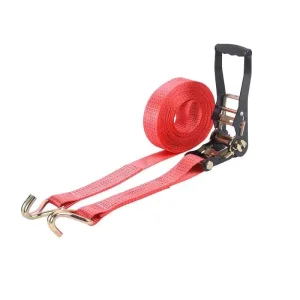
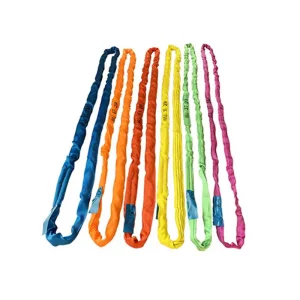
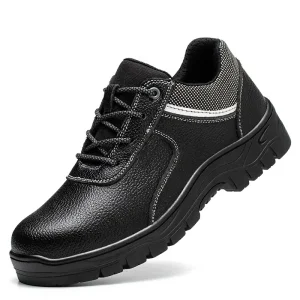
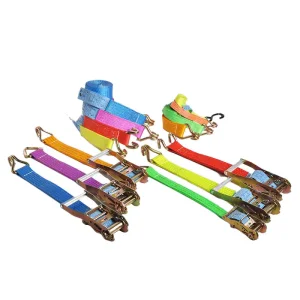
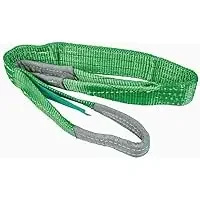
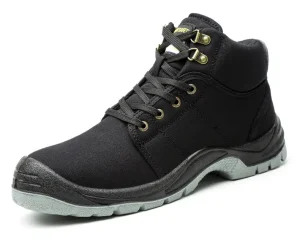
Yes, this is our core advantage. As a complete safety equipment and webbing manufacturer, you can combine helmet retention belts, safety harnesses, polyester cargo lashing straps, lifting slings, and industrial safety footwear into a single consolidated container from Tianjin Port, drastically reducing freight costs.
Expand your supply chain footprint with our certified hardware, lifting slings, cargo tie-downs, and industrial footwear manufactured to strict European and North American protocols.