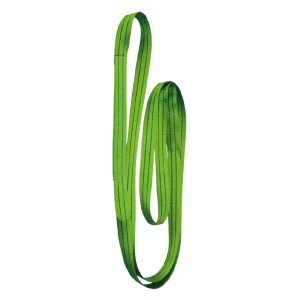
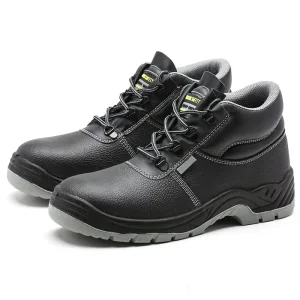
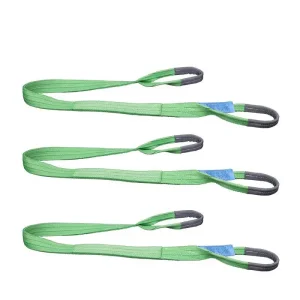
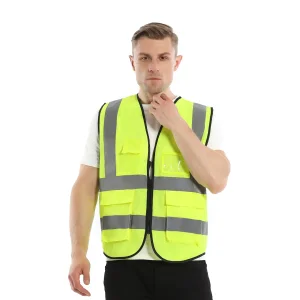
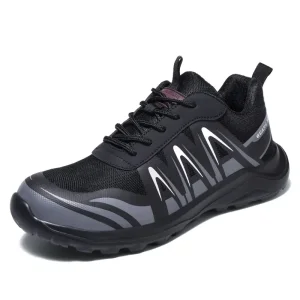
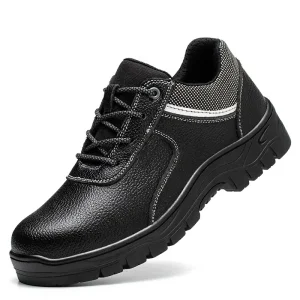
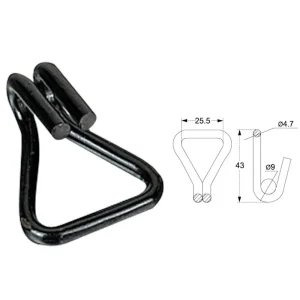
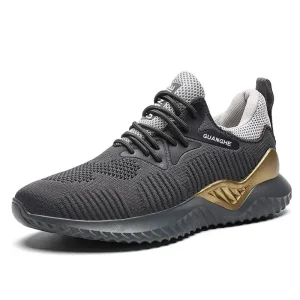
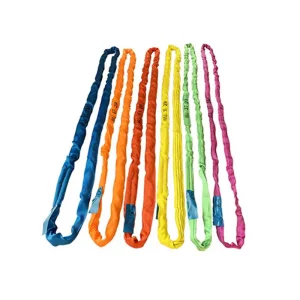
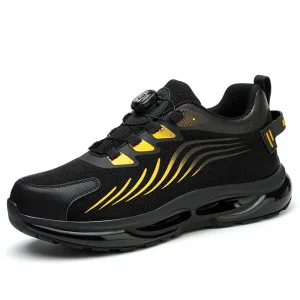
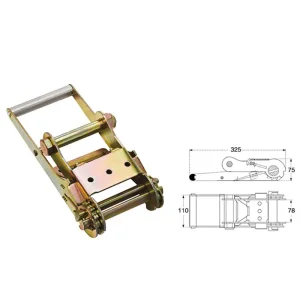
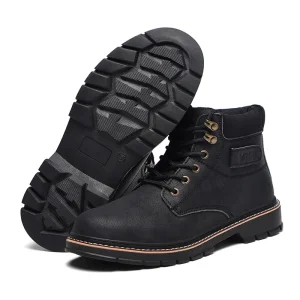
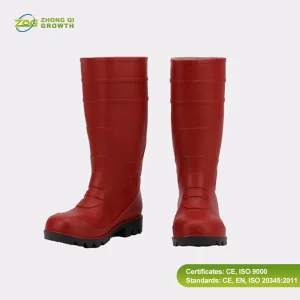
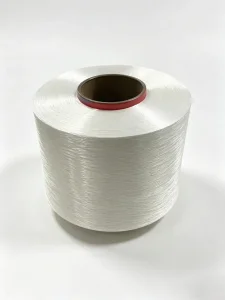
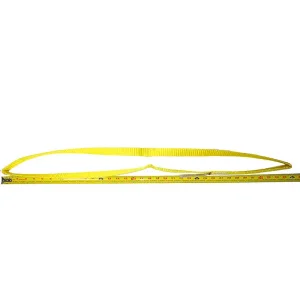
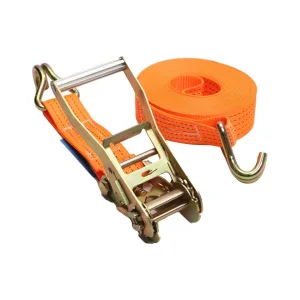
Direct factory manufacturing compliant with European CE, American ANSI, and international ISO quality standards. Fully customizable batch runs for enterprise contractors and safety distributors.
Accelerating infrastructure expenditure, heightened regulatory enforcement by OSHA, HSE, and international labor standards, alongside the widespread adoption of multi-hazard site protection, have triggered an evolutionary shift across the personal protective equipment (PPE) headwear sector.
Global general contractors are systematically phasing out traditional full-brim cap designs in favor of climbing-style safety helmets modeled after mountaineering gear (EN 12492 and ANSI Type II). These modern systems provide critical top-of-head crown attenuation as well as lateral, anterior, and posterior deceleration protection. Integrated 4-point chin straps with controlled buckle release thresholds prevent displacement during catastrophic slips, trips, and secondary falls from elevated structural works.
A safety helmet can no longer function in isolation. Modern industrial jobsites demand universal accessory integration slots (30mm universal Euro-slots), magnetic lamp housings, visor rails, and secondary attachment points for ear defenders. By creating an integrated headgear ecosystem, high-hazard facilities like offshore LNG terminals, petrochemical crackers, and tunnel mining setups ensure compatibility without compromising ballistic shell integrity or dielectric capabilities.
Global inflation and disrupted sea lanes have forced PPE distributors to consolidate their vendor base. Procurement departments avoid middlemen and trading agents, preferring dedicated direct-manufacturing hubs. Sourcing safety helmets alongside lifting webbing, cargo control systems, fall arrest harnesses, and protective footwear minimizes freight footprint, standardizes quality assurance protocols, and significantly reduces landed procurement expenses.
Structural reliability in severe industrial conditions depends directly on raw resin compounding, ultraviolet stabilizer saturation, and precision injection mold hydraulics.
| Polymer Shell Material | Impact Attenuation (Joule Rating) | Thermal Deflection Threshold | Dielectric Breakdown Voltage | UV Degradation Half-Life | Primary Industrial Sector |
|---|---|---|---|---|---|
| High-Density Polyethylene (HDPE) | Up to 45 Joules | -20°C to +50°C | Class G (2,200 Volts) | ~24–36 Months Field Exposure | General Civil Construction, Warehousing |
| Virgin Acrylonitrile Butadiene Styrene (ABS) | 55–75 Joules | -30°C to +80°C | Class E (20,000 Volts Tested) | ~36–48 Months with UV400 Masterbatch | Heavy Engineering, Power Grids, Oil & Gas |
| Polycarbonate / PBT Blend (PC-PBT) | 85–110 Joules | -40°C to +130°C | Class E (20,000+ Volts Tested) | ~60 Months Advanced Polymer Core | Foundries, Metallurgical Smelting, Arc Flash |
| Fiber-Reinforced Polymer (FRP / Phenolic) | Exceeds 120 Joules | Up to +260°C Radiant Heat | Class C (Zero Conductive Insulation) | Exceptional Resiliency (72+ Months) | Steel Forging, Deep-Pit Mining, Furnace Work |
Traditional hard hats rely almost entirely on webbed textile suspension straps to absorb impact via elastic extension. Modern Type II safety helmets integrate Expanded Polystyrene (EPS) or high-recovery Expanded Polypropylene (EPP) co-molded foam liners. While EPS offers maximum crushing dissipation against sudden primary kinetic impacts, EPP provides superior multi-impact resilience, springing back to absorb subsequent rockfalls or secondary structural strikes common in demolition and tunnel engineering.
Suspension physics dictate peak force distribution across the human cranium. Low-cost polyethylene suspensions transfer localized kinetic energy unevenly, causing cervical spine compression. ZhongQi's engineered 6-point suspension harness uses 100% woven AA-grade polyester and high-tenacity nylon webbing, secured with a fine-pitch rear ratchet wheel. This guarantees smooth micro-adjustments from 52 cm to 63 cm head circumferences even while wearing heavy cryogenic or chemical-resistant gloves.
Oblique impacts generate dangerous rotational acceleration inside the human skull, causing shearing of nerve tissues and traumatic brain injuries (TBI). Forward-thinking industrial factories now incorporate rotational slip-plane dynamics (similar to brain-cushioning MIPS architecture) within custom industrial helmet batches. By introducing 10–15mm of omnidirectional low-friction sliding motion during a 45-degree corner impact, shearing rotational loads delivered to the cervical spine drop by up to 35%.
Operating inside the Shuangjie Trusted Industrial Park, Beichen District, Tianjin, our advanced facility bridges precision polymer molding with large-scale industrial webbing production.
Our facility is situated next to Tianjin Port (Xingang), the premier deep-water maritime logistics hub of North China. Having direct highway connections avoids the multi-day domestic transit delays common with inland manufacturers. This proximity lowers drayage expenses, guarantees prompt access to empty shipping containers during peak seasons, and enables swift customs processing directly to European, American, Middle Eastern, and Southeast Asian ports.
Most overseas distributors struggle with scattered logistics across multiple factories when sourcing comprehensive PPE lines. At ZhongQi, we mold safety helmets and simultaneously weave high-tenacity polyester slings, assemble ratchet tie-down straps, stitch cut-resistant gloves, and vulcanize safety boots. Sourcing from our Tianjin industrial base allows buyers to mix multiple PPE product lines inside a single 40ft High Cube container, keeping inventory lean and driving down clearance overhead.
Our production floor operates automated 850-ton and 1,200-ton hydraulic injection molding machines equipped with servo-driven robotic pick-and-place arms. This high-precision cycle ensures uniform wall thicknesses across complex compound curves, prevents structural cold-joint weaknesses, and eliminates air bubble entrapment within critical top crowns. Every production batch undergoes rigorous dropped-weight strike trials and dielectric breakdown testing before packaging.
Understanding regional testing protocols is essential when importing safety gear. We construct and calibrate custom helmet configurations to guarantee compliance in your destination market.
| Standard / Code | Geographic Jurisdiction | Impact Configuration Tested | Transmitted Force Threshold | Chin Strap Retention Limit | Dielectric Class Options |
|---|---|---|---|---|---|
| ANSI/ISEA Z89.1 | United States & International Projects | Type I (Top Impact) / Type II (Lateral Impact) | < 4,450 N (Top Crown Strike) | Optional or non-breakaway specs | Class E (20kV) / Class G (2.2kV) / Class C (0V) |
| EN 397:2012+A1 | European Union / CE Directives | Crown Impact (5kg hemispherical striker) | < 5.0 kN Maximum Force | Releases between 150 N and 250 N | Optional 440V AC Electrical Insulation |
| EN 12492:2012 | Mountaineering & Work at Height | Multi-Angle (Crown, Front, Side, Rear) | < 10.0 kN Transmitted Force | Maintains grip > 500 N (Zero Slip) | Not rated for High-Voltage Electrical Arc |
| CSA Z94.1-15 | Canada | Type 1 (Crown) / Type 2 (Lateral & Top) | < 3,780 N Peak Deceleration | Requires secure harness anchoring | Class E (20,000 Volts / 3-minute test) |
| AS/NZS 1801 | Australia & New Zealand | Type 1 (Industrial) / Type 2 (Mining) | < 5.0 kN (Conditioned -10°C to +50°C) | Mandatory secure latch retention | Tested for surface electrical conductivity |
Different operating environments carry unique physical hazards. Our OEM manufacturing adapts shell ventilation, reflective trim, bracket hardware, and harness suspensions to target precise industrial needs.
Work-at-height operations mandate compact, unvented or slide-vented low-profile helmets meeting EN 12492 and EN 397 combined requirements. Our integrated 4-point chin straps with dual-position resistance prevent helmet loss in gusty 60-knot winds. Short peak visors maximize upward vision when ascending structural monopiles, telecommunication lattice towers, and industrial scaffolding.
Utility linemen, substation engineers, and switchgear operators require unvented Class E ABS protective helmets tested to 20,000 volts without dielectric puncture. Shell designs must be devoid of metal rivets, conductive brackets, or external metal fasteners. We formulate our injection pellets with specialized fire-retardant chemistry to extinguish open ignition within 5 seconds during electric arc flash incidents.
Confined underground mine crews work in abrasive, wet, and high-impact conditions. Custom configurations incorporate integrated reinforced front headlamp mounts, rear power-cable battery clips, and high-visibility 360-degree prismatic retroreflective tape lines. High-impact ABS shell bodies prevent cracking from falling rock fragments while resisting sulfur, grease, and acidic pit drainage.
A successful PPE procurement strategy balances upfront mold investments, international compliance certifications, and freight packing density to deliver maximum bottom-line savings.
For large safety equipment brands and national distributors, generic off-the-shelf hard hat profiles fail to build lasting market equity. ZhongQi provides in-house industrial CAD design, 3D prototype printing within 48 hours, and precision P20 steel injection tooling in 18 to 25 days. Shell side ribs, branded crest logos, pad-printed safety instructions, and custom-tinted shell colors are tailored directly to your brand guidelines.
Safety helmets are lightweight yet bulky. Shipping fully assembled helmets in consumer retail boxes fills an entire container with empty space, driving up per-unit freight costs. We engineer our helmet shells to nest smoothly when unassembled, packing suspensions and chin straps in dense bottom cartons. This approach quadruples shipping capacity—from roughly 2,800 fully boxed helmets to over 11,000 nested shells inside a single 40ft High Cube container.
Personal safety equipment requires uncompromising factory oversight. ZhongQi runs an on-site test laboratory equipped with precision drop towers, high-temperature conditioning chambers (-30°C to +60°C), and high-voltage dielectric test rigs. Each production lot is cataloged by raw resin melt index, UV additive percentage, and drop-impact strike force before issuing clean CE or ANSI technical data sheets.
Direct technical answers addressing production parameters, compliance standards, tool customization, and logistical procedures.
ANSI Type I helmets are designed strictly to reduce the force of impact resulting solely from a blow directly to the top of the head. Type II safety helmets protect against vertical crown strikes as well as lateral blows from the front, sides, and rear. Type II designs utilize an integrated high-density EPS/EPP foam impact liner alongside a 4-point or 6-point suspension.
For standard safety helmet shell colors (White, Safety Yellow, Navy Blue, High-Vis Orange, Red), our typical production MOQ is 500 units per color. For custom Pantone shade matching, we compound masterbatch pellets with a minimum run of 1,000 units. Pad printing, heat-transfer branding, and laser etching of company logos are fully supported in-house.
Any safety helmet incorporating ventilation cut-outs or perforated airflow channels immediately forfeits Class E (20,000V) and Class G (2,200V) electrical dielectric ratings. Under ANSI and EN guidelines, vented helmets default to Class C (Conductive), offering zero protection against live electrical contact. High-voltage utility applications must always utilize unvented dielectric shells.
Yes. That is a core competitive strength of our Tianjin manufacturing complex. Buyers routinely combine high-tonnage polyester lifting slings, cargo ratchets, fall-arrest harnesses, safety footwear, and hard hats within a single consolidated bill of lading. This eliminates LCL (less-than-container) logistics fees and allows distributors to replenish complete product lines together.
Industry best practice and manufacturer guidelines recommend replacing industrial safety helmet shells after 3 to 5 years of active field use, depending on UV solar intensity, chemical vapors, and mechanical exposure. Internal textile suspensions experience heavy friction and sweat accumulation, so they should be inspected regularly and replaced every 12 months.
Initial 3D surface files and mouldflow simulations are completed within 5 business days. Once client sign-off is finalized, CNC machining of the P20 steel injection molds, ejection pins, and side cooling channels takes 18 to 22 calendar days. Initial pilot T1 shot samples are molded, tested for impact performance, and air-freighted to the buyer for final approval.
Factory-direct industrial supplies manufactured in our Tianjin production facility, engineered to endure the most demanding global construction and logistics environments.
Whether you require full mold customization for branded climbing-style safety helmets, customized EN 1492 polyester lifting slings, or full container consolidation direct from our Tianjin maritime facility, our technical sales engineers respond within 24 hours.