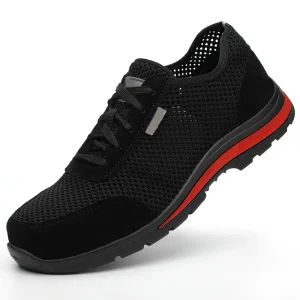
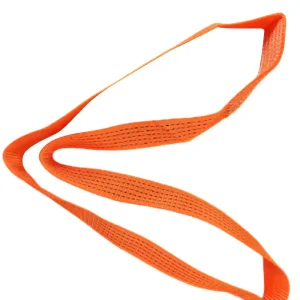
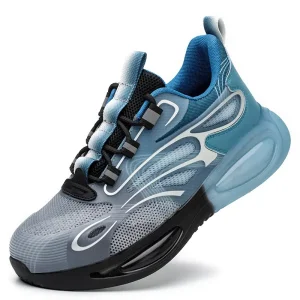
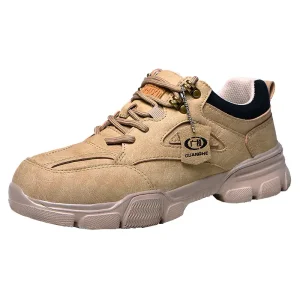
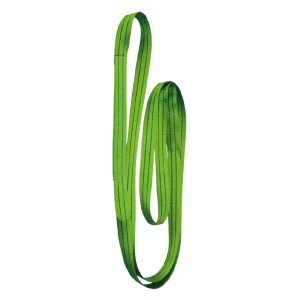
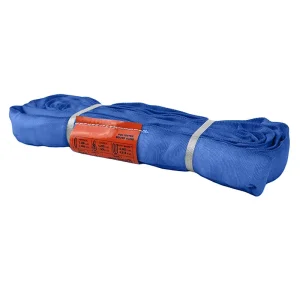
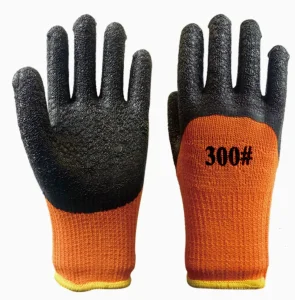
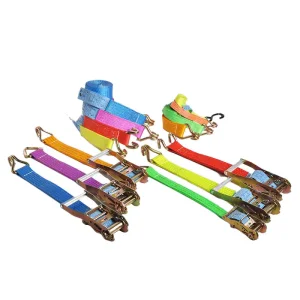
Direct factory manufacturing connecting fall protection, specialized safety footwear, lifting webbings, and occupational head protection.
In high-hazard commercial environments, color-coded hard hats are not aesthetic choices; they are visual ergonomics instruments that accelerate emergency command and reduce communication latency.
Under international construction and industrial site conventions (including UK Build UK and US OSHA standard practices), blue helmets strictly designate technical specialists, licensed electricians, mechanical contractors, and consulting systems engineers. Clear identification prevents unqualified personnel from intervening in energized zones.
During seismic, chemical, or structural emergencies, incident commanders must instantly isolate specific technical leads. A vibrant, high-luminance blue helmet with embedded prismatic retro-reflective micro-bead tape ensures instant 360-degree recognition even in dense smoke or high-particulate failure scenarios.
Natural solar UV spectrum radiation rapidly degrades low-grade polymers via cross-chain photo-oxidation. ZhongQi factory blue safety helmets incorporate masterbatch Hindered Amine Light Stabilizers (HALS), preserving chromatic density, shell tensile toughness, and dielectric resilience over multi-year continuous outdoor operational life.
A multi-billion dollar industrial safety paradigm shift is transforming head protection from passive plastic domes to precision-engineered impact energy attenuation systems.
The global Head Protection market is projected to surpass USD 4.8 Billion by 2030, driven by aggressive infrastructure growth in North America, the European Green Deal, and Asia-Pacific energy grid modernization. ZhongQi's manufacturing facility in Beichen District, Tianjin, directly exploits proximity to Tianjin Port—Northern China's mega-maritime terminal—eliminating demurrage risks and enabling rapid international container freight dispatch.
While low-tier consumer markets rely heavily on recycled High-Density Polyethylene (HDPE), institutional engineering enterprises demand modified Acrylonitrile Butadiene Styrene (ABS) or Polycarbonate-Polybutylene Terephthalate (PC-PBT) polymer alloys. High-grade ABS delivers exceptional rigidity, superior lateral stiffness (LD compliance under EN 397), and unmatched resistance to corrosive chemicals, fuels, and dielectric breakdown.
Work-at-height fatalities remain the single largest cause of traumatic brain injuries (TBIs) across civil infrastructure. Modern procurement managers mandate integrated systems where the safety helmet operates synergistically with 5-point full body harnesses (CE EN 361) and energy-absorbing lanyards. A helmet must stay mechanically anchored during dynamic multi-axis tumbling falls through certified 4-point chin straps.
| Material Engineering Grade | Primary Resin Chemistry | Impact Dissipation (-30°C) | Dielectric Breakdown Voltage | Optimal Industrial Deployment |
|---|---|---|---|---|
| Industrial High-Impact ABS | Virgin Terpolymer (Acrylonitrile-Butadiene-Styrene) | Exceptional (> 48 J) | Class E Tested (20,000 Volts AC) | Substation Maintenance, Electrical Transmission, Heavy Construction |
| High-Density PE (HDPE-UV) | Linear High-Density Ethylene Copolymer | Moderate (30–35 J) | Class G Tested (2,200 Volts AC) | General Warehousing, Agricultural Logistics, Light Assembly |
| Polycarbonate (PC) Composite | Bisphenol-A Carbonate Polymer Alloy | Extreme (> 65 J) | Class C (Conductive / Vented Options) | Smelters, Foundries, Cryogenic Liquefaction Facilities |
| Fiberglass Reinforced Polymer | Thermoset Polyester Matrix with Glass Strands | Rigid High-Energy Single Impact | Zero Conductivity (Resistant to Molten Metal) | Steel Foundries, Petrochemical Cracking Furnaces |
Behind the high-gloss aesthetic lies a multi-layer biomechanical kinetic chain designed to convert sharp focal impacts into broad, safe lateral kinetic dispersion.
Our injection molds incorporate longitudinal structural stiffening crown ridges. These ridges double the section modulus along the primary sagittal axis, actively deflecting dropped spanners, bolts, or rebar away from the cranial vertex without shell cracking.
Constructed using our proprietary high-tenacity woven polyester webbing (derived from our automated lifting sling weaving looms). The 6-point harness provides 30mm of mechanical deceleration clearance, dampening peak force transmission to the cervical spine below 3.8 kN.
A quick-turn ergonomic rear dial ratchet allows seamless one-handed sizing from 52 cm to 64 cm head circumferences. Engineered with internal slip clutches to prevent over-tightening headaches while preventing dislodgement during violent rotational accelerations.
Equipped with a certified dual-switch chinstrap compliant with EN 12492 (Mountaineering / Climbing: releases > 50 kg to prevent snagging falls) or EN 397 (Industrial: releases between 15–25 kg to eliminate throat strangulation hazards in confined spaces).
Deploying specialized blue safety helmet platforms across modern infrastructure networks with zero-compromise environmental and mechanical endurance.
Offshore nacelle technicians operate under continuous exposure to 35-knot winds, dense salt spray, and extreme altitude. ZhongQi's non-vented ABS Blue Helmets feature anti-corrosion nylon rivets, UV-stabilized pigment matrix, and closed-cell EVA comfort padding that does not absorb saline moisture, guaranteeing anti-fungal hygiene and dielectric insulation during high-voltage maritime switchgear coupling.
Utility electrical specialists face catastrophic Arc Flash and high-potential electrostatic discharge risks. Our ANSI Class E blue helmets undergo proof testing at 20,000 Volts AC for 3 minutes without dielectric puncturing or leakage currents exceeding 9.0 mA. Eliminating top ventilation slots prevents ingress of stray live wires, arcing debris, and conductive metallic particulates.
Modern mega-fulfillment centers operate automated guided vehicles (AGVs) and high-density racking exceeding 20 meters. Blue helmets equipped with built-in adjustable cooling fans and high-airflow lateral labyrinth vents keep logistics engineers comfortable across 12-hour shifts while shielding against falling pallet parcels and cross-aisle kinetic collisions.
Every industrial helmet shipment manufactured by ZhongQi is backed by comprehensive batch-traceable testing documentation conforming to cross-border statutory standards.
Mandatory for European industrial procurement. Mandates dynamic shock absorption testing using a 5 kg hemispherical steel striker dropped from 1 meter, flame resistance testing, and optional cold conditioning down to -30°C with lateral shell deformation (LD) under 400 N.
Governing standard for North America. Rigorously assesses Type I (top impact) and Type II (lateral and top impact) attenuation. ZhongQi builds Class E (Electrical: 20,000V) and Class C (Conductive: no electrical rating) variants to fit exact site hazard matrices.
Essential for mining and resource extraction across Australia and New Zealand. Dictates Type 1 general industrial, Type 2 high-heat refractory, and Type 3 bushfire/forestry helmets with severe UV weathering exposure pre-conditioning cycles.
The updated Chinese standard covering personal head protection. Mandates maximum transmitted force below 4,900 N, strict flammability self-extinguishing within 5 seconds, and puncture striker testing using a 3 kg conical striker dropped from 1 meter.
From raw resin dehumidification to automated multi-cavity robotic injection and dynamic destructive batch testing in Tianjin, China.
Polymer integrity begins with moisture extraction. Raw ABS granulates are dried in automated dehumidifying dryers below 0.05% moisture content prior to plasticization. This prevents microscopic steam micro-voids inside the molded shell that could induce catastrophic brittle failure during cold impacts.
Shells are molded on closed-loop, microprocessor-controlled 650-ton hydraulic injection machines. Wall thickness is mapped via ultrasonic sensors across 24 critical nodes, maintaining a uniform 2.8mm to 3.2mm structural envelope with zero residual mold stress or weld line vulnerabilities.
Our quality lab performs destructive tests on 5 out of every 1,000 manufactured shells. Test samples undergo 4-hour pre-conditioning at -30°C and +50°C before facing drop tower load cells and conical penetration strikers. Batch test certificates are stamped and packed directly into customer export cartons.
The future of occupational protection merges structural polymer composites with ambient micro-electronics, telematics, and circular bio-based chemistry.
Developing ultra-low-power micro-electro-mechanical system (MEMS) accelerometers embedded within the suspension cradle. In the event of a high-G impact or prolonged worker immobility, the helmet autonomously transmits emergency GPS coordinates via Sub-GHz LoRaWAN or Bluetooth Mesh to the central site safety dashboard.
Our forthcoming Mark-IV shell architecture features built-in micro-rail mounting interfaces. This permits instant tool-less snapping of smart AR holographic visors, high-lumen intrinsically safe explosion-proof headlamps, and noise-cancelling two-way comms headsets without compromising the helmet's dielectric envelope.
Targeting enterprise Scope-3 ESG decarbonization goals, ZhongQi R&D is formulating bio-circular polymer resins derived from non-fossil castor oil feedstocks. These compounds achieve parity with virgin ABS tensile modulus while reducing cradle-to-gate carbon footprints by up to 42% per manufactured unit.
In-depth engineering answers addressing compliance, lifespan, OEM tooling, container load optimization, and international standards.
Under international occupational health and safety codes, blue safety helmets signify technical specialists, certified electrical engineers, mechanical subcontractors, quality auditors, and systems integrators. This visual differentiation prevents non-qualified crew from tampering with critical circuitry, high-pressure piping, and complex switchboards during maintenance.
Unused helmets stored in original export packaging out of direct sunlight retain structural integrity for up to 5 years from the injection date stamp stamped inside the shell. Once placed into continuous daily industrial operation, regulatory standard EN 397 mandates replacement after 3 to 5 years, or immediately following any single high-energy blunt impact event, regardless of visible damage.
Our ANSI Class E certified helmets undergo testing where the inverted shell is filled with water and submerged in a dielectric bath. A 20,000-volt alternating current (AC) potential is applied at 60 Hz for a full 3 minutes. The helmet shell must demonstrate zero structural breakdown, no burn-through arcing, and leakage current strictly below 9 milliamperes.
Yes. With over 15 years of dedicated OEM/ODM manufacturing expertise, we offer pad printing of company logos (up to 5 colors), mold-embossed crests, customized high-intensity microprismatic reflective decal kits, and exact Pantone color masterbatch formulation (including Electric Royal Blue, Cyan, and Deep Navy).
A 4-point harness connects to four anchor slots around the headband rim, suitable for basic industrial tasks. A 6-point suspension incorporates two additional lateral cross-webbing straps over the crown. This expands the kinetic deceleration contact surface area by 35%, drastically lowering localized pressure concentrations on the skull during severe vertex impacts.
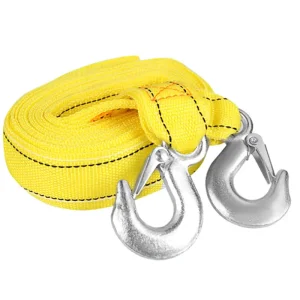
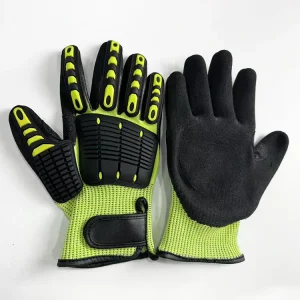
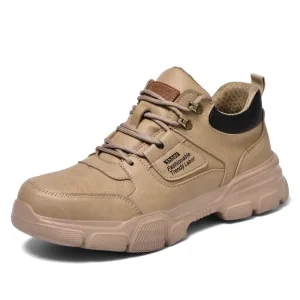
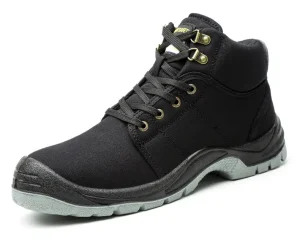
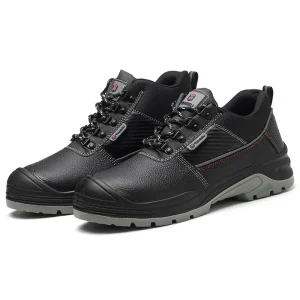
Yes! One of Tianjin ZhongQi's premier commercial advantages is container consolidation. Global importers can consolidate full 20GP or 40HQ ocean containers combining our ABS safety helmets with polyester webbing slings, ratchet tie-downs, full-body safety harnesses, work gloves, and steel-toe safety footwear, drastically reducing freight overhead.
Manufactured under strict ISO 9001 quality systems in Shuangjie Trusted Industrial Park, Beichen District, Tianjin, China.