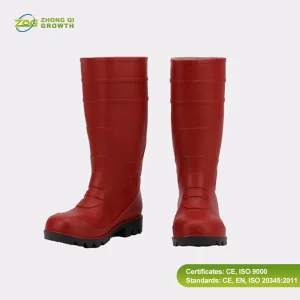
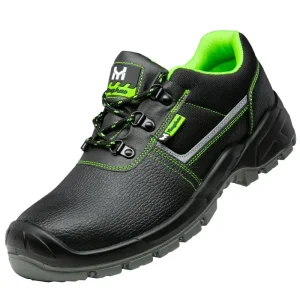
Engineered to operate seamlessly alongside smart headwear telemetry. Certified rigging, fall protection, and high-tenacity industrial apparel built under certified OEM/ODM manufacturing standards.


The transition from passive industrial protective equipment to active, connected telemetry nodes is revolutionizing environmental health and safety (EHS) across infrastructure, extractive industries, and heavy civil construction.
The modern industrial frontier demands verifiable occupational safety accountability. Global safety mandates—enforced by regulatory frameworks such as OSHA 1926/1910 in North America, EN 397/EN 14052 in Europe, and national work-safety digital twin directives in the Asia-Pacific—have accelerated the need for real-time spatial positioning on industrial personnel. A traditional hard hat mitigates passive mechanical impact; conversely, a Smart Safety Helmet with GPS & Multi-Constellation GNSS operates as an edge-computing hub. It streams telemetry regarding fall detection, worker vitals, hazardous gas incursions, exclusion zone violations, and heat stress indexes directly into centralized supervisory control and data acquisition (SCADA) platforms.
Industrial manufacturers and tier-1 contractors now view smart helmets not merely as regulatory line items, but as primary telemetry nodes that mitigate billion-dollar project delays, catastrophic liabilities, and unmonitored lone-worker incidents. By merging high-strength ABS/polycarbonate shell technology with low-power wide-area networks (LPWAN) like NB-IoT, LTE-M, and LoRaWAN, certified factories provide enterprises with end-to-end personnel auditing across sprawling gigaprojects, deep-shaft mining, marine terminals, and petrochem processing assets.
Enterprise smart safety helmets integrate multi-dimensional sensing arrays designed to maintain centimeter-level telemetry precision across open-sky, canopy-obstructed, and GPS-denied environments.
Utilizes multi-constellation L1/L5 GPS, GLONASS, Galileo, and BeiDou tracking combined with RTK (Real-Time Kinematic) differential processing, delivering sub-meter positioning in dense steel infrastructure zones.
When entering GPS-denied shafts, subterranean basements, or enclosed vessel drums, integrated 9-axis Inertial Measurement Units seamlessly switch to pedometer and spatial heading calculations without signal dropout.
High-G triaxial accelerometers instantly recognize high-velocity physical impacts, continuous freefalls beyond 1.2 meters, or prolonged worker dormancy, triggering an emergency SOS interrupt packet over LTE/NB-IoT.
Optional integrated multi-gas monitoring (CO, H₂S, LEL combustible gases, O₂ deficiency) combined with optical infrared forehead skin-temperature sensing to preempt thermal heat exhaustion.
Ultra-Wideband (UWB) sub-decimeter transceivers interact with mobile equipment and stationary heavy machinery beacons, producing 100dB acoustic and haptic warnings when personnel breach high-risk vehicle zones.
Industrial edge microcontrollers format raw positioning, sensor health, and network handshakes into cryptographically secured MQTT/HTTPS payloads, protecting enterprise asset tracking data from interception.
How top-tier engineering consortia, extractive resource operations, and infrastructure contractors deploy GPS-enabled smart helmets alongside load-securing and fall-protection equipment.
During cable-stayed bridge and skyscraper construction, smart helmets trace high-angle riggers. Combined with certified full-body fall arrest harnesses, GPS and vertical altimeter sensors identify suspension trauma before irreversible orthostatic shock occurs.
Hazardous, volatile processing environments utilize ATEX/IECEx Zone 1 certified smart helmets. Virtual dynamic geofences auto-alert operators if uncertified workers wander near hydrocarbon degassing stacks or active high-pressure cracking units.
Surface haul trucks create massive blind spots. Smart helmets equipped with RTK and peer-to-peer UWB exchange spatial coordinates with haul truck collision-avoidance systems (CAS), preventing catastrophic crushing accidents.
Transmission linemen working in proximity to high EMF fields benefit from shielded GPS circuits and non-conductive dielectric shells (ANSI Class E), streaming location stamps during stormy emergency restorations.
Procurement teams and project managers must verify compliance with strict mechanical and RF telemetry thresholds prior to bulk deployment.
| Subsystem | Technical Benchmark | Standards Compliance | Operational Function |
|---|---|---|---|
| Primary Shell & Suspension | Reinforced ABS / High-Density Polyethylene (HDPE); 6-point textile suspension harness with dial-ratchet tensioner | EN 397ANSI/ISEA Z89.1 Type I/II | Top/lateral impact energy absorption, high-velocity penetration mitigation, and dielectric arc protection. |
| GNSS Positioning | Multi-constellation L1/L5 (GPS, GLONASS, Galileo, BeiDou); dual-channel active ceramic patch antenna; RTK capable | 3GPP Release 16FCC Part 15 | Sub-meter horizontal field accuracy, geofence boundary triggering, evacuation roll-call telemetry. |
| Indoor Fallback Tracking | UWB (3.5 GHz - 6.5 GHz) TDoA ranging + BLE 5.2 beacon triangulation + 9-Axis IMU Dead Reckoning | IEEE 802.15.4zCE RED | Centimeter-scale location capture within concrete tunnels, basements, ship hulls, and steel vessels. |
| Telemetry Uplink | Global 4G LTE-M / NB-IoT bands with 2G fallback; optional private industrial LoRaWAN (868/915 MHz) | PTCRBGCF Certified | Transmits heart rate, skin temp, freefall shock warnings, and SOS packets directly to central web console. |
| Battery & Thermal Management | 4000mAh to 6000mAh intrinsically safe Li-Polymer; quick-swap magnetic latch; operating range -25°C to +65°C | UN38.3IEC 62133ATEX Zone 1 | Guarantees 14 to 28 hours continuous 1-second transmission intervals; zero thermal run-away risk on worker crown. |
| Environmental Enclosure | Ultrasonic weld with silicone perimeter gasket; hermetic acoustic membrane for microphone & speaker | IEC 60529 IP67/IP68MIL-STD-810H | Total dust ingress prevention; protection against torrential rain, salt-mist corrosion, and 1.5m drops onto concrete. |
As microelectronics shrink and machine learning edge engines become ultra-efficient, smart safety helmets are evolving from reporting instruments to predictive injury-prevention systems.
Direct-to-satellite 3GPP Release 17/18 connectivity will allow smart helmets to operate in remote deserts, offshore marine vessels, and alpine pipelines with zero terrestrial cellular tower presence, guaranteeing unbroken SOS capabilities worldwide.
Next-generation inner-suspension multi-point piezoelectric sensors will compute sub-concussive micro-impact forces over time, alerting occupational safety officers when cumulative rotational acceleration damages brain tissues—even without a visible skull rupture.
Micro-OLED wave-guide viewfinders projecting holographic blueprints, thermal conduit overlays, and hazardous utility warnings directly onto the helmet visor, elevating site technicians into spatially aware augmented-reality operators.
Critical checkpoints for purchasing departments, systems integrators, and EHS executives sourcing smart safety helmets and complementary PPE directly from manufacturing facilities.
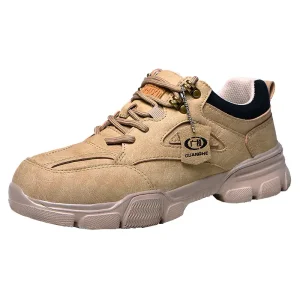
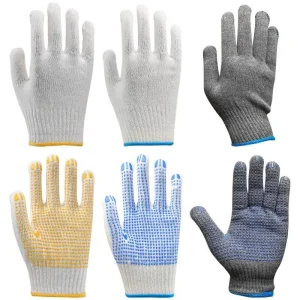
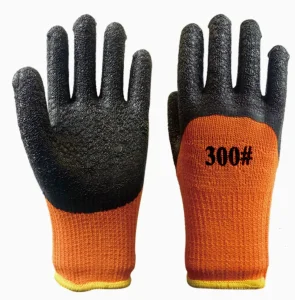
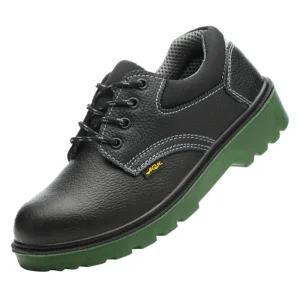
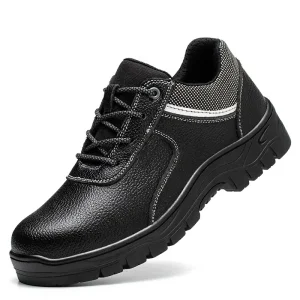
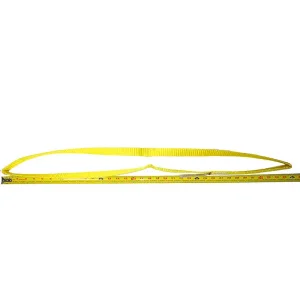
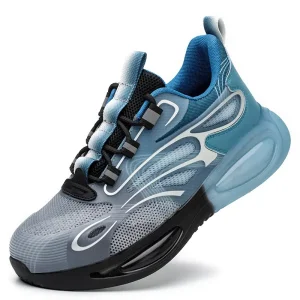
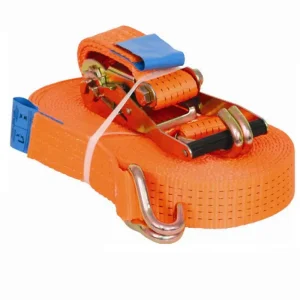
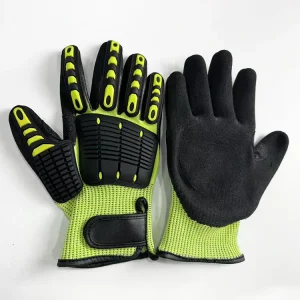
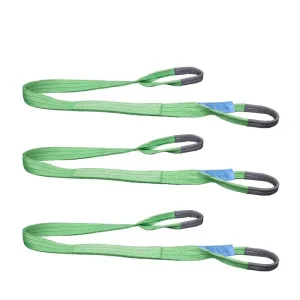
Complete your job-site compliance package. Factory-direct protective footwear, high-tensile lifting equipment, and heavy-duty work gloves built for demanding operations.