
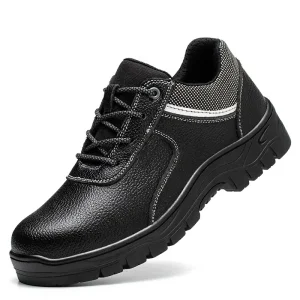
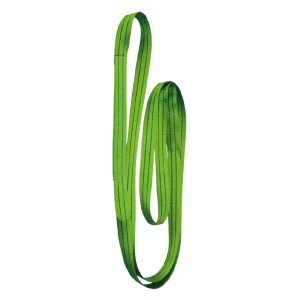
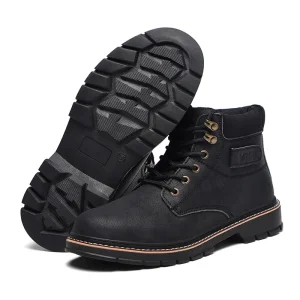
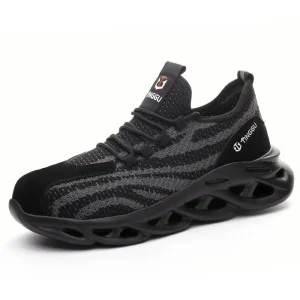
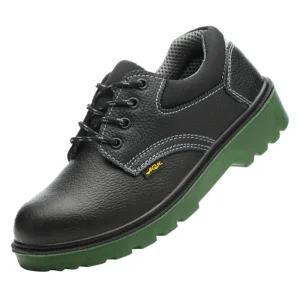
Integrate certified safety helmets with industrial footwear and fall-arrest equipment for comprehensive, consolidated turnkey shipments directly from our factory.
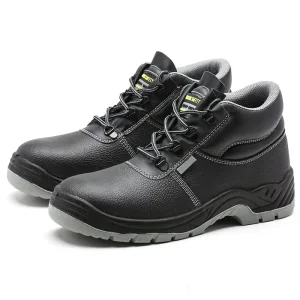
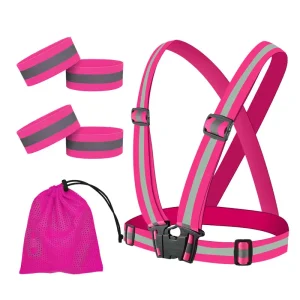
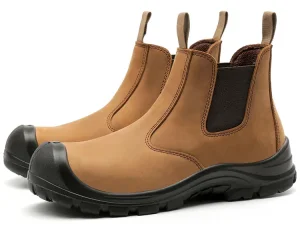
A granular engineering review of the European standard for industrial safety helmets, test procedures, and mandatory vs. optional performance thresholds.
The standard EN 397 specifies physical and performance requirements, methods of test, and marking requirements for industrial safety helmets. The primary objective is to protect the wearer's head against falling objects and the consequent mechanical brain injury, concussion, or skull fracture. Under standard testing protocols, an industrial safety helmet undergoes two mandatory mechanical verifications: Shock Absorption and Resistance to Penetration.
During the EN 397 shock absorption evaluation, a 5.0 kg striker with a hemispherical face is dropped onto the crown of the helmet mounted on a calibrated headform from an effective height of 1.0 meter (delivering 49 Joules of kinetic energy). The force transmitted through the helmet shell and harness to the headform must never exceed 5.0 kN. This force mitigation depends on the synergistic elastic-plastic deformation of the shell (typically ABS or HDPE) and the dynamic elongation of the interior 6-point suspension harness.
The penetration test deploys a 3.0 kg conical steel striker dropped from 1.0 meter onto the crown. To attain compliance, the point of the striker must not make contact with the surface of the underlying headform. Furthermore, flame resistance testing requires the shell surface to show no ignition or flame persistence 5 seconds after the removal of a direct burner flame.
| Performance Parameter | EN 397 Mandatory Requirement | ZhongQi Industrial Factory Benchmarks | Certification / Verification |
|---|---|---|---|
| Vertical Shock Absorption | Transmitted force ≤ 5.0 kN (under 49 Joules) | Average ≤ 3.65 kN (Superior impact dampening) | CE Certified / Batch Tested |
| Penetration Resistance | No electrical or physical contact with headform | Zero contact with 3.0 kg conical hardened striker | TÜV / SGS Validated |
| Flame Retardancy | Self-extinguishes within 5s after flame removal | Immediate auto-extinguishing (< 2s), zero melt drip | EN 397 Section 5.1.3 |
| Chinstrap Release Mechanism | Releases between 150 N and 250 N (prevents strangulation) | Precision calibrated buckle: 180 N ± 20 N | ISO 9001 Batch Monitored |
| Low Temperature Impact (Optional) | Impact attenuation validated at -20°C or -30°C | Arctic Grade ABS/PC blend stable at -40°C | Marked -30°C / -40°C |
| Electrical Insulation (Optional) | Protection against accidental contact up to 440V AC | Dielectric shell design certified up to 1000V AC (EN 50365) | VDE / Class 0 Tested |
Combining heavy polymer engineering, domestic supply-chain proximity, and seaport logistics efficiency to maximize procurement ROI.
Our Tianjin tooling division employs advanced CNC machining and mold flow simulation to calibrate wall-thickness uniformity across the dome. This prevents structural cold-joint vulnerabilities and ensures identical multi-axis stress distribution during impact loads.
We do not rely on generic off-the-shelf plastic regrind. Our helmets use 100% virgin Acrylonitrile Butadiene Styrene (ABS) and High-Density Polyethylene (HDPE) compounded with industrial UV-stabilizers and pigment matrices to resist structural thermal degradation.
Located in Shuangjie Trusted Industrial Park, Beichen District, Tianjin, our facility enjoys zero-bottleneck haulage directly to Tianjin Port. This geographic proximity drastically cuts drayage costs and enables multi-product container consolidation with webbing slings and safety footwear.
Customizing safety helmet configurations, dielectric isolation, and ergonomic suspensions to solve distinct operational challenges across high-risk sectors.
High-altitude environments demand structural protection against unpredictable deflection. Our EN 397 helmets feature full-perimeter rain gutters, reinforced lateral ribs, and internal wheel-ratchet dials that lock the 6-point suspension comfortably onto the cranial occipital bone.
Hydrocarbon refining presents acute volatility. We supply anti-static non-sparking safety helmets certified under ATEX/explosive atmosphere protocols. The closed non-vented ABS shells prevent chemical droplet ingress while offering 440V electrical insulation.
Confined spaces require high luminescent visibility and equipment mounting. Our customized helmets integrate specialized headlamp brackets, cable loops, reflective prismatic strips, and slots for hearing defenders, ensuring complete cranial and sensory defense.
Examining technological convergence, rotational acceleration mitigation, and the evolution of smart connected PPE.
Conventional EN 397 testing targets direct linear impacts. The industry is rapidly adopting oblique impact technologies (similar to MIPS systems) that allow a low-friction layer to slide 10-15 mm relative to the shell, dampening rotational brain strain caused by angled impacts.
Tomorrow's industrial hard hat is a connected edge-device. Our R&D team is developing helmet cavities engineered to house micro-sensors that measure ambient heat indexes, toxic gas concentrations, and transmit automatic SOS signals upon severe impact detection.
ESG procurement directives in Europe and North America demand reduced life-cycle emissions. ZhongQi is pioneering virgin-grade bio-based polyamides and closed-loop recyclability schemes for spent shells without compromising flame retarding or impact limits.
Essential validation criteria tier-one supply chain directors employ when selecting an OEM/ODM manufacturing partner in China.
Never rely on self-declarations. Ensure that the European Notified Body certificate is genuine, active, and ties specifically to Module B (Type Examination) and Module D (Production Quality Assurance).
Unscrupulous suppliers mix recycled resin that accelerates polymer fatigue and micro-cracking under sunlight. Demand resin certificates of analysis (COA) guaranteeing prime-grade granules.
Worker compliance directly impacts incident rates. Verify that the 4-point or 6-point suspension system includes breathable sweatbands, height adjustments, and rapid ratchet tightening mechanisms.
A dependable factory supports your custom pantone colors, molded brand logos, barcoding, multilingual instruction manuals, and drop-tested export cartons ready for wholesale distribution.
Clear, direct answers regarding testing standards, batch verification, customization, and factory lead times.
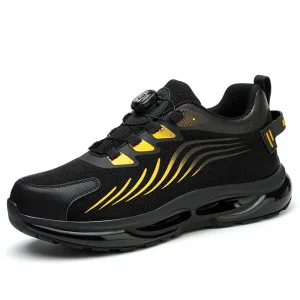
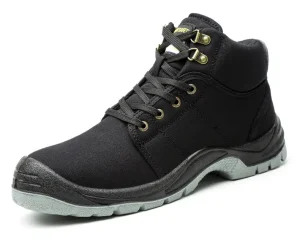
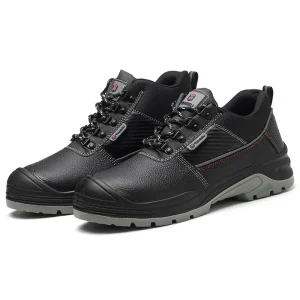
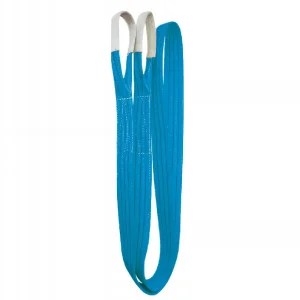
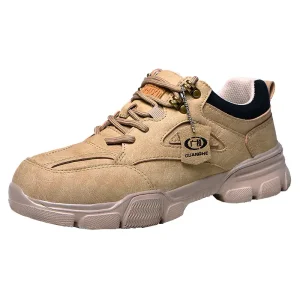
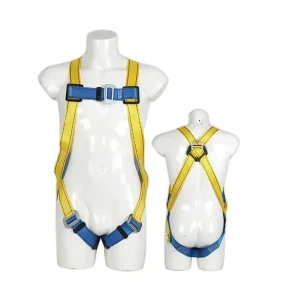
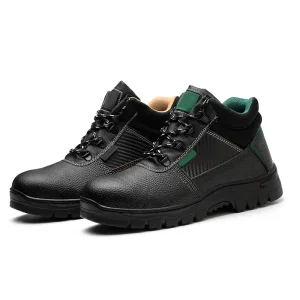
Complete your purchasing order by combining certified protective helmets with our CE EN 361 fall arrest harnesses, webbing slings, and heavy-duty footwear.
Continuous investment in research, mold engineering, quality assurance, and automated high-throughput production lines.