Pre-tested for high abrasion resistance, strict elongation thresholds, and extreme load dynamics across New York marine terminals, structural steel assemblies, and underground civil engineering.
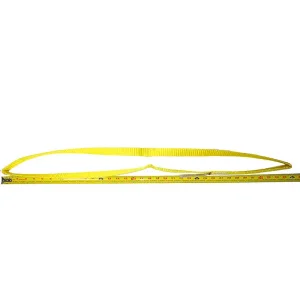
Engineered with continuous high-tenacity polyester filament for variable wear points, optimal choking efficiency, and high tonnage handling.
Explore Specification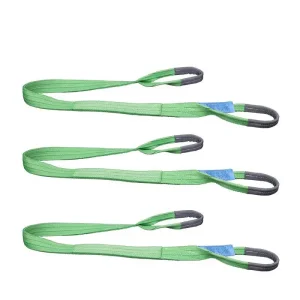
Reinforced woven eye loops, reinforced buffer sleeves, and low-stretch profile suited for multi-tier crane picks across Manhattan job sites.
Explore Specification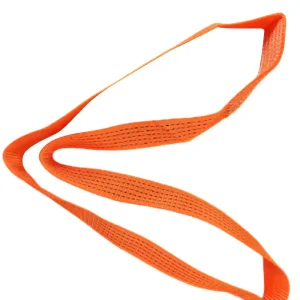
Cost-effective single-journey pre-slung solutions designed for breakbulk stevedoring, container loading, and industrial export consolidation.
Explore Specification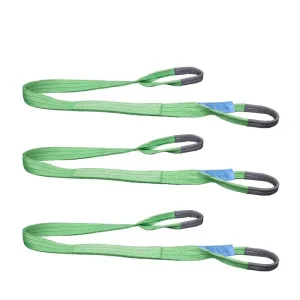
Color-coded standard capacity strap with high-density edge weave, offering acid resistance and surface protection for polished architectural components.
Explore SpecificationAnalyzing commercial hoisting protocols, heavy civil infrastructure rehabilitation, and the technical transition from rigid steel cable to synthetic fiber systems under strict municipal oversight.
The commercial landscape of New York City and its surrounding metropolitan area represents one of the most demanding, heavily regulated lifting environments on earth. From massive capital improvement projects overseen by the Metropolitan Transportation Authority (MTA) and the Port Authority of New York and New Jersey (PANYNJ) to ultra-dense high-rise construction governed by Chapter 33 of the New York City Building Code, rigging safety is not merely an operational preference—it is a statutory imperative. Synthetic webbing slings have emerged as an indispensable asset across these verticals, replacing legacy wire rope slings and alloy chains due to their non-marring characteristics, non-sparking composition, and unmatched strength-to-weight ratio.
Under NYC DOB Crane and Derricks regulations, every synthetic sling deployed on urban pick systems must carry an indelible, legible manufacturer tag explicitly stating the Working Load Limit (WLL) across vertical, choker, and basket hitches. Traceability to ASME B30.9 and WSTDA-WS-1 standards is mandatory to withstand rigorous on-site DOB job inspections.
Beyond civil engineering, the maritime terminals flanking Newark Bay, Staten Island, and the South Brooklyn Marine Terminal (SBMT) require continuous supplies of weather-resilient lifting gear. The emerging offshore wind marshaling hubs off Long Island and the New York Bight introduce specialized rigging demands: non-conductive, corrosion-free lifting belts capable of maneuvering precision composite turbine blades and nacelle subassemblies without scratching sensitive coatings. In this ultra-specialized commercial theater, New York procurement executives demand supply partners capable of delivering verified raw materials, deterministic batch consistency, and complete mill test certifications.
On a global scale, synthetic rigging is capturing a dominant market share from wire rope. Heavy manufacturing plants, energy installations, and aerospace manufacturing facilities across North America, Europe, and the Asia-Pacific region are prioritizing synthetic polyester slings due to ergonomic advantages. Musculoskeletal injuries among riggers drop precipitously when heavy steel chains are replaced by lightweight, high-tenacity polyester slings. Simultaneously, synthetic webbing eliminates the risk of sudden recoil fractures and invisible core bird-caging associated with traditional wire ropes.
Connecting North China's premier heavy webbing cluster directly to New York B2B importers, master distributors, and general contractors.
Located in Shuangjie Trusted Industrial Park, Tianjin, our production line encompasses AA-grade high-tenacity yarn drawing, high-speed shuttleless weaving, automated continuous thermosol dyeing, and multi-needle CNC lockstitch sewing. Eliminating sub-tier brokers enables superior quality control and unmatched FOB pricing.
Our in-house facility hosts 100-ton and 300-ton horizontal tensile testing machines. Every batch produced for the United States market undergoes destructive rupture verification to ensure strict compliance with the 5:1 ASME B30.9 design factor and 7:1 European EN 1492-1 safety threshold.
Direct proximity to Tianjin Port—the maritime core of North China—allows expedited FCL/LCL ocean freight dispatch. Standard maritime transit connects directly to the Port of New York & New Jersey (Maher, APM, and Red Hook terminals) without unnecessary inland routing overhead.
1. Manhattan High-Rise Structural Assembly & Glazing: Tower crane operations in Manhattan encounter turbulent wind shear between skyscrapers. Synthetic flat eye-and-eye webbing slings prevent critical impact shocks and prevent marring of pre-anodized architectural bronze, curtain wall glass modules, and structural composite beams.
2. Sub-Surface Transit Tunneling & Rail Maintenance: MTA subway system rehabilitation demands non-conductive rigging gear to mitigate catastrophic electrical arc faults within third-rail electrified zones. Polyester endless slings provide absolute dielectric safety during substation component replacement and track rail installation.
3. Marine Cargo Stevedoring & Offshore Wind Support: Across Staten Island, Newark Bay, and Long Island sound construction staging docks, flat slings and heavy ratchet lashing systems secure extreme oversized cargo against Atlantic swell dynamics without suffering saltwater-induced electrochemical pitting.
Comparative working load limits (WLL) calculated at 5:1 (US ASME B30.9 standard) and 7:1 (EN 1492-1 standard) using 100% high-tenacity industrial polyester filament.
| Webbing Width | Color Coding | Vertical Hitch (WLL) | Choker Hitch (WLL) | Basket Hitch 90° | Basket Hitch 60° | Ultimate Break Min |
|---|---|---|---|---|---|---|
| 1 Inch (25mm) | Violet | 2,200 lbs (1.0 Ton) | 1,760 lbs (0.8 Ton) | 4,400 lbs (2.0 Ton) | 3,810 lbs (1.73 Ton) | 11,000 lbs (5:1) |
| 2 Inch (50mm) | Green | 4,400 lbs (2.0 Ton) | 3,520 lbs (1.6 Ton) | 8,800 lbs (4.0 Ton) | 7,620 lbs (3.46 Ton) | 22,000 lbs (5:1) |
| 3 Inch (75mm) | Yellow | 6,600 lbs (3.0 Ton) | 5,280 lbs (2.4 Ton) | 13,200 lbs (6.0 Ton) | 11,430 lbs (5.20 Ton) | 33,000 lbs (5:1) |
| 4 Inch (100mm) | Grey | 8,800 lbs (4.0 Ton) | 7,040 lbs (3.2 Ton) | 17,600 lbs (8.0 Ton) | 15,240 lbs (6.92 Ton) | 44,000 lbs (5:1) |
| 6 Inch (150mm) | Brown | 13,200 lbs (6.0 Ton) | 10,560 lbs (4.8 Ton) | 26,400 lbs (12.0 Ton) | 22,860 lbs (10.39 Ton) | 66,000 lbs (5:1) |
| 8-12 Inch (200-300mm) | Orange | 22,000 lbs+ (10.0T+) | 17,600 lbs+ (8.0T+) | 44,000 lbs+ (20.0T+) | 38,100 lbs+ (17.3T+) | 110,000 lbs+ (5:1) |
We supply North American industrial distributors with container-direct pricing, custom tag branding, metric-to-imperial WLL conversions, and integrated RFID inspection microchips.
How technological evolution and rigorous corporate supply chain demands are reshaping the global synthetic lifting sector.
OSHA and NYC DOB mandate frequent pre-shift inspections. We embed passive UHF RFID / NFC transponders directly into the sling protective tag cover. Riggers and safety auditors can instantly verify manufacturing date, serial ID, and proof-load history with an industrial mobile scanner.
Edge damage is the primary cause of synthetic sling retirement. Modern lifting protocols employ detachable Cordura and cast-polyurethane sliding protective wear pads that neutralize razor-sharp I-beam corners and abrasive precast concrete slabs without compromising sling flexibility.
Advanced round slings feature contrasting internal core yarn systems (such as high-visibility red or orange inner load-bearing strands enclosed within an outer green protective jacket). Any critical cover penetration or internal abrasive failure is visually revealed immediately during routine inspections.
Explore our certified range of cargo straps, flat slings, endless belts, and safety footwear. Container-mixed consolidation available direct from our Tianjin manufacturing complex.
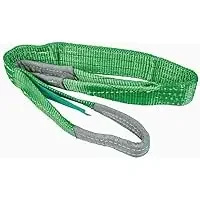
Precision dual-ply construction with reinforced eye loops for commercial warehouse handling and freight maneuvering.
Explore Specification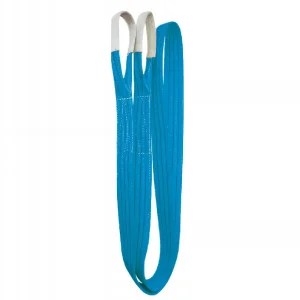
Engineered for multiple hitch geometries: vertical, basket, and choker hitch. Reinforced against friction fatigue.
Explore Specification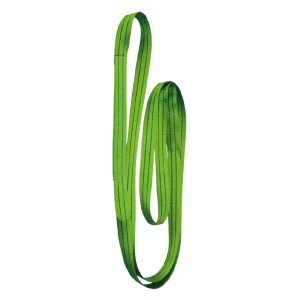
Seamless continuous load loop eliminating fixed weak points. Ideal for pipes, structural drums, and industrial coils.
Explore Specification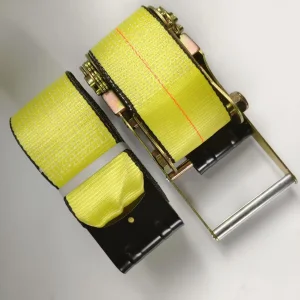
Flatbed freight securing for interstate transport along I-95/I-87 corridors. Heat-treated steel flat hooks and 20,000 lbs break strength.
Explore Specification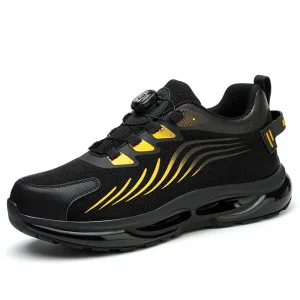
Lightweight site protection with composite toe and bulletproof Kevlar midsole for crane operators and dockside riggers.
Explore Specification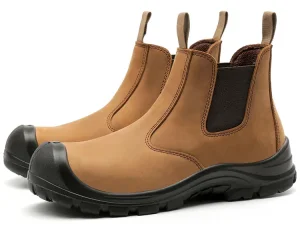
Chemical, oil, and moisture-resistant construction footwear designed for dirty excavation and foundation trench work.
Explore Specification
Pre-slung cargo solutions engineered to reduce turnaround dwell times at East Coast container and bulk cargo ports.
Explore Specification
Heavy-tonnage endless sling tailored for generator positioning, modular construction units, and subway train bogie hoisting.
Explore SpecificationEssential clarifications on regulatory compliance, inspection criteria, design factors, OEM customization, and overseas logistics to New York.
In the United States, synthetic webbing slings are governed primarily by ASME B30.9 and the Web Sling & Tie Down Association (WSTDA-WS-1) standard, which mandate a 5:1 design factor (Safety Factor). This means the minimum breaking strength of the sling must equal at least 5 times the rated Working Load Limit (WLL) for a straight vertical pull.
In contrast, the European EN 1492-1 standard establishes a 7:1 safety factor for flat woven polyester slings. At our Tianjin factory, we build to both standards based on buyer specification. Slings intended for the New York market are manufactured with high-tenacity 210D AA-grade polyester yarns calibrated specifically to meet or exceed ASME B30.9 requirements, complete with imperial measurements (lbs/tons) permanently printed on the certification tag.
As the horizontal angle between the sling leg and the load surface decreases, tension on each sling leg escalates exponentially. A sling rigged in a true vertical 90° basket hitch achieves 200% of its single vertical WLL.
However, when that sling angle decreases to 60°, the capacity drops to 173% of vertical WLL. At 45°, it is reduced to 141%, and at 30°, the sling can only support 100% of its vertical rating. Operating synthetic slings below 30° is strictly prohibited under OSHA 1910.184 and NYC DOB regulations due to extreme load multiplication.
Under OSHA 1910.184 and ASME B30.9, a synthetic webbing sling must be removed from service immediately if any of the following conditions are discovered during inspection:
1. Missing, illegible, or unattached manufacturer identification tag.
2. Acid or caustic chemical burns on the webbing fibers.
3. Melting, charring, or weld splatter on any part of the sling surface.
4. Holes, tears, cuts, snags, or embedded abrasive particles that sever load-bearing yarn.
5. Broken or worn stitching in the structural load-bearing stitch patterns.
6. Ultraviolet (UV) light degradation evidenced by chalking or severe fiber bleaching.
We provide full OEM/ODM manufacturing for industrial brands, rigging supply houses, and major distributors. We offer custom jacquard woven logos directly into the sling surface, customized trace yarns to indicate load ratings, and heavy-duty vinyl or synthetic leather wrap-around tags carrying your corporate logo, barcode, and serial number sequences.
Additionally, we can embed high-frequency or ultra-high-frequency (UHF) RFID microchips sealed within heavy-duty vinyl sleeves, enabling automated digital asset management and rapid Bluetooth/cloud crane safety audits on active construction sites.
Production lead time for standard FCL (Full Container Load) orders is typically 15 to 25 days depending on specification volume. Because our manufacturing base is situated adjacent to Tianjin Xingang Port, container drayage to the marine terminal is completed within 24 to 48 hours of final packaging.
Ocean transit time from Tianjin to the Port of New York & New Jersey (via the Panama Canal route or Suez/East Coast express strings) generally ranges between 28 and 35 days. We provide complete documentation sets including Commercial Invoice, Packing List, Mill Test Certificate, and Certificate of Origin (CO).
Get direct access to competitive factory pricing, verified ASME test reports, and dedicated engineering support for the New York commercial market.
Send Inquiry Now